

Twist in power struggle: Not just Himachal power, GNA power deal has also been scrapped
Mail This Article


Thiruvananthapuram: The power purchase controversy in Keralam has taken a new turn.
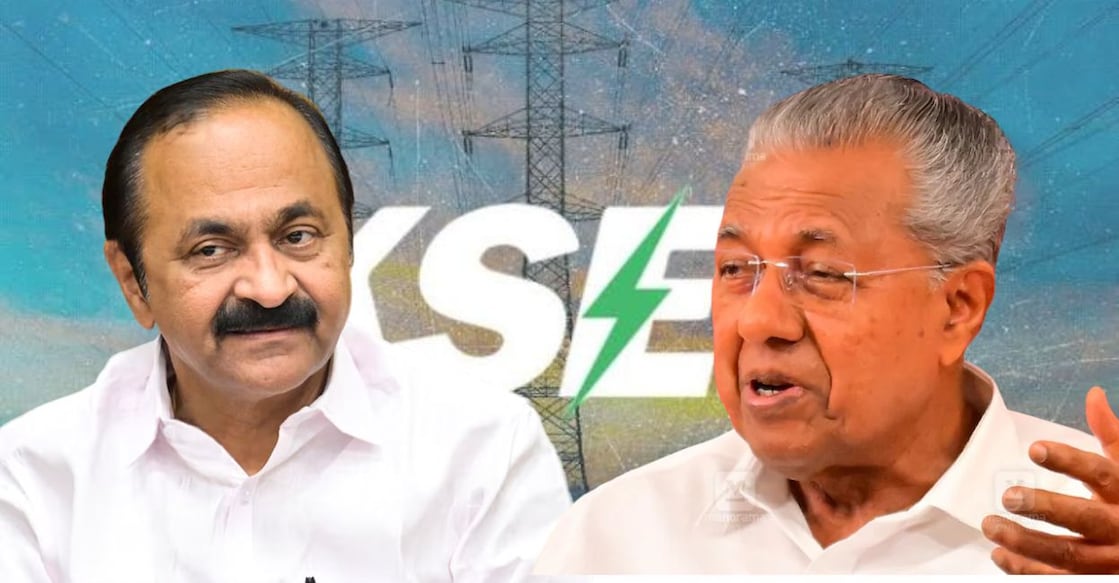
Power deals had blown up into a major political issue after Chief Minister VD Satheesan overruled former KSEB chairman MG Rajamanickam, and reportedly even power minister Sunny Joseph, and opted to purchase power till March 31 next year from General Access Network (GNA), an over-the-counter platform for power sales. Rajamanickam had argued for power from Himachal Pradesh.
Now, barely a week later, the Satheesan government has decided not to buy power from GNA, too.
Official sources said that additional chief secretary (power) Puneet Kumar and KSEB chairman N Prasanth had informed the Chief Minister that there was no immediate power crisis to necessitate costly short-term power purchases from outside. They had also reportedly told the CM that, unlike in August and September, there was adequate supply of power in the open market. There is power aplenty in the market, and that too at competitive prices, as daily temperatures have started to drop in North India during the early phase of winter.
It was during the Cabinet briefing on November 4 that the CM announced the decision to buy power from GNA. While power from Himachal was priced at ₹14.50 per unit, GNA power cost ₹8.63 per unit. The Chief Minister said that there was a ₹5-6 per unit difference between the two sources, and added that if the Himachal power was chosen, it would have caused the state government an additional burden of ₹2,232 crore.
On the contrary, top KSEB sources argued that though the unit cost was higher for Himachal, the aggregate power proposed to be bought from Himachal was less than from GNA; 884 million units (MU) as against 1812 MU from GNA.
More significantly, Himachal power was scheduled mostly for peak hours, unlike the GNA power,r which would be distributed evenly through the day. KSEB argued that there was surplus power during non-peak solar hours (8 am to 5 pm) and the purchase of costly power during this time-slot would result in the accumulation of costly but useless power with the public utility.
The Opposition also levelled serious allegations against the CM. Opposition Leader Pinarayi Vijayan said the agreement with GNA was an attempt to serve the interests of private companies that dominate power generation in the country. "GNA is not a power-producing company; it is only an 'over the counter' platform. Why would the Chief Minister intervene directly on behalf of a company that does not produce electricity," he said.
Pinarayi also wanted the government to name the private company whose power would be purchased through GNA. "It is highly mysterious that the name of the company is kept under wraps," he said. Pinarayi then urged the Chief Minister to publish all the files and documents related to the power purchase agreement with GNA.
It is in this context that the agreement with GNA has also been scrapped. However, the CM has reportedly told the power secretary and KSEB chairman to examine why the former chairman had painted a picture of crisis and placed two costly power purchase options before the government.
Has crisis blown over?
Power consumption figures confirm the assessment of the KSEB top brass.
Daily consumption that had hovered in the 110-118 million units (MU) range during the summer, and also during the monsoon months of August and September, had crashed to 90 MU in October and November.
Keralam is also receiving nearly 65 MU daily from relatively cheaper central generating stations, and long- and medium-term agreements. During August and September, even this supposedly assured daily supply was below 50 MU.
Another indication that the crisis has cleared is the KSEB move to lower hydel generation. From a high of 25-26 MU daily during September, KSEB has curtailed hydel generation to 12-13 MU. "In September, there was concern that El Nino would weaken the northeast monsoon also. But as it turned out, the retreating monsoon has arrived in strength. We can now rest our hydel stations and conserve water for the coming summer," a top KSEB official said.
