

Supreme Court's Sabarimala verdict due before Christmas; Knanaya endogamy case deferred as ruling may have a bearing
Mail This Article


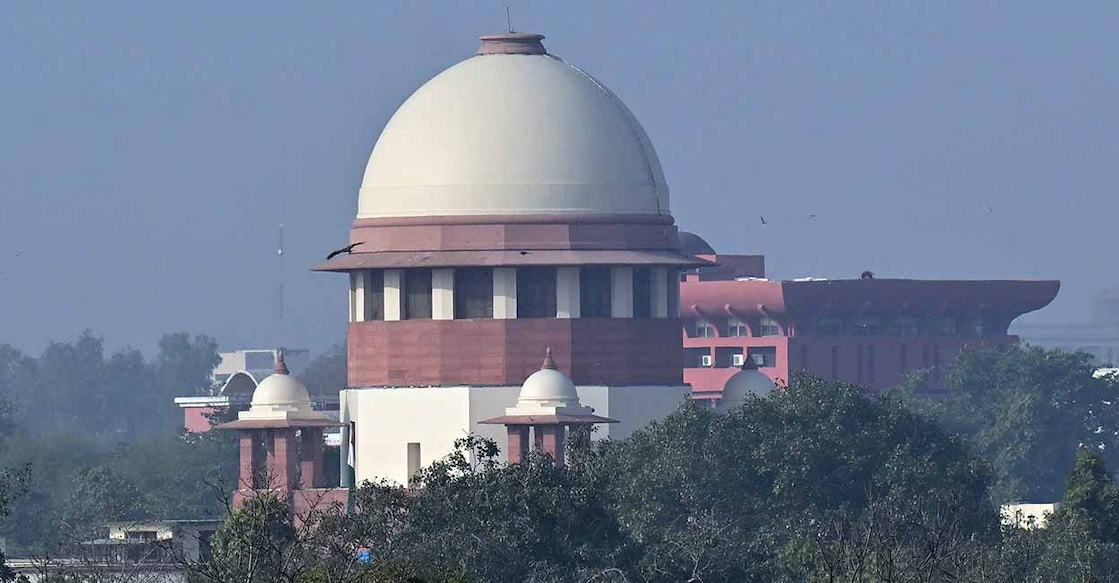
Kasaragod: The Supreme Court on Wednesday indicated that its verdict in the Sabarimala reference on women's entry into the hill shrine would be delivered before the Christmas break. The indication came while the apex court was hearing a challenge by the Knanaya Catholic Church against a Kerala High Court judgment that struck down the Church's practice of enforcing endogamy by excluding members who marry outside the community. The Bench deferred the Knanaya petitions, observing that the Sabarimala ruling could have a bearing on the issues involved.
A three-judge Bench of Justices B V Nagarathna, R Mahadevan and Sanjeev Sachdeva deferred the Knanaya petitions to January 5, 2027, indicating that they would be considered after the nine-judge Constitution Bench delivers its verdict in the Sabarimala reference.
Justice B V Nagarathna said that the Sabarimala verdict was likely to be delivered before the Supreme Court closes for its Christmas vacation on December 18, Adv Sai Shashank, who represents the reformist group in the Knanaya case, told Onmanorama. The nine-judge Bench had reserved its judgment on May 14 after 16 days of hearings.
The Sabarimala reference, however, goes beyond the question of women’s entry into the hill shrine. Several other disputes involving religious practices and the rights of religious denominations have been tagged with the reference for consideration by the larger Bench, said Adv Shashank. These include challenges concerning the entry of Muslim women into mosques and dargahs, the exclusion of Parsi women from fire temples after marrying outside the community, and the practice of female genital mutilation among the Dawoodi Bohra community. The reference also encompasses the Dawoodi Bohra community’s power to excommunicate members, he said.
The larger Bench is examining constitutional questions on the scope of religious freedom under Articles 25 and 26 of the Constitution, the autonomy of religious denominations, the limits of judicial scrutiny of religious practices and the relationship between individual rights and denominational rights.
The Knanaya dispute raises a closely related question: whether a religious community can invoke its right to manage its own affairs to enforce endogamy, or whether an individual’s right to choose a spouse takes precedence.
The Knanaya Archeparchy of Kottayam contends that endogamy is an essential and long-standing religious custom of the community and that its autonomy as a distinct denomination is protected under Article 26.
The Church's argument has been rejected by three courts: the Additional Sub-Court, Kottayam, the Additional District Court-V, Kottayam, and the Kerala High Court. While the first appellate court recognised endogamy as a long-standing custom, it held that the practice was not an essential religious practice. The High Court, in its March 23 judgment, went further, holding that the Church had failed to establish endogamy as either a binding custom or an essential religious tenet.
Supreme Court advocate Sai Shashank, who appeared for caveators Biju Uthup and Justin John, said the Sabarimala verdict could provide guidance on the constitutional balance between individual religious rights and the autonomy of religious denominations. But it would not automatically decide the Knanaya dispute, which would have to be considered on its own facts and merits.
Kasaragod autorickshaw driver Justin John, who married a woman from a neighbouring Roman Catholic parish, has been denied permission for the Church to solemnise their marriage, while his son has also been denied baptism. Bengaluru-based Biju Uthup, a former DRDO project manager, launched the legal challenge in 1989 after a Knanaya church denied him a marriage permission certificate because his maternal grandmother had married a Latin Catholic.
Adv Shashank said the Supreme Court did not grant any interim relief to the Church on Wednesday. "It issued no notice and passed no order staying the Kerala High Court judgment. The petitions have not been admitted either," he said.
The High Court had held that the Church could not exclude members or deny them religious services for marrying Catholics from outside the Knanaya community. With no stay from the Supreme Court, that judgment remains operative while the special leave petitions are pending, he said.
