Slow life in the age of screen resolution
Mail This Article


Slow living in the age of screens seems to be a task as difficult as frying ice-cream. Extraordinary, nearly impossible yet popular. A task so daunting, many wouldn’t even try. Slow living as a lifestyle movement has been discussed widely ever since the hyper stimulated environment created by digital devices started being counter-productive to the avowed purpose of fostering connection. In due course, it has only promoted addiction, raised cortisol levels due to the chaos of hyper information and made us all lonelier than before.
I have lived an online life on a social media platform which at its peak had more than 120k followers. In its heydays, I ran handloom saree themes on the handle, made reels, went live on interview formats and posted stories. In short, made content quite intentionally. Saved audios and filters, made mental note of trends, learnt the lingo and stayed afloat as the director of a fashion and design college for five years with more than 1000 students. It was a professional necessity, but more often than not personal vanity too.
The one unmistakable thing I have noticed in the process is the relentless rush with which life is led. The insistence on creating micro content by the minute fosters an artificial pressure at the back of your head. Creating content means micro filming and photography. A single pose gets translated into ten photographs; a birthday cake cutting gets retaken ad nauseam for the perfect shot between the soft exhale and the calibrated death of the candle flame. After the eleventh photo is taken, one would notice that the hair has not behaved properly or there is too much stomach showing, and so we ceremoniously proceed to the 12th shot. All in the name of aesthetics.
And that precisely is the problem. The chase for perfection and symmetry is contrary to the natural order. I am told that not even our two eyes are the same. No two finger prints of a person are the same. Staying busy in micro filming and shooting ‘perfectly’ can sometimes take many hours giving us the false impression that we are “busy”. We seldom achieve anything at the end of such exercises (unless you are a model, influencer or seller trying to sell more of her products online). It has bred a screen intensive culture, where one is forced to be filming and promoting the personal brand whether you are a dentist or boutique owner. The same is true for endless hours spent on messaging groups and individuals. The reason why online time is called slop, brain rot and doom scroll become clear because we all drop out of it feeling worse off than better.
Our real lives may have nothing in fast forward other than the images that flicker past us in quick succession. Our intellectual engagement is restricted to arguing online and consuming half-baked knowledge from influencers whose knowledge ranges from relationship psychology to make up recommendations. It has become a microphone and camera thing.
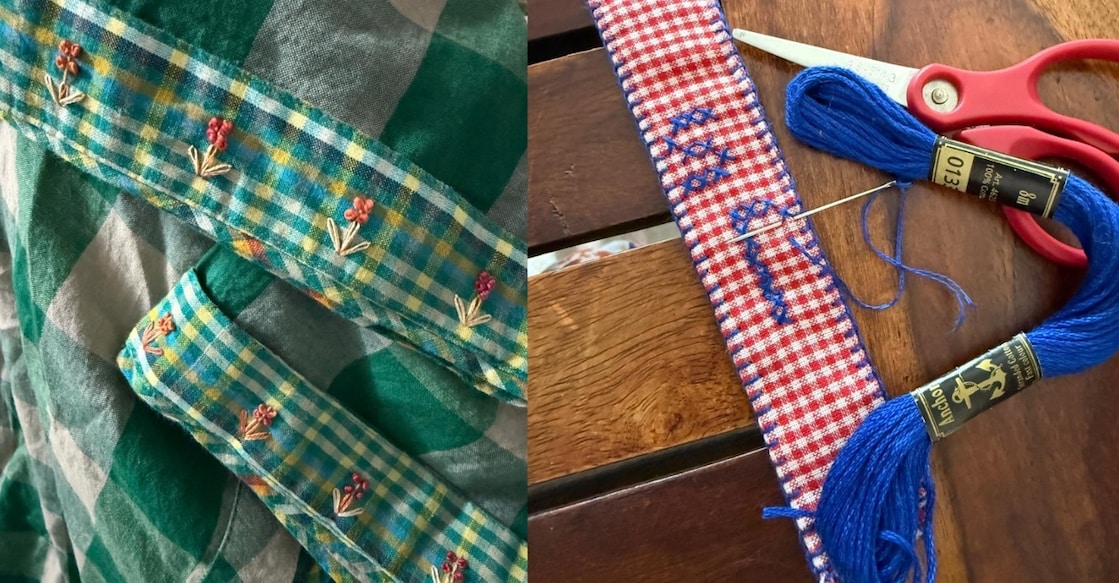
Caught as I was in deep thoughts on how to retrieve my slow life, I finally turned to my embroidery bag. I have a draw full of yarn, needle supplies, laces and trims. Bobbins beam their silvery light and thimbles wait to be worn. There is Aida cloth and linen, heat transfer sheets and pouncers. I have more than one scissor, thread cutter and seam ripper. Instead of thinking too much on slow life, I decided to live it.
I am happy to report here that I have been embroidering. Creating lazy Daisy flowers on slender green stem stitch vines, converting fabric scraps to flowers and awarding appliques to garments like medallions. The process takes many hours. No phone, no screen, no scroll. No zoom, no doom.
Grandma hobbies are back with a bang. These are hands on activities, that we all learnt as kids for hand eye coordination-water colour, doodle, paint, knit, crochet, garden, quilt, making Lego models and embroidery. No screen, no visual stimulation, no information dump, only calm and patience. In our compulsory needle work classes, nuns in my school insisted that working with yarn taught one patience. U take a wrong turn and you had to undo and restitch. Not at the click of a button but patient snipping and stitching. No instant gratification but delayed reward mechanism.
Many of the embroidery forms flourished thanks to community networks. Phulkari in Punjab, Kantha in Bengal, Sujani of Bihar and quilting were projects in which many women worked together sitting huddled over the fabric, singing songs and working their stitches on the side. Human to human connections that kept loneliness at bay.
At the 2020 Olympics at Tokyo, as British diver Tom Daley sat in the stands knitting, he was also subverting a gender stereotype. Dickens’s Madame Defarge from A Tale of Two Cities or Agatha Christie’s Miss Marple who were keen knitters were women after all. Here was a young sports guy doing a grandma thing. He knitted a pouch for his gold medal and has since been spotted knitting at sporting events. He now has his own brand of knit wear. Closer home, Bollywood actor Kajol is seen knitting through makeup sessions.
Over the years, I have tried my hand at crochet and knitting, but embroidery is my jam. Sew far, sew good. Since therapeutic is a loaded word, I will refrain from it. But allow me to say, creating with one’s hands feels good. I strongly suggest you enrol for a baking class or pottery and explore a hobby community near you. Connect with nature and go for a bird watching walk. Engage in activities that require you to pay attention for more than a few seconds. It will change the way we live for the better, away from pixels and incessant influencer prattle.