Bookended: Anthropic does not want it to be known

Mail This Article


“Its fine work. Monday burn Millay, Wednesday Whitman, Friday Faulkner, burn ‘em to ashes, then burn the ashes. That’s our official slogan”.
When Guy Montag explains his book burning job to Clarisse McClellan in Fahrenheit 451, his innocent neighbour asks him whether it is true that long ago firemen put fire out than starting them. The dialogue written in 1951, has a prophetic ring today as news has come on the massive destruction of books under Project Panama. If one were to reframe Clarissa’s question, it would be that long ago weren’t we writing and creating books than destroying them?
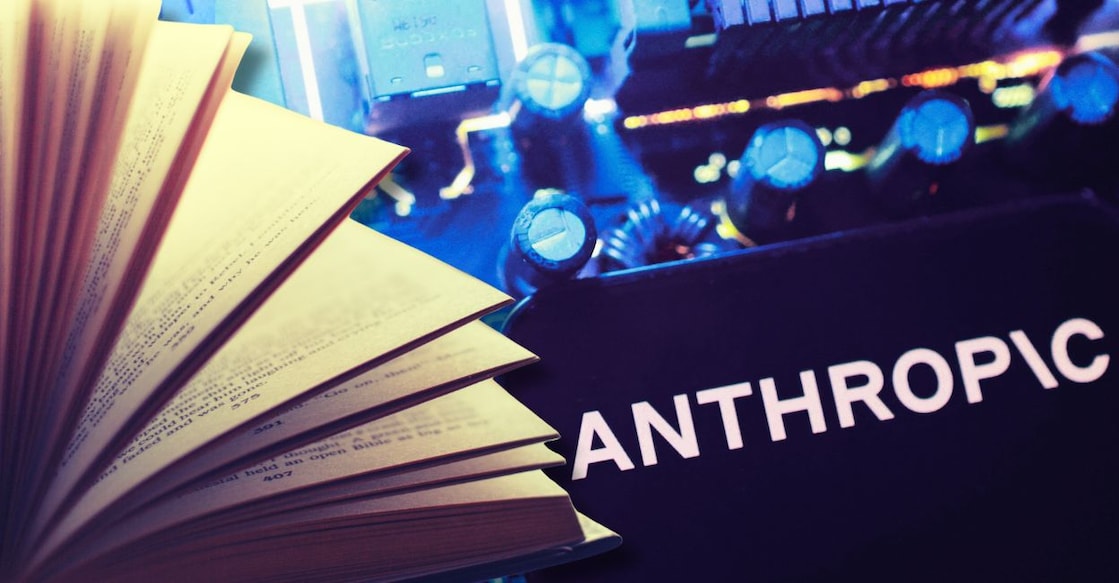
As the shocking details of Anthropic’s Project Panama unfolded following the North Carolina District court verdict in the case of Bartz Vs Anthropic PBC, fence sitters on the ethics of AI usage finally seem to have made up their minds on the diabolic ways it is erasing culture. If there were concerns on the complete surrender of human intelligence at the hands of AI, we now know that it is also an irrigation project, the details of which are as follows. Anthropic, in order to train Claude scans long form content in books (yes it needs works produced by human intellect), and then shreds the books and recycles the paper. It breathes in human intelligence, and breathes out machine intelligence in short.
Books still remain the best works of human intelligence from which a thing or two can be learnt about language, reasoning, logic, drafting and analysis. The machines go line by line, read between the lines and read cover to cover before condemning it to a shredder. Books are bought in bulk, its spine and cover removed to facilitate easy scanning and stored in digitized form “forever” as the order reveals in its introduction. Reading through the 32-page judgment, I felt the dismay of authors who painstakingly create literary works, only to realise that their work is being used to train LLMs (large language models) for “good writing” of the kind “an editor would approve of” (page 6 of the cited judgment) so that human authorship can be replicated and authors finally replaced.
As I finished reading the judgment, I sat down with my despondency and watched it form a knot in my throat and swell in my eyes as tears. I had never felt more hopeless about the world we live in. The old soul that I was, had written a piece in August this year about the romance of gifting books without knowing that in a parallel world, books were being shredded and dehumanised by tech capitalists of the world. Judicial benches have okayed it now.
Where do we go now; whom do we turn to, to restore order and justice?
Books are a cultural token, often revered as the epitome of human endeavour and creativity. The written word, akshar is indestructible. So we are taught in Indian culture. On Vijayadashami day next month, many toddlers will be sat down with reverence by their elders in front of a lit lamp and a plate full of grain (rice mostly) to be initiated into the world of letters. Nearly five decades ago, my grandfather took my index finger and drew Harishree on rice and wrote the same word on my tongue with a gold cross to propitiate Saraswati, the Goddess of letters so that what I spoke and what I wrote were divinely inspired. Looking back, it is India’s syncretism at its best-- to write Harishree on a child’s tongue with a gold cross. I relived the vidyarambham as my father initiated my daughter into learning with the same ritual nearly 15 years ago. Perhaps, it is the view that Saraswati resides in books, that makes us all touch the books to our foreheads in apology, should one fall down or accidentally step on it. A book was Goddess herself. In childhood we were always threatened that Saraswati, seated in her lotus would just get up and leave unhappily if we did not read enough. Knowledge was permanent, which was why she was shown seated unlike Lakshmi, Goddess of wealth who was always standing denoting the transience of money.
One by one, our world is being taken apart, that which we held dear and indestructible are slowly getting eroded. As cultural tokens crumble, the concomitant value system is bulldozed too. Everything can be bought at a price. Profit is perfect. Avarice, corporate and otherwise is agreeable. If-it-works-for-me sort of whataboutery operates best in a cultural vacuum. And looks like the stripping down is intentional, so as to dismantle everything brick by brick and page by page.
People who read books cultivate patience, empathy and cultural curiosity. In the new world of hyper informed and overstimulated individuals, books stand for patience and quietude. A reader of books today refuses to participate in the urgency culture spawned by smartphones. They have in them a rare ability to think beyond their immediate surroundings and accept humanity sans borders. This is perhaps why Truman once said that all readers are not leaders, but all leaders are readers. The neo capitalist models that hoist non- reading leaders in the world today have only given us wars, indifference to suffering and authoritarianism.
Disregard for books has led to the formation of a zeitgeist, that has zero tolerance for someone different form you or dissenting with your point of view. If one compares the sharp decline in reading over the past decade, the trend is clear. It is the advent of the Dark Ages 2.0. Nobel laureate Brodsky famously said that there are worse crimes than burning books. One of them is not reading them. The mass destruction that is happening at the hands of Anthropic raises another important question of who actually is reading books these days? Who has the patience to grapple with other people’s lives, their tales of heartbreak, suffering and moral dilemmas. Plodding through 300 pages of fiction and closing it ever so often to marvel at the turn of a phrase and the tenderness of the language seems arduous compared to hypnotic viewing of AI slop and brainrot. Already, poetry is a lost case, so also the art of learning verse by heart and being able to recite them from memory. Now prose is at danger, especially the elegant kinds that have withstood time and ravage. They will be digitised and stored in servers perhaps, and a time may come when people will not be given access to the same. It throws up questions on the very right to life, justice and liberty, all of which are cardinal concerns raised to tech companies that have scant regard for them in their dogged pursuit of data and surveillance.
Hope springs eternal in the human breast sang the poet. I wish that knowledge, free thinking, free speech and individual liberty that survived many a library burning and destruction, find a way still, to light our paths.