

Paris climate accord exit, Cuba crackdown and WFH rollback: Trump's first day back in office
Mail This Article


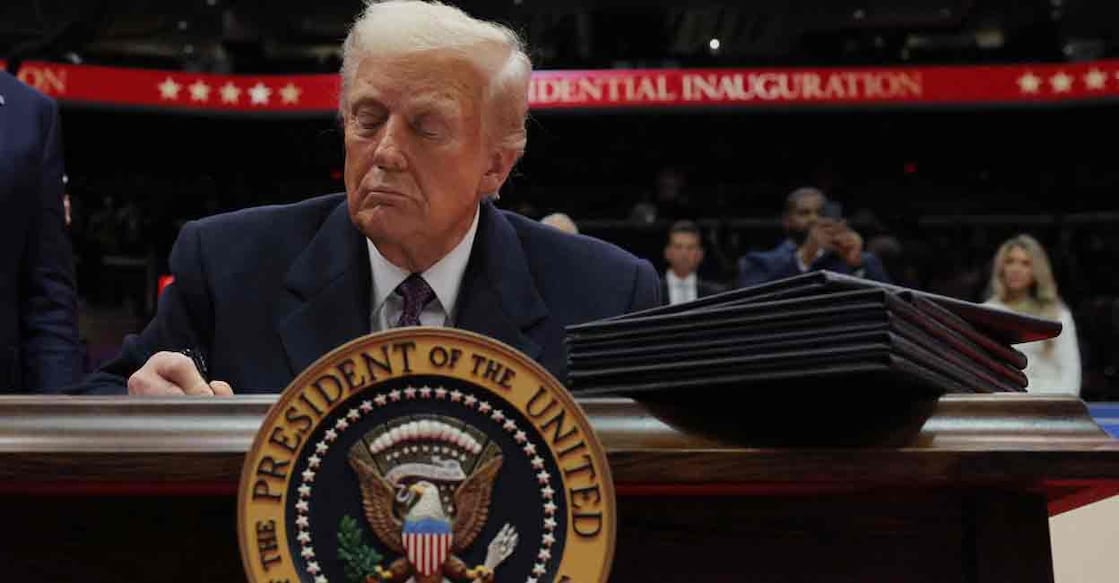
Washington: Donald Trump marked the start of his second term as the 47th US president on Monday by signing a series of executive orders aimed at reversing key policies of the Biden administration, reshaping federal operations, and reaffirming his agenda. The orders included measures on workforce management, climate policy, and regulatory changes.
One of the most prominent actions was a mandate requiring federal employees to return to their offices five days a week, ending remote work arrangements that became widespread during the Covid-19 pandemic. This move aligns with Trump’s campaign promise to curb what he described as an unproductive “work-from-home culture.” Last month, at Mar-a-Lago, he had vowed to dismiss federal workers who failed to comply.
Additionally, Trump reinstated a federal hiring freeze, similar to an action from his first term. The freeze suspends most new and open positions, with exceptions for national security, public safety, and military roles. The measure underscores Trump’s pledge to shrink what he has frequently termed the “deep state” bureaucracy.
He also signed an executive order that he said was aimed at "restoring freedom of speech and ending federal censorship." Trump and his Republican allies had accused the administration of Democratic former President Joe Biden of encouraging suppression of free speech on online platforms.
Paris climate agreement withdrawal
In a move that echoes his 2017 policy, Trump signed an order withdrawing the United States from the Paris climate agreement. This decision distances the US from global efforts to limit temperature increases and combat climate change. The Paris accord, aimed at keeping global warming well below 2 degree Celsius above pre-industrial levels, has been a cornerstone of international climate strategy.
“The United States' successful track record of balancing economic and environmental objectives should serve as a model for others,” Trump stated, criticising the agreement as misaligned with American values and interests. Environmental advocates and international leaders expressed concern, warning of potential setbacks in global climate progress.
Reversal of Cuba policy
Trump also reversed a Biden-era decision to remove Cuba from the list of state sponsors of terrorism. The re-designation comes just days after Biden’s announcement, which was part of a Church-mediated deal to release political prisoners in Cuba. Trump’s action signals a hard-line stance on the island nation, which he has consistently criticised for its human rights record.

Freezing federal regulations
In another significant move, Trump ordered a regulatory freeze, halting new or pending federal regulations. While such freezes are customary during transitions, Trump’s directive goes further, aiming to counter what he and his allies call “federal overreach.” Similar to his 2017 actions, this order includes exceptions for emergency situations related to health, safety, and national security.
Key actions on day one
Trump’s administration outlined several priorities in its initial flurry of executive orders:
- Halting 78 Biden-era executive actions.
Implementing a regulatory freeze to ensure full control of government directives. - Freezing federal hiring, excluding military and essential roles.
- Requiring federal employees to return to in-person work full-time.
- Addressing the cost-of-living crisis through department-level directives.
- Withdrawing from the Paris climate agreement.
- Restoring protections for free speech and curbing censorship.
- Ending the “weaponisation of government” by targeting perceived bureaucratic overreach.
Domestic and international reactions
Environmental experts and international leaders voiced alarm over the US’s withdrawal from the Paris accord. Laurence Tubiana, a key architect of the agreement, noted that the decision risks forfeiting the US’s leadership in the global clean energy transition. “The momentum behind climate action is unstoppable, even if America steps back,” she said.
Domestically, opinions on Trump’s orders remain divided. Polls indicate that a significant portion of Americans, including some Republicans, oppose withdrawing from the Paris agreement. Critics argue that such measures could hinder long-term climate strategies and damage America’s international reputation.
Despite opposition, Trump and his supporters maintain that these measures will prioritise American interests, reduce government waste, and bolster the economy.
Here’s a look at some of Trump’s other plans:
America First
Trump will sign an order renaming the Gulf of Mexico, making it the Gulf of America. The highest mountain in North America, now known as Mount Denali, will revert to Mount McKinley, its name until President Barack Obama changed it. According to a preview of the orders posted online by Trump’s incoming press secretary, these renaming efforts aim to honour American greatness.
He also signed an order mandating that flags must be at full height on all future Inauguration Days. The directive came after former President Jimmy Carter’s death prompted flags to be at half-staff. Trump demanded the flags be moved up on Monday.
Immigration
Much of Trump’s executive action on immigration mirrors his first-term policies. He plans to declare a national emergency at the US-Mexico border, deploy US troops to support immigration agents, and restrict refugees and asylum seekers. Additionally, he pledged to reinstate a policy requiring asylum seekers to wait in Mexico, though it is unclear if Mexico will accept migrants again.
Trump also intends to end birthright citizenship, a move enshrined in the US Constitution, raising questions about its feasibility. He ended the CBP One app, a Biden-era innovation that allowed nearly one million migrants legal entry.
The economy
Trump is poised to ease regulatory burdens on oil and natural gas production, including an order tied to Alaska. He plans to sign a memorandum for a government-wide strategy to tackle inflation.
For now, he appears to hold off on issuing tariffs on countries like China, Mexico, and Canada, focusing instead on studying trade issues.
Diversity, equity, and inclusion (DEI) and transgender rights
Trump is rolling back protections for transgender individuals and terminating DEI programmes in the federal government. Under one order, the government will recognise only two immutable sexes: male and female, defined biologically. The order will also segregate federal prisons and shelters by sex and prohibit taxpayer funding for gender transition services. A separate order will end DEI initiatives, directing the White House to identify and dismantle such programmes.
Pardons in the January 6 Capitol attack
Trump has pledged to pardon individuals convicted for their roles in the January 6, 2021, Capitol attack. However, he did not mention the pardons in his inaugural speech, telling a crowd afterward, “It’s action, not words, that count, and you’re going to see a lot of action.”
Energy
Trump will declare an energy emergency, championing increased oil drilling and ending what he describes as Biden’s “electric vehicle mandate.”
(With AP inputs.)
 Add as a preferred source on Google