

Raising concern for India, China starts construction of world’s biggest dam over Brahmaputra
Mail This Article


Beijing: A Chinese dam project has sparked concern in India, as the neighbouring country will gain control over the water flow of the Brahmaputra River once construction is complete. On Saturday, China formally began building a USD 167.8 billion dam on the Brahmaputra River in Tibet, near the Indian border in Arunachal Pradesh.
Chinese Premier Li Qiang announced the commencement of the project during a groundbreaking ceremony on the lower reaches of the Brahmaputra—locally known as the Yarlung Zangbo—in Nyingchi City, official media reported.
According to China’s Xinhua news agency, the ceremony took place at the Mainling hydropower station site in the Tibet Autonomous Region.
Not only India, but also Bangladesh has expressed concerns over the hydropower project, which is considered the largest infrastructure project in the world.
China aims to generate 300 billion kWh of power
The dam will include five cascade hydropower stations, with an estimated total investment of around 1.2 trillion yuan (about USD 167.8 billion), according to reports. A 2023 report noted that the hydropower station is expected to generate more than 300 billion kilowatt-hours of electricity annually—enough to meet the yearly energy needs of over 300 million people.
The electricity generated will be primarily used for external consumption, while also addressing local demand in Tibet, which China officially refers to as Xizang.
Representatives from various organisations, including the National Development and Reform Commission, the Power Construction Corporation of China, and local communities, attended the ceremony. The project received approval in December last year.
Why is India worried?
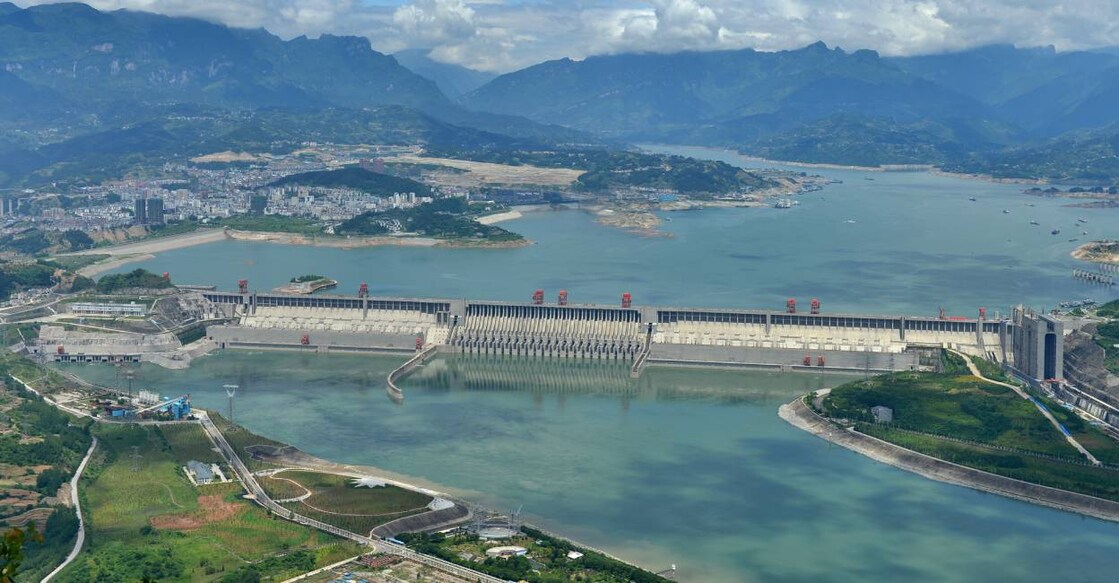
The dam is being built in a massive gorge in the Himalayan region, where the Brahmaputra River makes a U-turn to enter Arunachal Pradesh before flowing into Bangladesh. Previous reports have indicated that the scale of this project would surpass any other single infrastructure project globally, including China’s own Three Gorges Dam, currently the largest in the world.
In 2015, China operationalised the USD 1.5 billion Zam Hydropower Station—then the largest in Tibet—prompting earlier concerns in India.
India is apprehensive not only because the dam could give China the power to control the river’s water flow, but also because the massive scale of the project might enable Beijing to release large volumes of water during times of conflict, potentially flooding downstream border areas. India is also constructing a dam on the Brahmaputra in Arunachal Pradesh.
To manage transboundary river issues, India and China established the Expert Level Mechanism (ELM) in 2006. Under this mechanism, China provides India with hydrological data on the Brahmaputra and Sutlej rivers during the flood season.
Data-sharing on transboundary rivers was also discussed during talks between India’s National Security Advisor Ajit Doval and Chinese Foreign Minister Wang Yi on December 18 last year.
Engineering challenges and seismic risks
The Brahmaputra dam presents significant engineering challenges, as the project site lies along a tectonic plate boundary prone to earthquakes. The Tibetan Plateau—known as the "roof of the world"—frequently experiences seismic activity due to its geological location.
However, an official statement released in December last year attempted to allay such concerns. It claimed that the project prioritises ecological protection and emphasised that comprehensive geological surveys and technological innovations have established a secure and scientifically grounded foundation for the dam’s development.
The Brahmaputra River cuts across the Tibetan Plateau, carving the deepest canyon on Earth. The dam will be constructed in one of the rainiest regions of the area.
 Add as a preferred source on Google