

Nepal lifts social media ban after Gen Z protest leaves 19 dead
Mail This Article


Kathmandu: Nepal has lifted a social media ban following protests that resulted in the deaths of 19 people, a government minister said on Tuesday. Cabinet spokesman and Communications and Information Technology Minister Prithvi Subba Gurung said the government had rolled back the social media ban imposed last week.
The decision came after 19 people were killed and more than 100 injured in the "Gen Z" protests on Monday against widespread corruption and the ban.
"We have withdrawn the shutdown of the social media. They are working now," Gurung told Reuters.
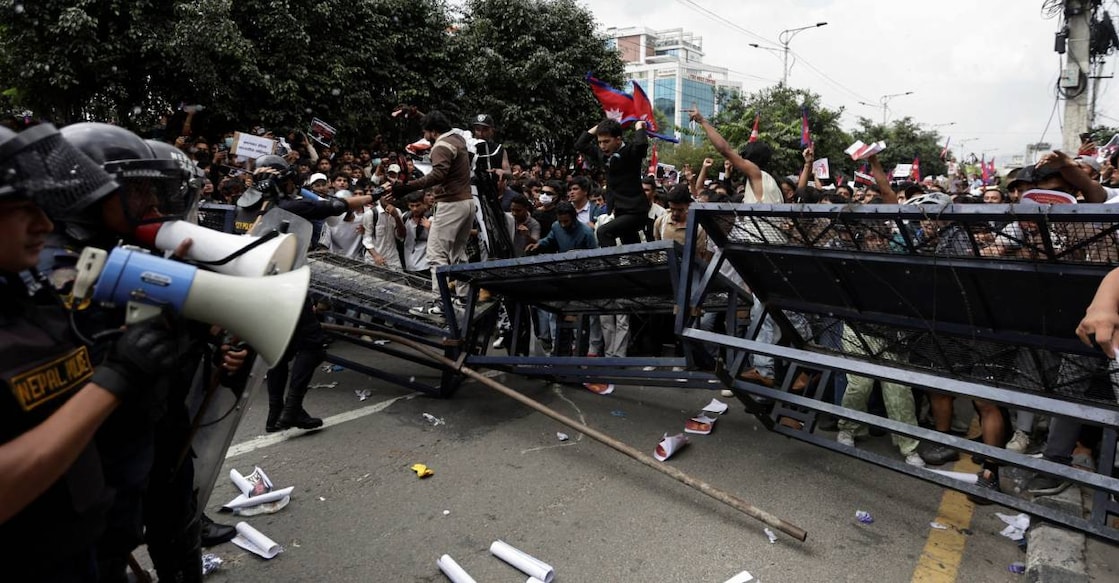
The protest turned deadly in two cities on Monday as police in the capital fired tear gas and rubber bullets at protesters trying to storm parliament in anger at a social media shutdown and corruption.
Some of the protesters, most of them young, forced their way into the parliament complex in Kathmandu by breaking through a barricade, a local official said, setting fire to an ambulance and hurling objects at lines of riot police guarding the legislature.
"The police have been firing indiscriminately," one protester told the ANI news agency. "(They) fired bullets which missed me but hit a friend who was standing behind me. He was hit in the hand."
More than 100 people including 28 police personnel were receiving medical treatment for their injuries, police officer Shekhar Khanal told Reuters. Protesters were ferrying the injured to hospital on motorcycles.
A government decision last week to block access to several social media platforms, including Meta Platforms' Facebook, has fuelled anger among the young. About 90% of Nepal's 30 million people use the internet.
Officials said they imposed the ban because platforms had failed to register with authorities in a crackdown on misuse, including false social media accounts used to spread hate speech and fake news, and commit fraud.
The 26 apps banned by the Nepalese government include: Facebook, Messenger, Instagram, YouTube, WhatsApp, X, LinkedIn, Snapchat, Reddit, Discord, Pinterest, Signal, Threads, WeChat, Quora, Tumblr, Clubhouse, Mastodon, Rumble, VK, Line, IMO, Zalo, Soul, and Hamro Patro.
All the apps were available in Nepal on Tuesday morning, Reuters was able to verify.
Curfew in place
Authorities have also imposed an indefinite curfew within the Kathmandu city area, Kathmandu district administrator Chhabilal Rijal said, a move aimed at stopping any more protests.
"No protests, mass gatherings, meetings, or assemblies of people will be allowed during the curfew," he said in a notice.
This comes after protesters called for people to participate in condolence meetings in memory of those killed in Monday’s protests.
In neighbouring Lalitpur district, authorities imposed a curfew until midnight (1815 GMT) on Tuesday.
PM orders probe
Prime Minister KP Sharma Oli said he was saddened by the incidents of violence due to the "infiltration from different selfish centres". The government would pay relief for the families of the dead and provide free treatment for the injured persons, he added.
"An investigation panel will be set up to find out the causes, assess losses and suggest measures within 15 days to ensure that such incidents are not repeated in future," Oli said in a late-night statement on Monday.
Organisers of the protests, which spread to other cities in the Himalayan country, have called them "demonstrations by Gen Z". They say the protests reflect young people's widespread frustration with the government's perceived lack of action to tackle corruption and boost economic opportunities.
The government last week decided to block access to several social media platforms including Facebook, a decision that fuelled anger among the young. Officials say the shutdown was for those social media platforms that had failed to register with the government, amid a crackdown on fake IDs, misinformation and hate speech.
 Add as a preferred source on Google