

James Watson, co-discoverer of DNA's double-helix shape, dies at 97
Mail This Article


Washington: James D Watson, the co-discoverer of the double helix structure of DNA in 1953, which ignited a revolution in medicine, crime-fighting, genealogy and ethics, has died at age 97, according to his former research lab.
The breakthrough was made when the young, Chicago-born Watson was just 24, turning him into a hallowed figure in the world of science for decades. But in recent years, he had faced condemnation and professional censure for offensive remarks, including saying Black people are less intelligent than white people.
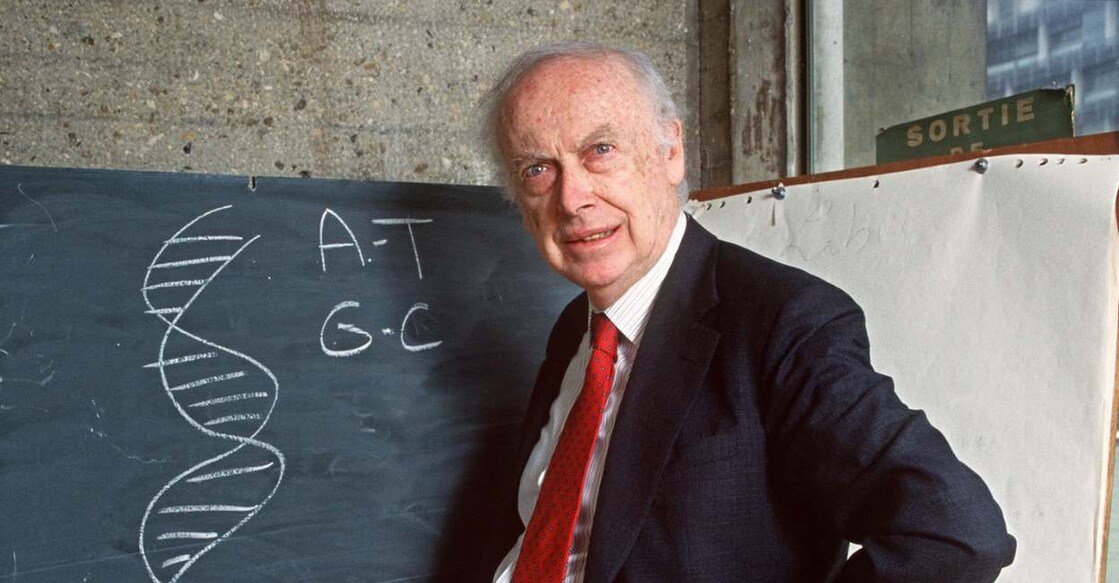
Watson shared the 1962 Nobel Prize with Francis Crick and Maurice Wilkins for discovering that deoxyribonucleic acid, or DNA, is a double helix structure, consisting of two strands that coil around each other to form a structure resembling a long, gently twisting ladder.
This breakthrough immediately revealed how hereditary information is stored and how cells duplicate their DNA during cell division. It begins when the two strands of DNA separate like a zipper.
Even among non-scientists, the double helix would become an instantly recognised symbol of science, appearing in works by Salvador Dalí and on a British postage stamp.
The discovery helped open the door to more recent developments such as tinkering with the genetic makeup of living things, treating disease by inserting genes into patients, identifying human remains and criminal suspects from DNA samples and tracing family trees. But it has also raised a host of ethical questions, such as whether we should alter the body's blueprint for cosmetic reasons or in ways that are transmitted to a person's offspring.
Francis Crick and I made the discovery of the century, that was pretty clear, Watson once said. He later wrote: There was no way we could have foreseen the explosive impact of the double helix on science and society.
Watson never made another lab finding that big. But in the decades that followed, he wrote influential textbooks and a best-selling memoir and helped guide the project to map the human genome. He picked out bright young scientists and helped them. And he used his prestige and contacts to influence science policy.
He gained unwelcome attention in 2007, when the Sunday Times Magazine of London quoted him as saying he was inherently gloomy about the prospects for Africa because all our social policies are based on the assumption that their intelligence is the same as ours, when all the testing says not really. He said that while he hopes everyone is equal, people who have to deal with black employees find this is not true.
He apologised, but after an international furore, he was suspended from his job as chancellor of the prestigious Cold Spring Harbor Laboratory in New York. He retired a week later. He had served in various leadership jobs there for nearly 40 years.
In a television documentary that aired in early 2019, Watson was asked if his views had changed. No, not at all, he said. In response, the Cold Spring Harbour lab revoked several honorary titles it had bestowed on Watson, calling his statements reprehensible and unsupported by science.
Watson's combination of scientific achievement and controversial remarks created a complicated legacy.
He has shown a regrettable tendency toward inflammatory and offensive remarks, especially late in his career, Dr Francis Collins, director of the National Institutes of Health, said in 2019. His outbursts, particularly when they reflected on race, were both profoundly misguided and deeply hurtful. I only wish Jim's views on society and humanity had matched his brilliant scientific insights.
Long before that, Watson scorned political correctness
A goodly number of scientists are not only narrow-minded and dull, but also just stupid, he wrote in The Double Helix, his bestselling 1968 book about the DNA discovery.
For success in science, he wrote: You have to avoid dumb people. ... Never do anything that bores you. ... If you can't stand to be with your real peers (including scientific competitors), get out of science. ... To make a huge success, a scientist has to be prepared to get into deep trouble.
 Add as a preferred source on Google