

Strait of Hormuz to remain shut, Iranian supreme leader calls for defiance
Mail This Article


Tehran: Iran's new supreme leader ordered the vital Strait of Hormuz oil shipping lane to remain closed on Thursday, while US President Donald Trump said stopping the Islamic republic's "evil empire" was more important than crude prices. Following the leader’s order, Iran's Revolutionary Guards vowed on Thursday to keep the strategic Strait of Hormuz closed.
"In response to the order of the commander-in-chief, we will deliver the harshest blows to the aggressor enemy while maintaining the strategy of closing the Strait of Hormuz," said Guards navy commander Alireza Tangsiri in a post on X.
The Strait, through which a fifth of the world's oil and liquefied natural gas (LNG) passes, lies off Iran and is just 54 kilometres (34 miles) wide at its narrowest point.
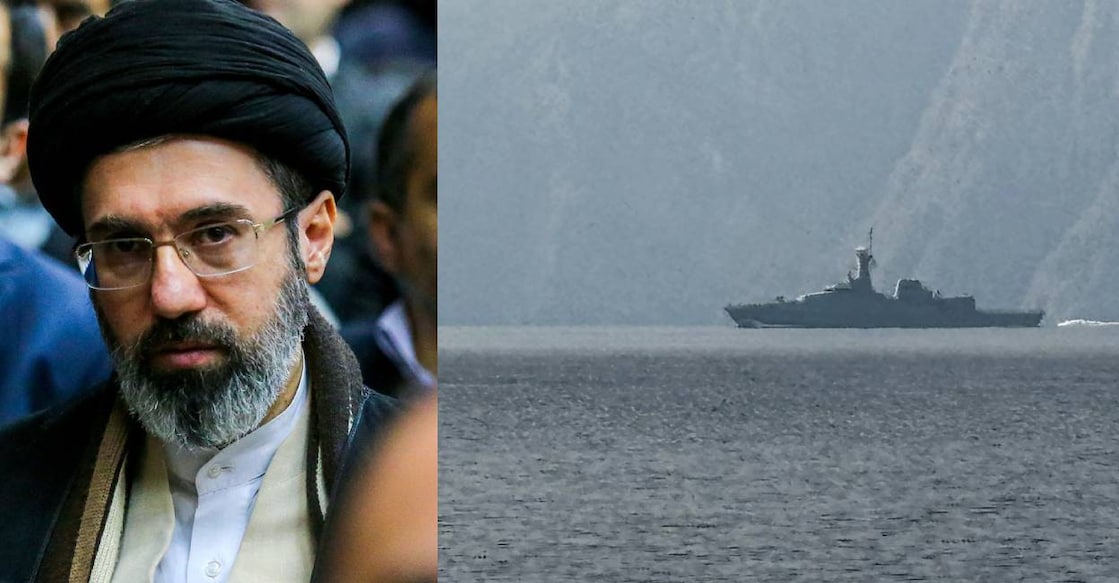
Ayatollah Mojtaba Khamenei, who was reportedly injured in an air strike, has yet to appear publicly since his nomination last Sunday as supreme leader, and his defiant message was read by a newscaster on state television.Khamenei, whose father Ali Khamenei was killed in the first wave of US-Israeli attacks at the start of the Middle East war, called for the Strait of Hormuz to remain blocked and for Gulf countries to close their US military bases.
"The lever of blocking the Strait of Hormuz must definitely be used," Khamenei said of the waterway through which a quarter of world's oil and liquefied natural gas (LNG) usually transit.
He added that "a limited amount of" Iran's revenge for US and Israeli strikes had "taken concrete form, but until it is fully achieved, this case will remain among our priorities."
Iran launched a new wave of attacks against Gulf energy targets on Thursday that sent prices oil spiking briefly above $100 a barrel and led to a warning that the crisis could lead to to "the largest supply disruption" in history. But Trump dismissed growing concerns, writing on social media that "of far greater interest and importance to me, as President, is stoping an evil Empire, Iran, from having Nuclear Weapons, and destroying the Middle East and, indeed, the World."
Shipping in and around the crucial Strait of Hormuz remains at a near-standstill, with another three vessels attacked in the Gulf off the coast of the United Arab Emirates and Iraq.
The Paris-based International Energy Authority, a world authority on energy markets, warned Thursday the 13-day conflict "is creating the largest supply disruption in the history of the global oil market", which would surpass those of the 1970s.
With Gulf states slashing production and oil tankers stuck in the Gulf, benchmark oil prices have risen 40-50 percent since the US and Israel attacked Iran on February 28, threatening to crimp growth and stoke inflation.
A top Iranian military figure warned on March 11 that the country could wage a prolonged war that would "destroy" the world economy. Trump, who is under mounting domestic pressure, ruled out the air campaign ending "immediately" while indicating that US forces were running out of targets to hit.
The conflict has spread across the region, with hundreds killed by Israeli strikes in Lebanon, including at least eight more who died on Beirut's blood-stained seafront where displaced families were camping in tents. After the Iran-backed Hezbollah group announced a new operation against Israel on March 11, Israeli Defence Minister Israel Katz said he was ordering troops to "prepare for expanding" attacks on Lebanon.
In Iran, over three million people have been displaced by the war, according to new figures issued Thursday by the UN's refugee agency.
Israel's military said it had began a new "wide-scale" wave of strikes in Iran on Thursday, including one southeast of Tehran that it said had targeted a site used for developing nuclear weapons.
US forces said they had struck 28 Iranian mine-laying vessels amid fears that Tehran could render the Strait of Hormuz unnavigable. Tehran has vowed that not one litre of oil will be exported from the Gulf while US-Israeli attacks continue, although industry figures suggest its own sanction-hit exports are continuing to get through.
Oil prices have soared past $100 a barrel despite an announcement that leading consumer countries would authorise a record release of their strategic crude reserves in action coordinated by the IEA.
 Add as a preferred source on Google