

World asteroid day: How can humans avoid tragic fate of dinosaurs
Mail This Article


Today is World Asteroid Day. It was on a fine June 30th morning like this in 1908, something really dramatic happened on planet Earth. A big patch of forest on the banks of Tunguska river in Russia vapourised in a flash. Because it was an uninhabited area, luckily there were no direct human casualties. The inhabitants in nearby areas couldn’t fathom what happened! They have never ever seen lakhs of trees burn in a jiffy like this before.
It was many decades later that astrophysicists found that the cause of this massive forest fire incident was of extra-terrestrial origin. It was later understood that it was a small asteroid (about 50 metres) which flattened the whole forest due to its impact with Earth and this is referred to in astronomical history as the ‘Tunguska impact’.
In Dec 2016, the United Nations General Assembly officially declared every 30 June as World Asteroid Day commemorating this Tunguska impact incident. The idea of celebrating this day is to create awareness about threats to Earth from outer space and devise strategies to safeguard our Earth against these risks.
One question astrophysicists often get from politicians in multiple countries is: “Why should we invest in space rocks outside our planet?”
Many astrophysicists often give a reply with a tinge of humour: “Dinosaurs got extinct because they did not invest in the study of space rocks.”
Although this sounds like an answer in jest, it is not far from reality either. About 65 million years back, it was an asteroid of about 10-15 km size which wiped out the whole species of dinosaurs.
If a relatively small asteroid can end a whole civilisation on planet Earth, isn’t this a matter of some concern?
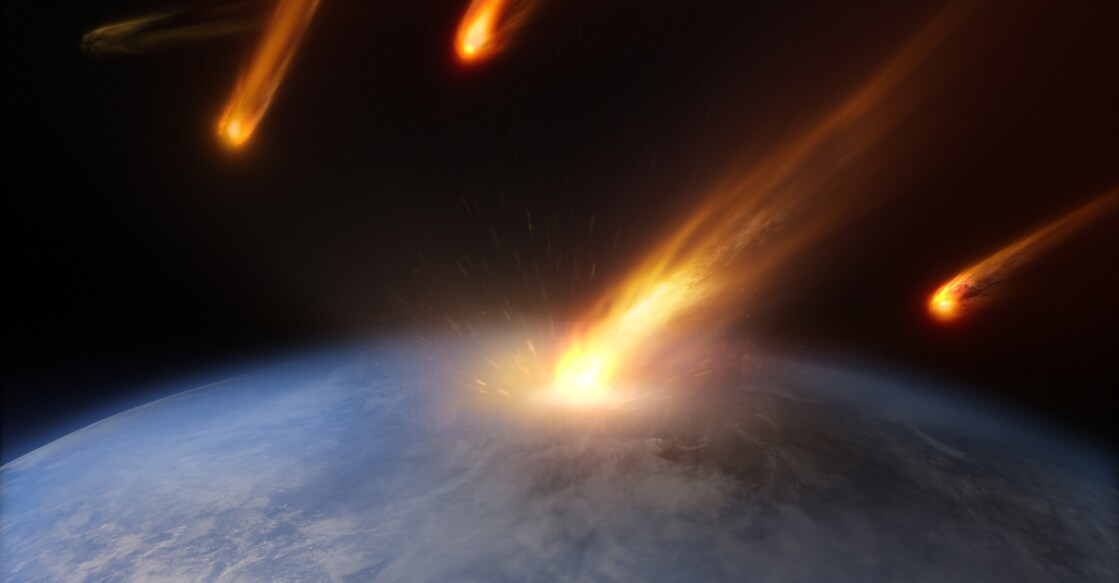
Asteroids and meteors collide and interact with our Earth much more often than we think. Exactly one month back, i.e. on 30 May, a fireball over the Boston skies in America caused some concern. Some people thought it was some missile or bomb due to the global war situation. But very soon, NASA confirmed that it was a large meteor (also called ‘bolide’ technically as per astronomy textbooks and also called a large ‘fireball’ in colloquial terms). Because this small asteroid or large meteor burnt up about 60 km above Earth surface, there were no damages or injuries on ground.
However, a similar fireball incident in 2013 Feb 15 morning in Chelyabinsk region in Russia was not-so peaceful. Although the airburst occurred several kilometres above the ground, the shock waves were so powerful that they shattered hundreds of glass buildings and thousands of humans were hospitalised due to injuries from flying glass.
A large number of similar incidents go unnoticed because some of these happen at sea. Because the surface area of Earth is largely covered by oceans more than land area, there is always greater probability of outer space objects falling into the sea. Such incidents don’t make it to daily headlines or media news.
However, these incidents are a stark reminder that humans need to be careful and mindful about the risks from outer space. It is vital to identify, track and study these potential ‘killer asteroids’. Special telescopes which rapidly scan the skies for such Potentially Hazardous Asteroids (PHAs) are in operation these days.
The PAN-STARRS telescope based at Hawaii islands in America is one of the most efficient telescopes on this matter.
There are also latest space missions which are designed to mitigate risks from such Near Earth Objects (NEOs). The DART Mission of NASA and the HERA Mission of ESA are primarily focused on this objective. The underlying philosophy behind these two missions are the same.
The idea is to carry a small nuclear device on a spacecraft to the potentially dangerous asteroid. Using this nuclear device, a small explosion is created on the target asteroid and because of outgassing and thrust from this nuclear explosion, the path of the asteroid is nudged in such a way that its trajectory changes and misses the initial encounter with Earth.
NASA’s DART mission has been very successful in achieving this goal in 2022. It is a baby step in the direction of human exploration in terms of managing and mitigating risks from future Earth-colliding bodies. ESA’s HERA mission also plans to study this target of the binary asteroid system (Didymos-Dimorphos) by the end of this year (approx Nov 2026).
In future, the modelling from these missions will give us the necessary know-how about managing risks from outer space.
With India’s highly successful Atomic Energy Program and highly successful Space Program, our country also has the capabilities and talent and resources to be leaders in Planetary Defence Programs like NASA and ESA and JAXA. Planetary Defence is one of those rare programs which is a combination of both space power and nuclear power. It is about time that we also invest in this game without much delay.
Modern geopolitics is becoming very transactional and it is increasingly becoming more and more deal based (as we see in the present global war situation). In future, if an asteroid is found on the way to collide with some part of our country, there is no guarantee that other space faring nations will come with a helping hand out of sympathy or pity. The price they ask to help us might be too heavy in terms of geopolitical power games!
Hence being independent and self-sufficient in a well prepared planetary defence system is in the interest of the sovereignty of our nation. World Asteroid Day and the UN's idea of creating awareness about protection and risk mitigation strategies amongst policy makers is a good way to pave the way for our own independent planetary defence program in future. Space rocks!
(The author is the first professional meteor scientist from India)
 Add as a preferred source on Google