

Onmanorama Explains | What's fuelling unrest in Europe?
Mail This Article


Masses across the world have taken to the streets in protest. These movements are far from identical. Some are driven by economic hardship, others by concerns over democracy, corruption, public services or the environment.
For many people, soaring living costs, limited opportunities and a perceived lack of accountability have deepened their distrust of those in power.
Here is a closer look at the protests unfolding across Europe
France: From student protests to widespread unrest
In late September, student protests erupted across France over teacher shortages, overcrowded classrooms, deteriorating school infrastructure and concerns about the quality of education. Students complained that staff shortages and poor facilities were affecting their education and depriving them of valuable learning time.

What began as a movement centred on schools soon intersected with broader public discontent. Demonstrations expanded alongside wider protests against government spending plans, rising living costs and concerns over public services.
Trade unions, including the General Confederation of Labour (CGT), backed calls for higher wages, better pensions and measures to ease the financial burden on households.
The unrest has also unfolded against a backdrop of political uncertainty as President Emmanuel Macron approaches the end of his second term. His government faces mounting pressure to address economic grievances while dealing with growing public dissatisfaction.
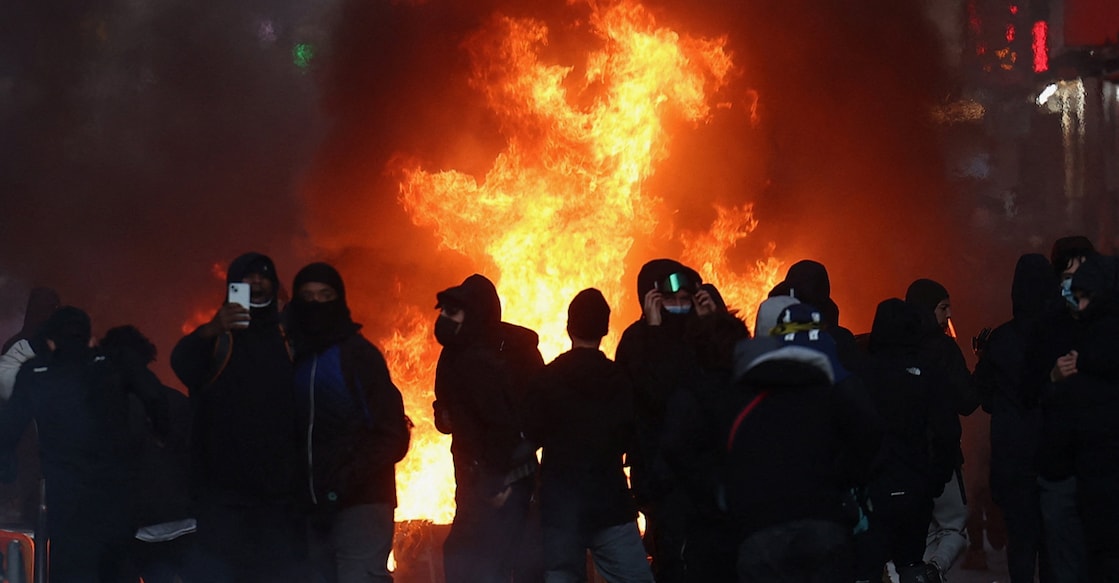
By the end of September, some demonstrations had turned violent, with clashes between protesters and police, vandalism and attacks on public property. Authorities reported hundreds of arrests during the initial phase of the unrest, while subsequent demonstrations saw further violence and arrests.
Macron condemned the violence and called for calm, distinguishing between those exercising their right to protest and those engaging in destruction. The developments have once again highlighted the challenge facing French authorities as economic anxiety spills over into street protests.
Albania: Corruption, education and a controversial development project
In Albania, student-led protests against Prime Minister Edi Rama's government have festered amid longstanding concerns over corruption, unemployment and education standards.
A controversial luxury tourism development linked to Jared Kushner, US President Donald Trump's son-in-law, has added to the anger. The proposed project involves a resort complex in a coastal area of southern Albania, including ecologically sensitive locations.
Critics have raised concerns about environmental damage, transparency and the influence of wealthy investors over the country's development. The project has become a rallying point for those who believe public interests are being sidelined.
The unrest has also drawn on broader dissatisfaction with Rama's administration, which has faced repeated corruption allegations. Protesters have questioned whether the government is doing enough to address employment opportunities, education and the cost of living.
Demonstrations in the capital, Tirana, escalated into clashes with police, who used tear gas and water cannons. Some protesters attacked government buildings and threw objects at security personnel, prompting a forceful response from authorities.
Rama has rejected calls to resign, while the protests have developed into a significant challenge to his government. The unrest illustrates how specific disputes over development projects can become focal points for much wider public grievances.
Spain and Portugal: The housing crisis pushes people onto the streets
For many young people in Spain and Portugal, the housing crisis has become a defining economic concern. Rising rents, expensive property and limited access to affordable homes have made independent living increasingly difficult.
In Portugal, house prices rose sharply between 2015 and 2024, placing considerable pressure on households, particularly in Lisbon and its surrounding metropolitan area. The concentration of employment and services in major cities has added to the challenge for people trying to find affordable accommodation.
Demonstrations have called for stronger public services, better wages and pensions, and measures to rein in housing costs. In Lisbon, protesters have also used camps and tents to draw attention to the difficulty of securing a home.
Spain has witnessed similar anger over rents and evictions. In one case that drew public attention, an 87-year-old woman was evicted after her rent was reportedly increased sharply. Her death after a subsequent hospital admission further intensified public debate over housing insecurity.
Activists have demanded rent reductions, stronger protections against eviction and restrictions on investment funds purchasing residential properties.
Italy: Rising costs and declining public services
Italy has also witnessed demonstrations over the economic pressures facing households. Protests in several cities in October were marked by clashes with police, arrests and reports of injuries.
The demonstrations reflected growing anger over the cost of living and concerns about the quality of public services. The unrest came amid similar tensions in neighbouring France, where economic grievances have fuelled large-scale protests.
Italian Prime Minister Giorgia Meloni condemned the violence and announced a government meeting to discuss the situation.
Belgium: Students protest rising education costs
Belgium has also witnessed student-led protests against rising education costs and reforms that demonstrators fear could make higher education less accessible.
Several hundred people, mostly young protesters, took to the streets of Brussels on Saturday. The demonstrations turned violent, with rioters clashing with police amid unrest partly inspired by protests in neighbouring France.
Demonstrators gathered in central Brussels, many wearing masks and chanting anti-fascist slogans. Belgian Interior Minister Bernard Quintin warned that the situation had gone beyond peaceful protest.
Protests have also taken place in Liege, in eastern Belgium. Earlier this month, students there demonstrated against issues affecting French-language education, including rising costs and difficulties accessing study materials.
The demonstrations highlight growing concerns among students over the affordability and accessibility of education, adding to the wider wave of public discontent seen across parts of Europe.
