

Arigato, Japan: Learning the art of courtesy, one bow at a time
Mail This Article


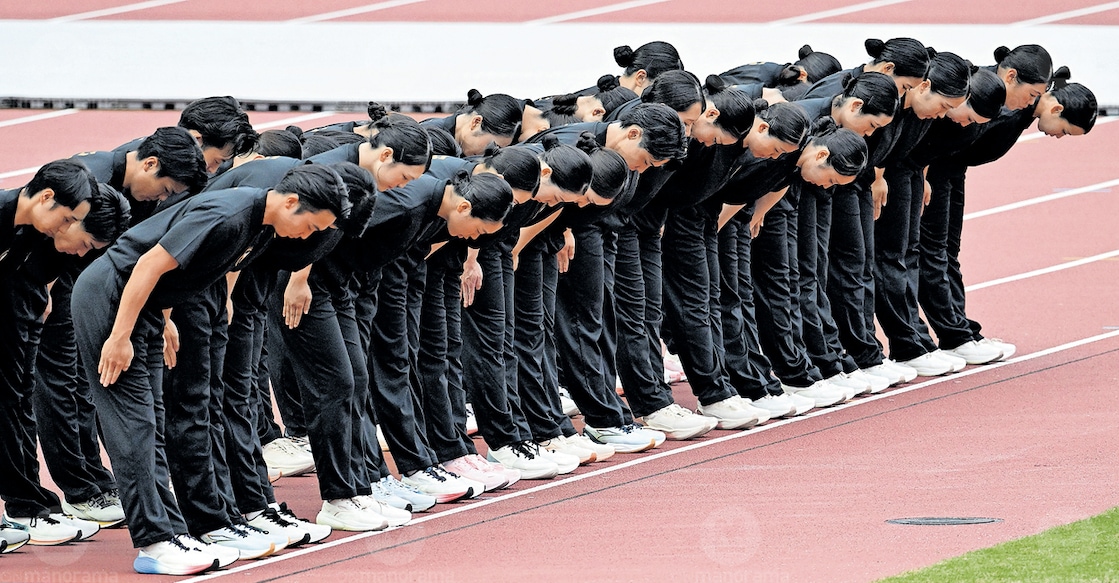
Arigato Gozaimasu! I lost count of how many times I heard this word after arriving in Japan. At first, I didn't know what it meant. By the time I left Japan, I had learned to say it back - 'Arigato Gozaimasu'. In its simplest form, it means thank you. But it's more than just the 'thank you' we typically understand; it's a profound expression of gratitude, conveyed with immense respect, deep humility, and a significant bow.
Officials at the Games venues, volunteers, bus drivers, police officers, shop assistants- everyone I met thanked me. There were times on the sidewalks when I would step aside for oncoming pedestrians, and they would smile, bow their heads, and thank me, leaving me bewildered, wondering why.
My preconceived notion about Japanese people was that they were reserved and kept to themselves, not interacting much with others. But that wasn't the case. While they wouldn't interfere unnecessarily, if assistance was needed, they would step in and help in any way they could.
One day, as I stepped out of my accommodation and was looking for directions to Nagoya Station, a Japanese man appeared right in front of me. I managed to convey what I needed. The single phrase 'Nagoya Station' was enough for him to understand. He introduced himself as Shiruka and walked ahead, with us following behind. He stopped walking in front of the 'L4' subway gate, which led to Nagoya Station. Before we could even thank him, he said, 'Arigato Gozaimasu'. From that day on, the 'L4' subway gate became our daily guide, and each time, we remembered Shiruka.
During the Games, we travelled from venue to venue, often changing multiple trains. To board a train, one had to queue. Driven by our natural instinct, we'd break the queue, trying to push our way in. Immediately, security would rush over. They would politely ask us to join the queue. And once we took our place at the back of the queue, they would smile and say, 'Arigato'.
We heard that 'thank you' countless times from the cashiers at Family Mart and Mini Stop convenience stores, which were open even in the dead of night, when we'd grab something to eat and head back. Even when waiting for a taxi on the road at night, the drivers, often wearing white gloves, would open the automatic door and ask our destination with an unexpected level of courtesy.
That is Japan's hospitality - a renowned courtesy known as 'Omotenashi'. It's a hospitality that anticipates and fulfils guests' needs even before they vocalise them. A hospitality that helps others without expecting anything in return. A hospitality that treats even those you might only meet once in a lifetime with warmth and without any hint of unfamiliarity.
What you should read next

Thank you to Nana Kennedy, who arranged our accommodation in Nagoya even before we arrived for the Games; Miyu from JTB Corporation, who assisted with our travels in Japan; Tatsuya Kaneko and Sayaka Yamada, who guided us through the places of peace in Nagasaki; Amal, the writer who introduced us to friends in Nagoya; VC Anoop from Kannur, who stood by us like a brother in Nagoya, providing unwavering support; Mohammed Luthfi from Koyilandy, who brought us a large platter of Kuzhimanthi when we were hungry. Dear friends, Arigato Gozaimasu.
