

Cheers to the individuals who galvanised Team India to emerge World Champions

Mail This Article


Team sports by definition need all members of the side to perform in coordination to win matches. However, they also leave scope for individual enterprise and exploits to steal match over the collective show. There also exist the rare instances where a burst of brilliance from one player not only overshadows the outputs of others but also acts as an inspiration which propels the side to great heights. These are the stuff of legends where an individual single-handedly decides the fortunes of a game through a superhuman effort and in the process galvanises the entire team to attain what was hitherto considered impossible.
One example of such performance was the knock of Kapil Dev in the 1983 World Cup match against Zimbabwe at Tunbridge Wells where he strode to the wicket with the side reeling at 9 runs for 4 wickets and hit an unbeaten 175. Kapil’s innings not only helped India to win that match; it fired up his colleagues to such an extent that they raised their performance levels by many notches in the subsequent games where India defeated Australia, England and West Indies in the next three games to lift the championship. This fable has been told and retold numerous times in almost all households in India.

Another similar instance is the innings played by Glen Maxwell during the 2023 International Cricket Council (ICC) World Cup when Australia were staring at defeat in their fixture against Afghanistan, having lost 7 wickets for 91 while chasing a target of 292. Maxwell batted like a man possessed to strike an unbeaten 201 to take his side to victory. Australia was a different side after this match as they demolished all opposition that came their way and won the trophy. One can further cite the case of Diego Maradona single-handedly dribbling the ball past the entire England team in the 1986 FIFA World Cup to net an unbelievable goal in the quarter finals. Argentina team played like champions after this and brushed past Belgium in semifinals and Germany in the finals to win the title.
But, like all rules, this one also makes provision for an exception. Harmanpreet Kaur’s stunning knock of 171 in the semifinals of ICC Women’s World Cup of 2017 propelled India into the finals by defeating the highly fancied Australian side. But India could not capitalise on this win when they took on England in the finals of this tournament. After holding the upper hand for most part of the match, they went down narrowly, by a margin of 9 runs, much to the disappointment of their countrymen.
The only reason why the knock of Jemimah Rodriguez in the semifinals against Australia cannot be placed on the same pedestal as the other innings’ mentioned earlier is that this was not an instance where one player carried the entire weight of the side on her shoulders. Skipper Harmanpreet had batted brilliantly to score 89 off 88 balls and was the more dominant partner in the third wicket stand of 167 runs with Jemimah. But it was left to Jemimah to stand firm like a rock after Harmanpreet was dismissed and prevent the middle and lower order collapses that had bogged down the side in the past and guide the team past the winning post. This was not a knock of power and panache, nor did it stand out for flair and flamboyance. Instead, this was an innings of character and courage, where the batter displayed guts and grit to steer the team through a difficult chase against the toughest side in international cricket.
But Jemimah’s innings was unique in that it electrified the entire country in a manner few performances on the sports field have done. The national side had suffered three consecutive defeats in the league stage of the championship and was fortunate to make it to the knock out stage as the fourth team. There were not many who thought that the team possessed the strength and calibre to defeat the Aussies, who had proved that they were a top drawer side by winning all the matches in the first round. And even the few faithful supporters of the home sides would have felt their optimism drain away when Australia posted a total of 337 runs. It was from this pit of despair and despondency that Jemimah resurrected the side and placed them firmly on the path for attaining championship glory.
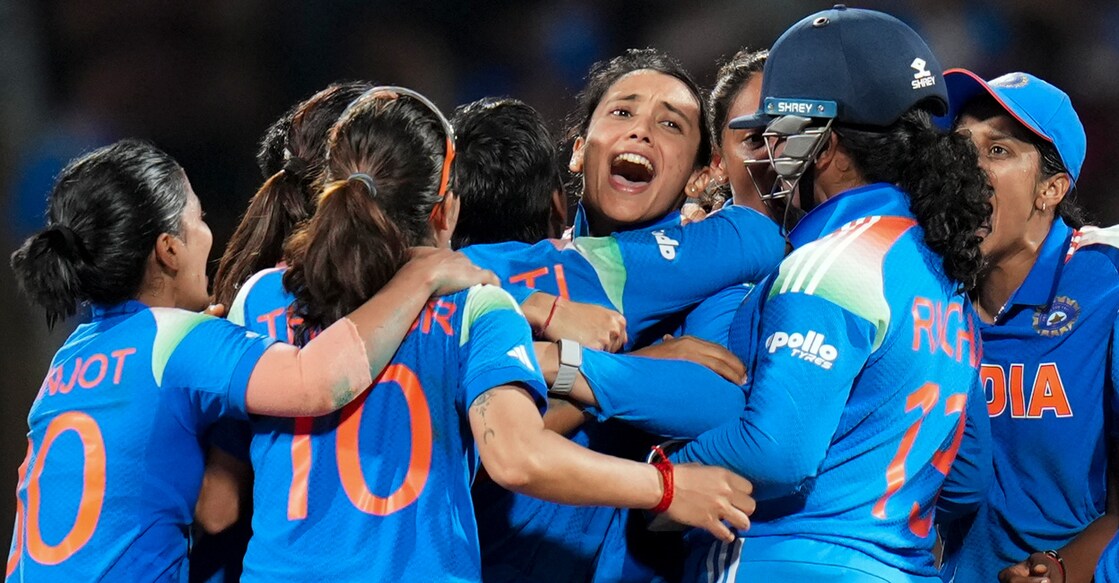
Thus, it was only in the fitness of things that India kept their tryst with this trophy eight years after they came close to winning it. There was a poetic justice in skipper Harmanpreet holding the catch that sealed the 52 run win over South Africa who fought valiantly. She led the side from the front and deserved to be at the helm when the side won its first-ever ICC championship.
One interesting feature of the winning side was that all members were in top form and contributed substantially towards this victory. Smriti Mandhana was solid at the top of the order and Pratika Rawal was also amongst the runs till she suffered the injury that forced her out of the tournament. Harmanpreet, Jemimah and Richa Ghosh held the middle order together while Deepti Sharma and Amanjot Kaur came good with the bat whenever required. On the bowling front, though, Deepti emerged as the highest wicket taker; equal praise is due to Kranti Goud, who improved with each match and Sree Charani, who chipped in with vital wickets regularly. Renuka Singh was the unsung hero with the ball, bowling very economical spells and keeping pressure of the batters. The out cricket of the side improved with each match and it was a pleasure to see the players throwing themselves at the ball and sliding along the boundary line to stop runs in the finals.
The final showed another facet of the glorious uncertainties that cricket is famous for. Shafali Verma was unlucky in not making it to the squad as she suffered a sudden drop in form in the months leading to the championship. But fate willed that she should be the star in the finals and contribute handsomely to the Indian victory. Recalled to the team after the injury to Pratika, Shafali was pitch forked into the playing eleven for the semifinals against Australia, where she could not score much. But, in the finals, she showed her true mettle with a superb knock of 87 and her opening stand of 104 with Smriti set the foundation for the big Indian total. And she came good with the ball as well, picking up two vital wickets when the South African batters looked like seizing the initiative.
One should also mention at this juncture that this championship was a personal triumph for Amol Mazumdar, who coached the side. Mazumdar was one of the best middle-order batsmen in India during the 1990s and was a veritable run machine in the domestic first-class circuit. However, he did not find favour with the national selectors of that time and had to watch from the sidelines even as lesser cricketers were given the opportunities to wear the national colours. But he did not allow this setback to affect him and continued playing domestic cricket diligently to become the second highest run getter in the history of Ranji Trophy. Hence, this victory is also a reward to Mazumdar for his commitment to the game and his contributions to Indian cricket.
Well played, Jemimah! You represent the spirit of new India- robust, resilient and resurgent. Congratulations, Harmanpreet Kaur and the side! You made us feel proud to be Indians.
 Add as a preferred source on Google