

Remembering fearless Roy who made a mockery of Australia’s pace attack

Mail This Article


It is not in dispute that the second half of the 1970s was a period when there existed a significant risk of physical injury for batsmen in international cricket. This was especially so during the years between 1974, when a new breed of superfast speedsters arrived on the horizon, and 1978, by which time the use of helmets and other protective equipment became universal. There were no restrictions on the number of bouncers that could be bowled during an over and, even worse, umpires were extremely reluctant to intervene even in those instances of outright intimidatory bowling. Further, there was no penalty for slow over rates, which allowed fast bowlers to keep bowling unchanged for hours on end.
Batsmen who faced up to the fast bowlers of this era and scored runs fluently have etched their place not only in the history of the game but also in the hearts of cricket lovers of that generation. Standing up to the fast bowlers who sent down the cricket ball at speeds in excess of 90 miles per hour required not only exemplary technique but intense concentration and fierce determination as well. Batsmen also had to take the occasional blows on their bodies, which would have caused severe pain, but had to, per force, suppress the discomfort and continue as if nothing had happened.
The heroics of Gundappa Viswanath during the series against West Indies in 1974-75, when he single-handedly held the Indian batting together by tackling the thunderbolts sent down by Andy Roberts and company is still talked about by followers of the game who were privileged to watch these matches.
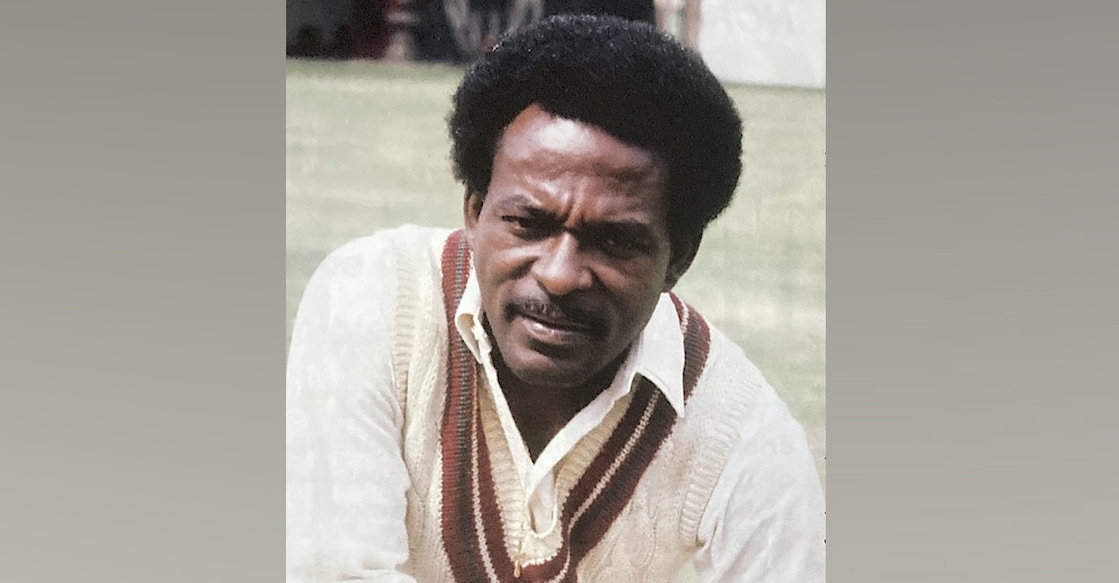
Though many courageous innings’ were played against fast bowlers during this period, the one that has stood the test of time as the most significant amongst these in terms of brilliance and audacity is the knock played by Roy Fredericks of West Indies against Australia at Perth in the second Test of the series in 1975-76. This series between these two sides was a hard-fought one played between the two top sides in cricket of that period and generated a considerable amount of fire on and off the field. Cricket lovers across the world followed the progress of the clash of these two titans eagerly.
Australia was considered as a top Test-playing country of that period and they had thrashed England 4-1 during the previous year. They had a side that boasted of batsmen like Ian and Greg Chappell, Doug Walters, Ian Redpath and Rick McCosker. But their real strength, especially while playing in home conditions, was the fast bowling pair of Dennis Lillee and Jeff Thomson, who were supported by medium pacer Max Walker and off spinner Ashley Mallett. Thomson was the tearaway fast bowler who rattled stumps and broke bones in equal measure with undisguised glee, while Lillee used as much brawn as brain to dismiss batsmen. In Rodney Marsh, they had a wicket keeper who seldom dropped any catches, besides being a useful batsman in the lower middle order.
West Indies, on the other hand, was a team that was in the process of rebuilding after the departure of Gary Sobers and Rohan Kanhai, two all-time great players. Clive Lloyd, their skipper, was a hard-hitting middle-order batsman, and he had with him the experience of Roy Fredericks, Alvin Kallicharan and Lawrence Rowe, besides two new exciting prospects named Viv Richards and Gordon Greenidge. On the bowling front they had Andy Roberts, one of the fastest bowlers in the world, backed up by the medium pace of Keith Boyce and Bernard Julien and the off spin of veteran Lance Gibbs. People were also looking out for Mike Holding, a new fast bowling prospect, who was said to match Roberts in the speed at which he delivered the ball.
Australia won the series opener at Brisbane by a comfortable margin of eight wickets. This Test was played on a pitch which did not lend any extra assistance to the fast bowlers and hence it was not surprising to see the spinners returning with better figures at the end of the match. Thomson was off-colour, picking up only one wicket, while Lillee took three in each innings. The highlight of the game was the fightback by the West Indies in the second innings through gutsy centuries by Kallicharan and Rowe. But Australia reached the last innings target of 219 with ease, losing only two wickets in the process.
Following this, the action shifted to Perth, which, at that time, boasted of having the fastest and bounciest pitch in the world. Both sides packed their sides with fast bowlers, who eagerly looked forward to the prospect of bowling on this wicket. Australia batted first after winning the toss and reached a total of 329, on the strength of a masterly innings of 156 by Ian Chappell. The fact that the next highest score was 45, by Gary Gilmour, stands as evidence as to how much the home side depended on the elder Chappell to shepherd them on a fast-paced wicket.
Australia’s first innings ended about 90 minutes before lunch on the second day. Lillee started the proceedings for the Aussies with a bouncer that sailed above the head of Fredericks. The next delivery also was a bouncer, but this time Fredericks swung on his feet and hooked the ball right out of the ground for a grand sixer! After this scintillating start, Fredericks simply ran amok, smashing the ball to all corners of the ground. When Thomson pitched short, and the ball rose above his shoulder height, Fredrickes leapt upwards and cut and pulled the ball vigorously. On most of these occasions, his feet were airborne at the time the bat made contact with the ball. In the 90 minutes till lunch, Australia bowled just 14 overs (those days Australian overs had 8 deliveries), but Fredericks was in such a murderous mood that the scoreboard had raced to 130 runs in this time. As Ashley Mallett remarked pithily, most of the time was spent in retrieving the ball from the boundary and beyond. It was as if a gale had struck the Aussies who were left astounded by the stupendous strokeplay of Fredericks.
Fredericks continued in the same vein in the post-lunch session also. That this was not an easy pitch to bat on was seen when Kallicharan was struck on his nose by a snorter from Lillee and forced to retire. But neither the pitch nor the pace generated by the Aussie speedsters had any effect on Fredericks, who batted as if he was facing a bunch of club bowlers. His century came off a mere 71 balls but he did not allow this moment of personal glory to undermine his concentration. Australian bowlers ran out of ideas and simply went through the motions, hoping that the batsman would commit some mistake and thus end their agony.
Australians had to wait till Fredericks reached his individual score of 169 before he was dismissed, caught by Greg Chappell, off the bowling of Lillee, with the total score at 258. But, by that time, the Aussies were such a thoroughly dispirited and crestfallen lot that the bowling became easy pickings for skipper Lloyd, who walked in at the fall of the wicket of Fredericks. Lloyd took off from where Fredericks left and took West Indies to a total score of 585. Australia were too shellshocked and went down meekly in the second innings, crumbling to a total score of 169, leaving the visitors winners by a huge margin of an innings and 87 runs.
Though Fredericks is best remembered for this scintillating innings, he was no slam and dash player in the Virender Sehwag mould. He could play the role of a patient run accumulator when the situation demanded, as he did at Edgbaston in the series against England in 1973, when he batted for more than 8 hours to graft 150 invaluable runs. He was one of the best players of the hook shot during that period and a very strong player off the back foot. His career record of 8 centuries in 59 Tests at an average of 42.49 (Total runs scored: 4,334 runs) does not reflect the full impact he had in the Test matches of that period. He was an excellent player of spin bowling as well, as his century against India at Kolkata in the 1974-75 series shows. He played his last Test against Pakistan at Kingston, Jamaica in 1977. He joined the World Series Cricket (WSC) of Kerry Packer after that and did not return to Test cricket once WSC concluded.
After his exit from representative cricket, Fredericks joined politics and became a junior Minister for Youth Affairs and Sports in the ministry of Forbes Burnham in Guyana. An enormously popular person, he was well-liked and respected by the public and had a successful innings in politics and public governance as well. Unfortunately, his life was cut short at the relatively young age of 57 years, when his body succumbed to the ravages brought by cancer.
This week marks the 50th anniversary of 13 December 1974, the day on which Fredericks played the magnificent innings of 169 runs at Perth. On this occasion, it is only proper that cricket lovers doff their caps and say in unison, “Well played, Roy Clinton Fredericks. Rest in Peace”
 Add as a preferred source on Google