

Are pitches the only reason for short-duration Tests?

Mail This Article


The Boxing Day Test at the Melbourne Cricket Ground (MCG) is one of Australia's great cricketing traditions. Five days of cricketing action, commencing on the day after Christmas, are usually watched by close to 100,000 spectators on the ground. Though it creates considerable difficulties for players of the home squad who are forced to leave their families while still in the midst of Christmas celebrations, this custom has lingered, drawing strength from the support extended by the paying public. The popularity of this fixture is evident from the fact that there has not been a single year since the turn of the present century when this match was not part of the international cricket calendar.
Till date, there have been 45 Boxing Day Tests at Melbourne, out of which the hosts emerged victorious on 27 occasions. The fact that they were vanquished only nine times shows that this has been a lucky fixture for them. The remaining nine matches ended in a draw. England have been the opponents on the most occasions, having played 12 Boxing Day Tests, winning and losing five matches each. For the record, India has taken part in 10 such Tests, losing six of them while winning only two.
But the Boxing Day Test of 2025 was unique in that it got over in less than two days. This was the second occasion during the current Ashes series when a Test ended within two days, creating considerable headlines. When the first Test of this series at Perth ended before the close of play on the second day, there were gasps of surprise. As the pitch at Perth enjoys a well-deserved reputation for favouring quick bowlers, given its hard and bouncy nature, not many eyebrows were raised at this unusually fast culmination of the match.

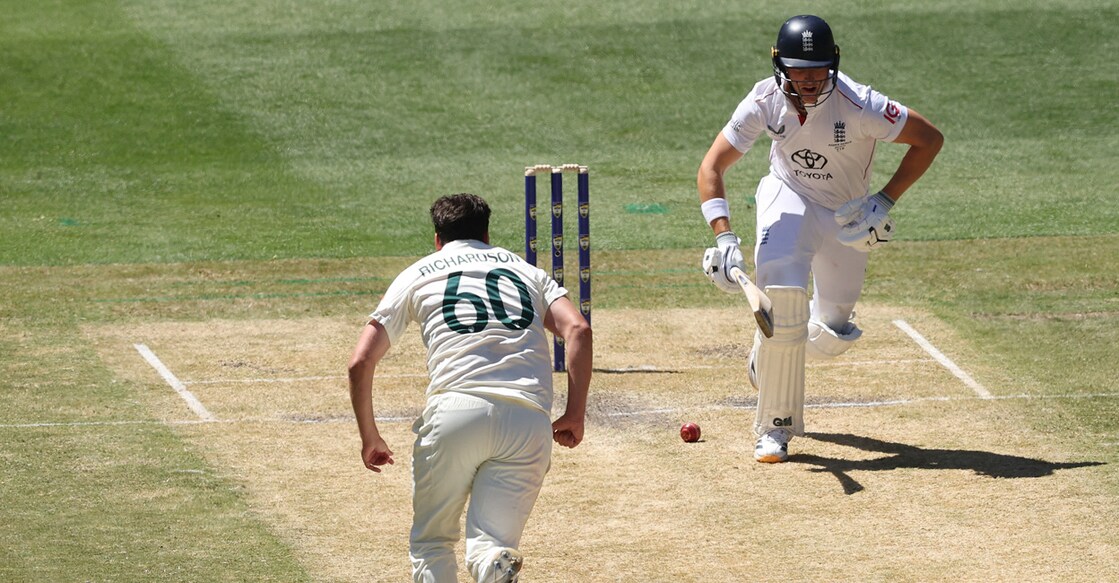
This brings one to the Melbourne Test, which was the fourth match on the ongoing series. Though Australia had won the first three Tests and clinched the series, spectator interest was high with close to 95,000 people turning up on Boxing Day to watch the proceedings. They were in for a shock as wickets started tumbling at regular intervals. A total of 20 wickets fell on day one, when Australia managed to get a 42-run lead over the visitors. But England struck back strongly on the next day and held their nerves while chasing a last innings target of 175, after skittling the hosts for a total of 132 runs in their second outing.
More than the defeat by four wickets, what stunned the followers of the sport in Australia was the rapid end to the game and the poor quality of the cricket on display. There also arose stinging criticism of the groundsman, who was painted as the prime villain responsible for the low-scoring game. The chatter against him was so strident that Cricket Australia took the unusual measure of asking him to meet the Press and explain his side of the story. Thus, Matt Page, curator at MCG and his boss Stuart Fox, the President of Melbourne Cricket Club, met the media on the morning after the match got over.
Page explained that the reason for the bowlers getting extra assistance was due to the extra 3 millimetres of grass that he left on the pitch. He said he usually leaves 7 mm of grass on the surface, which ensures the match produces not just a result but also good, entertaining cricket. The weather forecast had predicted a period of warm days during the match, and he feared that leaving too little grass might cause the pitch to become flat as the game progressed. Page kept the extra millimetres of grass on the pitch in order to counter that possibility of batsmen dominating the proceedings completely during the game. He added that the intention has always been to create a pitch where the battle between the bat and ball are balanced, leading to generation of “captivating cricket”. He also said the pitch preparation at MCG is more difficult than at Sydney and Perth on account of the city’s inconsistent and unpredictable weather patterns.
The two short-duration Tests at Perth and Melbourne brought comparisons with those that took place in India recently. The groundsmen in India were at the receiving end of a huge barrage of criticism when the home side were whitewashed by New Zealand and South Africa. What made matters worse was that the “underprepared” pitches on which these matches were played were specifically made to suit the strengths of the home side. The policy of instructing groundsmen to prepare wickets that favoured spin bowlers, and the low-scoring matches that resulted, also drew adverse comments. Incidentally, none of these matches ended in two days.

A look into the history of the game shows that to date, there have been only 28 Test matches that have ended in less than two days. Twelve of them took place after 2000, while nine had occurred in the 19th century. The 1888-89 cricket season in England was unique in that it saw five Tests that ended before the close of play on the second day. Incidentally, there were no matches of less than two days duration in the period between 1946 and 2000. Only two of the above 28 Tests took place in India.
Thus, it is evident that two-day Tests are more the exception than the norm, and two of them taking place in the same series constitute an extreme event. The usual practice is to point fingers at the pitches and groundsmen for low-scoring and short-duration matches. But the fact that there were no such Tests during the 54 years since 1946 shows that such wickets are not the sole reason for this development. While there is no doubt that pitches that give an undue advantage to the bowlers are responsible, at least in a small part, for this phenomenon, the fall in quality of batsmanship is also to blame for the repeated incidence of such episodes in recent years.
It is not in dispute that the advent of limited-overs cricket has injected an element of thrill and excitement into the game. This has also led to the creation of a new genre of strokes, which will cause the coaches of yore to turn in their graves. The increased inflow of money into the game has improved players' and associations' finances and helped upgrade the sport's infrastructure. But, the focus on maximising revenue from the game has led to the formulation of new rules and regulations, which favour the batsmen. The overwhelming dependence of high-quality protective equipment has improved the confidence of batsmen to such an extent that they freely skirt with danger and attempt outrageous strokes, feeling fully secure within the armour worn by them.
Taken together, the above developments have contributed towards a gradual loosening of technique amongst the batsmen globally. Some notable exceptions apart, it is difficult to find batsmen who possess the technique and temperament to play long innings’ on pitches that offer help to the bowlers. Until the 1990s, batsmen who prospered on placid wickets were scorned and labelled “flat track bullies,” and they were soon sorted out by the bowlers.
In other words, before the turn of the present century, it was impossible to succeed in the tough and demanding world of international cricket without possessing exemplary technique. But, with the passage of time as T20 cricket started offering more fame and fortune than the other formats, innovation and improvisation became the focus of batsmen rather than technical purity. Hence, one seldom sees a batsman capable of grinding down the bowling with tight defence and monumental patience. The mind-boggling hurry to play strokes and an inability to stay defensive at the wicket for long periods lie at the root of the repeated failures to score runs on pitches that favour bowlers even the slightest bit.
To sum up, the blame does not always lie on the groundsmen if a Test match gets over within two days. The weather conditions, the demands made by the home side and the skill sets of the batsmen and bowlers are all important factors in deciding the duration of a match. Groundsmen are the easiest target available as they offer a convenient face to pelt eggs at, a facility which is used liberally by the critics. But it should be remembered that he is only one amongst the many cogs in the wheel that ensures proper conduct of a match and should not be pilloried for the inadequacies of other stakeholders.
 Add as a preferred source on Google