

The buds of Kashmir: Domestic cricket compensating for India’s long-lost competitive edge
Mail This Article


The week that went by saw the national Men’s cricket side simultaneously play two versions of the game by fielding two different teams. While the T20 squad under Shreyas Iyer returned home with the gold medal in the Asian Games currently underway in Japan, the Shubman Gill-led side defeated West Indies in a One Day International (ODI) series held at home. The Women’s side too chipped in handsomely winning the pole position in the Asiad, thus ensuring that India won both gold medals in cricket in this sports extravaganza.
However, the series against West Indies also threw up some uncomfortable questions for India. Though the series even saw India chase a target in excess of 400 in the second ODI with utmost ease and win the match with 39 balls to spare, West Indies turned the tables in the last game by comfortably chasing a target of 352 runs. All matches were played on featherbeds where the batsmen made merry, while bowlers returned with miserable figures. One interesting aspect of this series was that all matches were won by the team batting second. In other words, the pitches were so flat and easy that no total was defendable as West Indies showed in the last ODI. Double hundreds, centuries and other individual batting achievements tend to lose their lustre and become mere statistical figures when matches are played in these conditions where the bat completely dominates the ball.
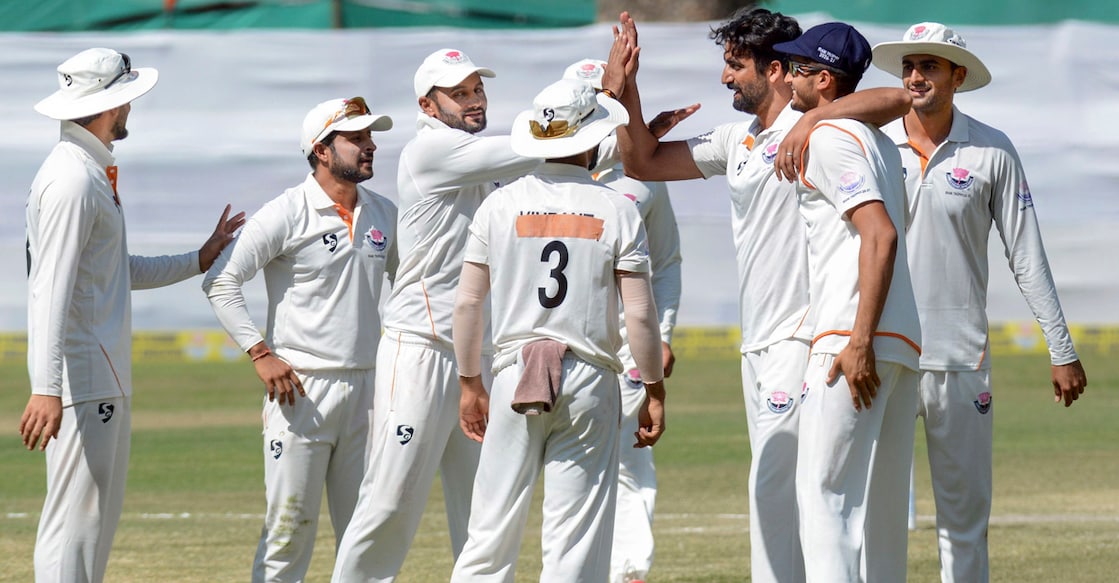
In the midst of these high scoring ODI’s and the glitter of the Asian Games, the average cricket fan in the country could be forgiven for not following the proceedings that took place at Srinagar, where Jammu and Kashmir (J&K), the current Ranji Trophy champions took on Rest of India, led by Rishabh Pant, in the Irani Trophy championship. Though neither side boasted of the presence of any stars, with the exception of Pant, the game produced not only exciting cricket but also threw up excellent performances by talented players. The cricketers from both sides grabbed with both hands the opportunities provided by this game and proceeded to put up inspired performances that raised the quality of cricket on offer.
Though the result shows that J&K lost the match by a margin of 167 runs, the Ranji champion can take pride from the fact that they fought well and held the upper hand till the last session of the third day. One of the main factors that helped J&K in their maiden Ranji Trophy conquest last season was the brilliant performance of fast bowler Aaqib Nabi, who picked up 60 wickets in the championship. This earned Nabi a call to the national side, with the result that he was not available for this match since he was in the ODI squad playing against West Indies. Hence it was only natural that observers harboured grave apprehensions about the ability of the side to put up a good fight against the Rest of India team.
However, these sceptics were in for a great shock as J&K found capable substitutes for Nabi in Sunil Kumar and Lone Nasir. Sunil, a lanky left arm medium pacer, made his first-class debut in November 2025, but grew in stature as the season progressed and ended with 31 wickets to his credit. As a left-arm bowler, the natural angle at which he approaches the crease and delivers the ball ensures that his stock delivery is the out swinger to the right hand batsman. However, he added the in-swinging delivery to his repertoire, thus growing into a complete medium pace bowler. His ability to move the ball both ways and to extract late swing kept the batsmen guessing and helped him finish with a haul of 6 wickets for 82 runs in the this match.
Lone Nasir, on the other hand, fancies himself as a fast bowler, who can let it rip. He had an inauspicious entry to the world of first-class cricket during the 2024-25, when he remained wicketless after three matches, leading to loss of place in the squad. He got his chance again in the Irani Trophy outing solely on account of Nabi proceeding on national duty. Drafted into the playing eleven at the last minute, he took a wicket with his second ball and troubled batsmen with his pace to return with figure of 3 wickets for 59 runs off 13 overs in the Rest of India first innings. He followed this up with a cameo with the bat, striking a quick-fire 64 off 58 balls, which helped J&K to gain the lead in the first innings.
A little-known fact about Sunil and Nasir is that neither of them hails from a place with good infrastructure for pursuing a career in cricket. Sunil belongs to Akhnoor, located 35 kilometres from Jammu and took to red ball cricket only 10 years ago. Nasir, on the other hand, belongs to Bandipora and had to commute 60 kms everyday to Srinagar, to be able to bowl in the nets. It is a tribute to their determination and fortitude that the duo were able to surmount the difficulties posed by insurgency and logistics and make their mark on the national stage.
The success of Sunil and Nasir will inspire more youngsters to take up the game in the remote villages of J&K. An important page in the history of this state and Indian cricket was written in 2014 when Parvez Rasool donned the national colours and played in an ODI. Parvez, who came from Bijbehera in Anantnag district in Kashmir valley, was an outstanding performer in domestic cricket circuit and turned out for J&K for 15 years from 2008. The fact that Parvez, Sunil and Nasir hail from districts that were the hotbed of insurgency till not too long ago underlines their passion and commitment to the game as well as the capacity of cricket to act as an important instrument in the process of national integration.
From the Rest of India, three players utilised this opportunity to remind the selectors about their ability. The first was Ravichandran Smaran, the 22-year-old left handed middle order batsman from Karnataka, who had topped the list of run scorers in Ranji Trophy last season with a tally of 950 runs. He followed his elegant 68 in the first innings with a polished century (135) in the second knock, which helped Rest of India to recover from 197 for 8 wickets to a final score of 319. This was also a sweet revenge for him as he had failed to open his account in the Ranji Trophy final, where his team ended up second best to J&K. Smaran is certainly test match material as he displays a healthy appetite for runs besides possessing an excellent temperament. He can turn out to be the answer that the selectors are looking for to fill the void in the middle order of the national side in red ball cricket and needs to be encouraged with more opportunities.
Veteran Mukesh Kumar continued the good form that he had shown in Duleep Trophy matches by picking 8 wickets in this game. Bowling consistently at a speed close to 135 kilometres per hour, Mukesh struck the correct line and length and helped himself to a bag of wickets in the J&K second innings. One hopes that selectors take note of these performances and reward him with a berth in the national side.
Another cricketer from Rest of India who made his mark was Mukesh Choudhary, the hard working left-arm medium pacer from Rajasthan, as he used this occasion to showcase his comeback from injury by bowling with fire and venom. At 30, he is no spring chicken and has been playing first-class cricket for close to 10 years. The zeal with which he bowled through the match was heartening to see and one hopes that he gets the just reward for his hard work and dedication.
What you should read next

The final word about this Irani Trophy match should be about Skipper Paras Dogra, the 41 year old veteran who showed that he still had plenty of cricket left in him by leading the J&K side with panache. With more than 10000 first-class runs under his belt in 25 seasons, Dogra would have been pardoned had he chosen to call it a day after the Ranji Trophy triumph last season. Though he does not stand any reasonable chance of getting a call from the national selectors, he still turns out for his side, realising that his presence at the helm is important to guide the youngsters at this level. He continues to contribute handsomely with the bat, as seen from his knock of 75 in the first innings, besides leading astutely on the field.
It was Dogra’s first ball dismissal in the second innings that opened the floodgates and led to J&K getting bundled out for a low final innings total. Indian cricket owes a lot to old warhorses like Dogra who have kept the flag of first-class cricket flying high, even as the superstars who gained in fame and riches from the game chose to leave the heat and dust of the playing field and sought the comforts away from it.
Well played J&K! You won the hearts of the followers of the game by your lionhearted performance!
