

My days with an Apartheid man in South Africa
Mail This Article


I met Tom (name changed) on my first visit to Africa over 25 years back. I had taken a bus from Cape Town to George, a small city some 400 kilometers away, via the exhilaratingly beautiful Garden Route on the Indian Ocean coast. I walked into the lobby of the Backpackers’ Hostel in George to find the reception empty and two white men and a couple of white youth watching TV in the lobby. One of the men told me the manager had gone to the bank and I could take a seat and wait for him. I did that.
After a while the other man asked me, ‘Where are you from? England or the US?’
I thought this was a peculiar question because there was nothing in me that would even distantly connect me to these two western countries.
I replied factually that I was from India but had arrived from the US – I’d flown in from New York to Johannesburg. He chewed on that.
Then he said, ‘If you’re from India, you should be going to Durban. That’s where all the Indians are.’
I said I didn’t know anyone in Durban.

‘Go there. Meet them,’ he repeated.
It was clear he was trying to provoke me. I replied that I was a tourist and a writer and I had other plans. I noticed that the others, talking in Afrikaans, were trying to stop him from needling me. He was silent for some time.
Then he asked, ‘Is it true that in India monkeys enter human habitats and create problems?’
I said it happened some times in some places. He considered that for a while.
Then he asked, ‘Is it because India is overpopulated that such large numbers of people die in train accidents?’
I matter-of-factly and briefly told him the conditions under which Indian railways worked, as if I didn’t understand the sting behind his question.
He was silent.
Then he asked, ‘Why are India and Pakistan fighting? Can’t you just give up Kashmir?’
If he expected the patriot in me to come out screaming it didn’t happen. I told him that the Kashmir issue had a long history behind it and a solution – if any – wasn’t simple.
Again, there was silence.
Then he asked, ‘Why are India and Pakistan playing with nuclear weapons? What’ll happen if nuclear bombs fell upon large populations like yours?’
I agreed if that happened it would be bad. It was self-evident.
My tormentor seemed lost.
Then he shifted track. He said, ‘Hey, if you go to Durban you can eat hot Indian curry. There are only three types of curry there: very hot, hotter, hottest.’
I said I would certainly enjoy that because I loved hot curry. Probably Durban’s hottest wouldn’t be anywhere near the hot curry I was used to.
‘Did you ever taste curry in South Africa?’ he asked.
I said I had it in an Indian restaurant called Passage to India in Cape Town and it was even better than what I get in India.
He was now completely at a loss. But he recovered and changed track again.
Pointing to the South Africa-England cricket match playing on the TV he said, ‘England is playing cricket with us. Do you know, one day the English will have to pay a price for all that they did to us in South Africa. We were a great country. What has it been reduced to!’
Suddenly it dawned on me what Tom was. He was a true-blood Boer – now called Afrikaner. They were the Dutch colonisers of South Africa who lost power to the British in the Boer War (1899-1902). South Africa became a dominion of the British Empire and remained so till it declared unilateral independence from Britain in 1961. It was the Afrikaner white minority rule in South Africa that created the notorious Apartheid system of social segregation of whites and blacks. How their regime came to an end after the struggle led by the African National Congress and Nelson Mandela is now history.
I could see that Tom the Afrikaner was, for some reason, opening up to me, an utter stranger. Maybe he liked the way I refused to be incited by his questions or the simple fact I was a writer. Soon, the manager returned and I checked into my room. As I was going out to get food Tom called out to me, ‘Hey, remember to hand over all money on you without protest when they point a gun at you!’ That was a sardonic comment on the state of affairs in South Africa under President Thabo Mbeki who succeeded Nelson Mandela. But it was also absolutely true. Coming from Cape Town, I too knew that crime ruled the streets.

It was only 7 pm but the streets were near-deserted. As I went looking for an open shop, a young boy came up to me and said ‘Give me money. I’m hungry.’ His one hand was inside his pullover. Then I noticed something sticking out like a gun under his pullover, pointing at me. I could not make out if it was his finger or a real gun. I just told him, ‘I’ve no money on me. I’m only a tourist. Please go away. Or I’ll call the police.’ Tom’s jocular warning had become reality. But in my panic, everything I was saying and doing was against the advice he gave. The boy stared at me and then said, ‘You can go free.’ He then ran off to join his two friends waiting on the other side of the road. I was so disturbed I gave up my food mission and returned to the Hostel.
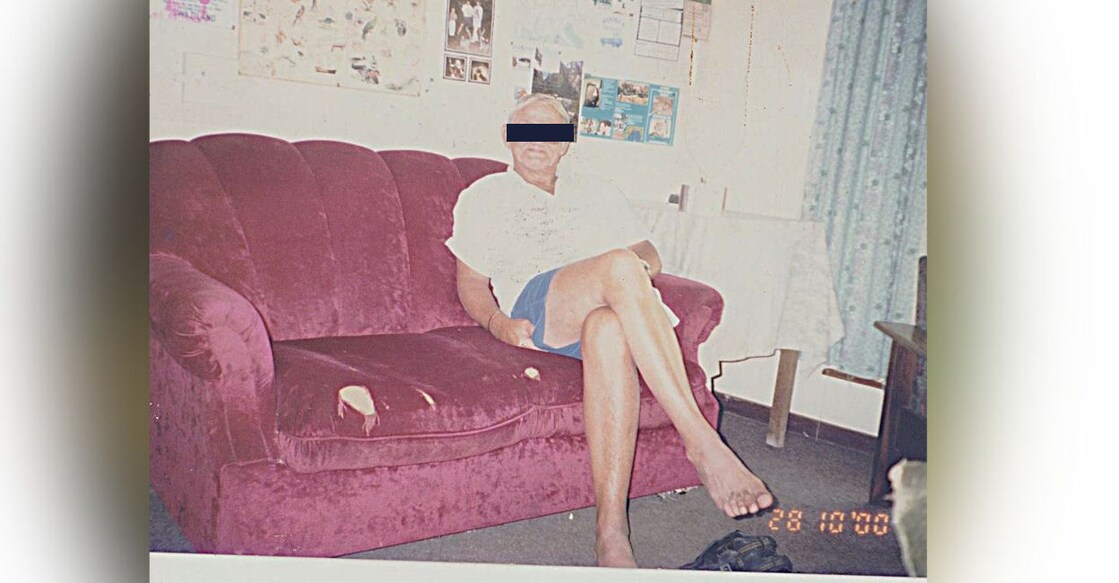
I was in George to visit the famous Kango caves in the Swartberg mountains, about 90 kilometers away. In the few days I spent there, Tom conversed with me often. We became friends. A room in the Hostel was his home. He stood six feet plus, was powerfully built, and looked a soldier every inch, which he had been. He was perhaps in his fifties and had an impassive look which deepened when he put on sun glasses. He wore the standard attire of the African white: shorts and cotton half-sleeves. I was the first ‘original’ Indian he had met and he wished to know about India and about being a writer, and I wished to know his Afrikaner mind. He took me for long walks along the beautiful country paths around George. And we talked.
He passionately believed that the white dominion of Africa was right and Apartheid was fully justified. He belonged to the Dutch Reformed Church which was the mainstay of white supremacy, the slave trade, and the Apartheid. Like the Church Tom too quoted the Bible – the Old Testament - to support his racist beliefs. For example, Deuteronomy 7:3-4, which calls for total elimination of ‘other’ races and Leviticus 19:19 which prohibits even crossbreeding of animals and plants. It was a shock to discover the extent to which religion had shaped white racism in Africa.
Politically, Tom’s most dreadful enemy was communism. He couldn’t believe I came from a communist-leaning society and his curiosity was endless. He was immensely proud about Apartheid. The streets were spick and span in the Apartheid days, he said, and there was no crime. Everything functioned perfectly. But he admitted that the white regime had overplayed Apartheid. The segregationist restrictions, he said, shouldn’t have been so harsh and the black people should’ve been given some sort of representation in the government.
He asserted that Africa’s black people were, as a race, lazy. It was the white who had made them work and created an economy and an organized society. He was bitter about the black regime in South Africa. He said it was corrupt and inept. He reeled off a list of public services they had rendered useless including the public bus transport system and the railway. He had an interesting view of how African politicians drained the treasury. He said the stealing politicians believed no one would notice if a few millions were gone from the treasury’s immense funds. But all of them thought the same way and kept stealing, and now there was no money even to steal! I did not contest any of his views because my business was to listen. He must’ve thought I was a philosopher.
A second or third generation European born and brought up in South Africa, Tom had never been to Europe – in fact never outside the African continent at all. He was a mechanical engineer who took up a short service commission in the army and joined South Africa’s wars against Mozambique, Angola and Zimbabwe - countries that supported the anti-Apartheid movement. Johannesburg was where he sought pleasure: women and gambling.
He made a lot of money from gambling by using a technique which was, according to him, his own invention. In those days real coins were used in the casinos’ slot-machines. He froze coins in the refrigerator for a few days before playing the machines with them and, he claimed, they gave him big wins. He didn’t explain the science, if any, behind this magical formula. When the army engagement ended, he retired to George and has been leading a quiet life – except for an occasional romp to Johannesburg.
Tom confessed to me how he used to break the Apartheid rules himself even though he was its staunch defender! It was a serious crime for a white man to have relations with a black woman. Tom said he would jump the barbed wire fence that surrounded the black peoples’ enclave to join an African, Indian or Malay girlfriend. ‘Great days!’ he laughed. I remembered Zambia’s former president Kenneth Kaunda’s words: ‘When the white man sleeps with the black woman, he has no Apartheid.’
He also told me some striking things about his own existential crisis. ‘I too am a son of this soil. My people have been here for 350 years. I did not ask Bartolomeu Dias to anchor his ship at Mossel Bay. (Bartolomeu Dias, the Portuguese explorer, was the first European to round the southernmost tip of Africa, the present-day Cape of Good Hope, in 1488. He had briefly landed in what is today’s Mossel Bay. – PZ.) I did not ask my forbearers to settle down here. I’m as much a child of this land as the black people. The prosperity they enjoy is part of my hard labor too. Where are they asking me to go? And they’re destroying my fine country before my eyes.’
I could imagine how, even if Tom went to Europe, he would be a tragic misfit there.
The day came for me to leave for Umtata, the village where Mandela was born and where he then lived a retired life. As I was taking my leave, Tom suddenly went to his room and came holding something in his hand. Laying a hand on my shoulder he said, ‘Paul, give me an Indian coin for good luck.’ I was taken aback. Tom the white supremacist was seeking good luck from an Indian and his rupee! I rummaged in my backpack, found a one-Rupee coin and gave it to him. He gave me what he had in his hand: a one-Rand coin. ‘Good luck!’ he said.
I doubt if he’ll ever read this but I would like him to know that I believe that the Rand he gave me brought me lots of good luck. I still have it in my wallet. And I also like to imagine that the Rupee coin I gave brought him lots of luck too. Sometimes I even think that the Rand he gave me might take me back to him one day. I’ll be happy to meet him again and start a new conversation.
 Add as a preferred source on Google