

Traveller, do not miss Kashi
Mail This Article


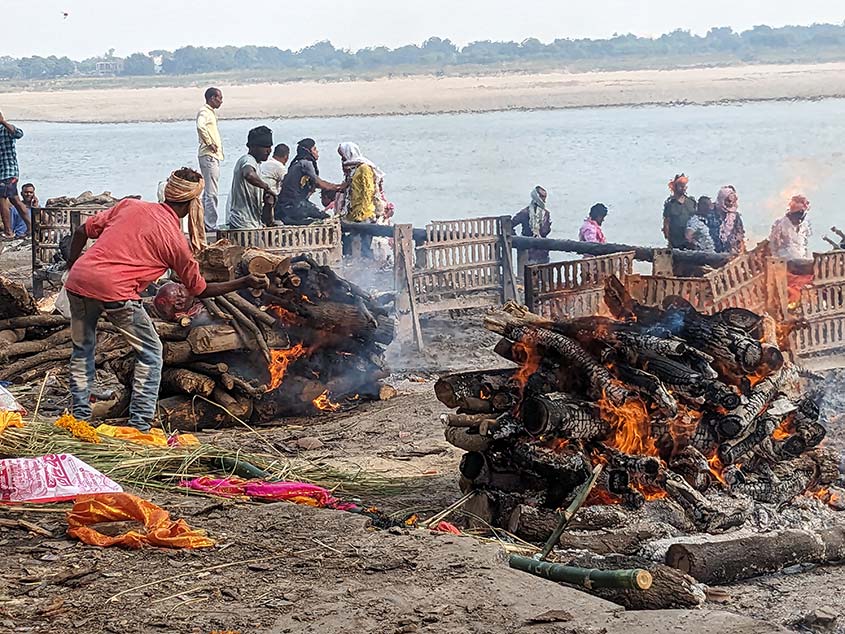
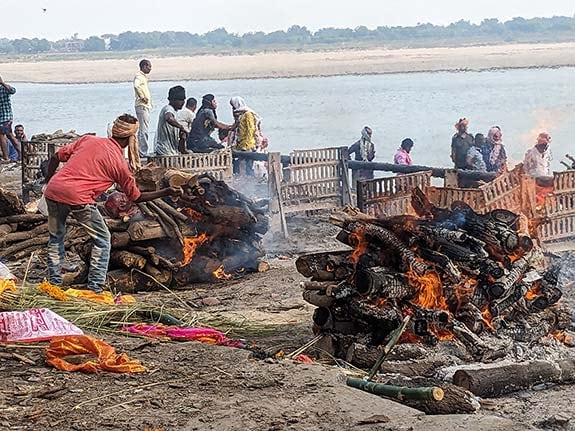
Here’s a tip from me to the reader, as one traveller to another: do not ever miss Kashi, aka Varanasi, aka Banares, as you travel around India or the world. I’ve been to Kashi several times. Kashi is an experience by itself. Kashi’s magic is in simple things: the river; the ghats and the Indian people who throng there as if it’s their own home; and the bustling, friendly city. If you’re on a spiritual quest, you will feel at home there. The busy ghats offer you a special kind of solitude. If you’re looking just for peace and quiet, you’ll get them in abundance on the riverbank. Peace surrounds those crowded ghats in a mysterious way. If you’re looking for excitement, the town will give you endless small pleasures, from tasty food to shops that sell interesting local things like Banaras silk, jewellry, handloom textiles. The famous burning ghats, where bodies burn all day and night, will astound you. They don’t seem to belong to this world. You see westerners sitting in meditation there and relatives of the dead waiting patiently for the turn of their departed one, all enveloped in the smoke from the burning pyres. And the teaseller is busy amongst them. As also the samosawallah.
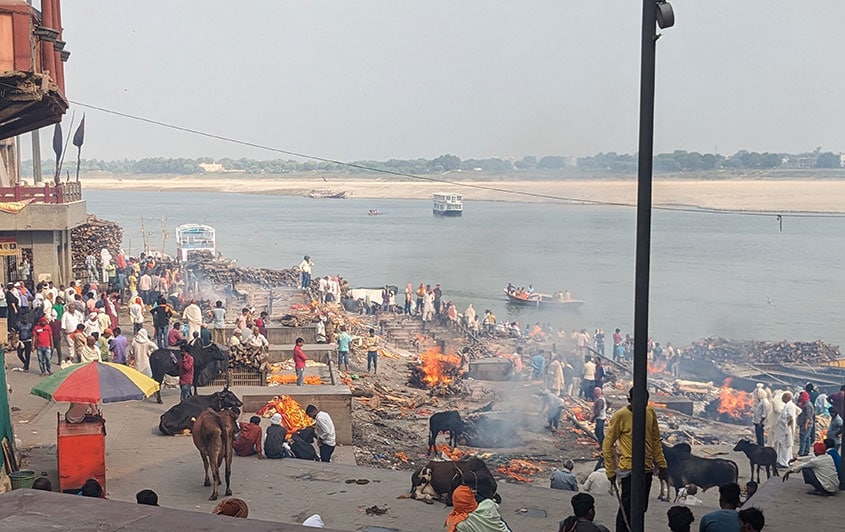
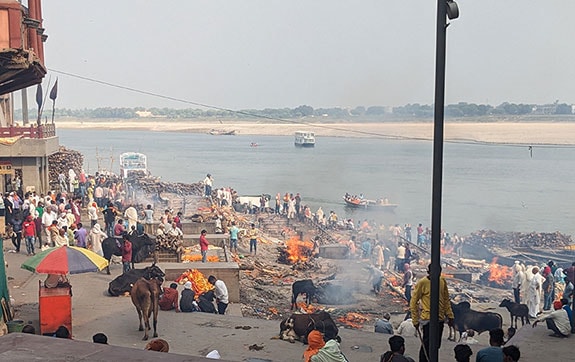
Cows and goats who wander about nibbling the leaves and flowers adorning the bodies placed on the ground to await their turn, give you no respect. They even push you out of their way when a new bier comes in, and they want to get to it first. Cremating the dead is a job like any other here, except that here it’s a 24/7/365 occupation. It is life’s finale in the raw. There are no frills, no whitewashing. The way the body ends is on show without any disguise.
A friend of mine, who is a monk and who first took me around the ghats at Kashi, told me an interesting story as we stood at Manikarnika ghat watching some seven or eight pyres burning simultaneously. He pointed to a building overlooking the ghat and said it was there that he underwent part of his monk-training. He and his companions lived in that building. The smoke from the pyres was, of course, a constant presence in their living quarters. That was nothing. As they sat in the dining room eating their sparse food, ash would blow in through the windows and settle on it. My friend said in the beginning, he had found it hard to keep eating. Then he realised he would die of hunger if he didn’t eat because he had no money to buy food elsewhere.
So, he learned to blow on the ashes just as a meaningless formality – they never got blown away – and eat his fill. It was one of his early lessons in Vedanta! He then took me into the centre of the burning ground with the pyres blazing around us. The heat was unbelievable. It seemed to gnaw at me with burning fingers. I rushed out. But that moment will remain imprinted in my memory as something beyond my understanding. It wasn’t supernatural; it was like being on an alien planet.
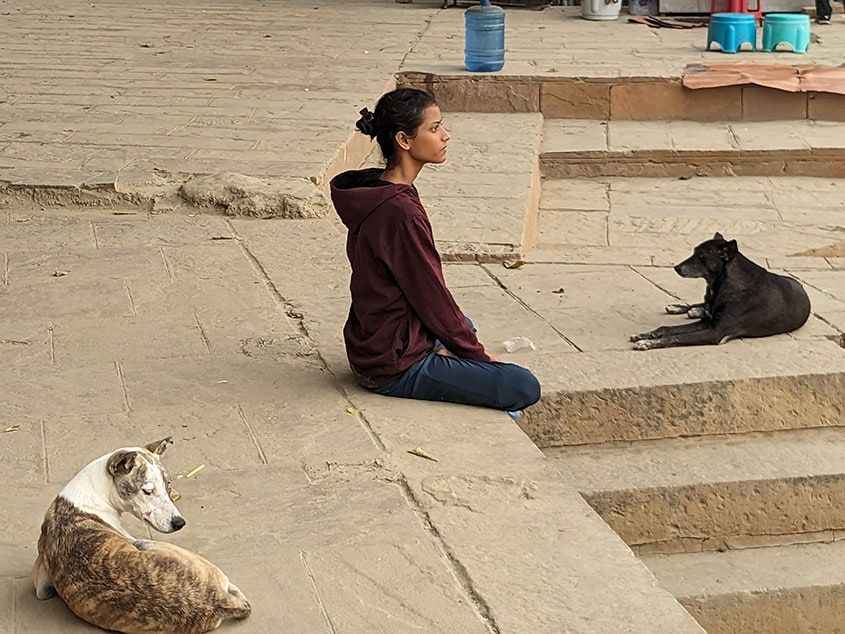
The faith that draws millions of people to Kashi is astounding in its steadfastness. No questions asked. No doubts raised. It’s not just the belief that the Ganges can wash away your sins. According to Hindu spiritual tradition, anyone who dies within the holy precincts of Kashi attains heaven instantly. Even cremating the body there or immersing the ashes in the river can bestow heaven. No wonder the Manikarnika ghat and the Harishchandra ghat, the major cremation grounds, work around the clock, and you’re in the queue at all times of the day and night.
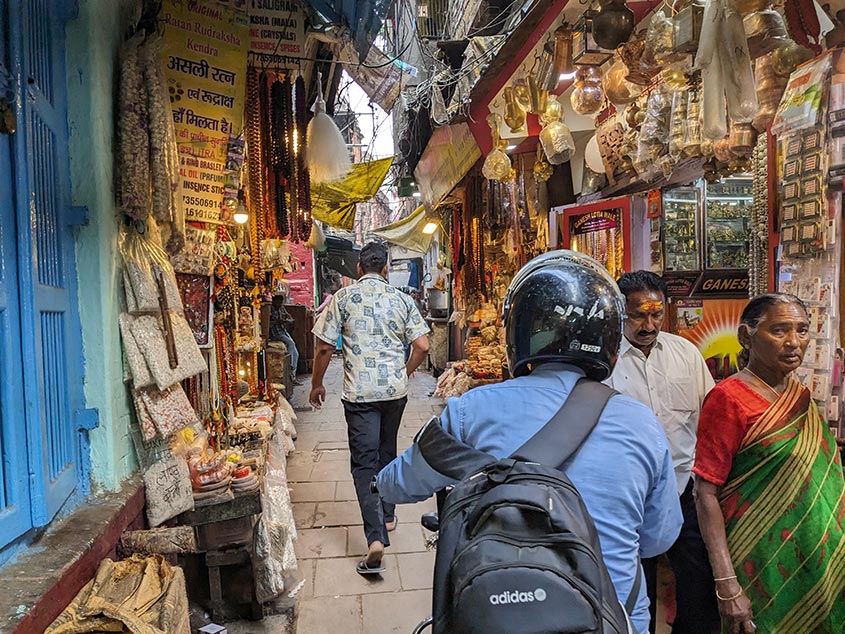
In the famous Bengali novel ‘Arogya Niketan’ by Tarasankar Bandyopadhyay, the traditional healer Jiban Moshay teases grumbling old patients, saying they should stop wanting to live forever and proceed to Kashi and peacefully await death there. I love Jiban Moshay, but I do not agree with him that Kashi is a place to await death. Of course, what he meant was that, as mentioned above, Kashi is a good place to die because you’re assured heaven. On the one hand, it is a lively town where life in all its ordinariness flowers and thrives, and where you can eat, drink and be merry like anywhere else. Religion does not sit on you like a weight. Food in general is excellent – including that of the pavement food carts - and you will find many charming things and bargains in the shops that fill the narrow, crowded streets. On the other, as you enter the world of the ghats along the Ganges you’re in another universe. It is the Kashi of faith; Kashi of the ordinary Indian and her simple faith. For a relaxed and curious traveller, Kashi is an amazing place to explore and experience. Limiting the experience of Kashi to its religious nature alone is a great injustice to the place and to ourselves.
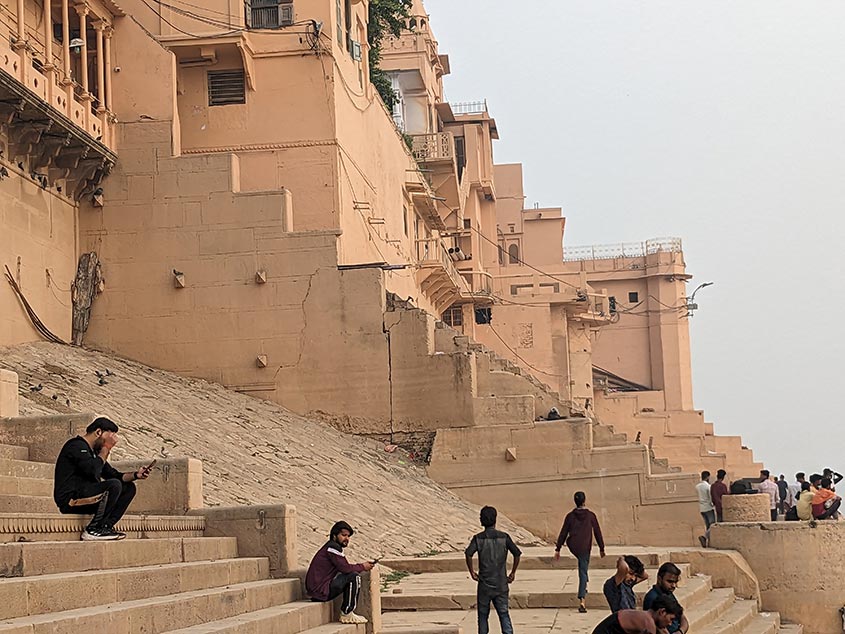
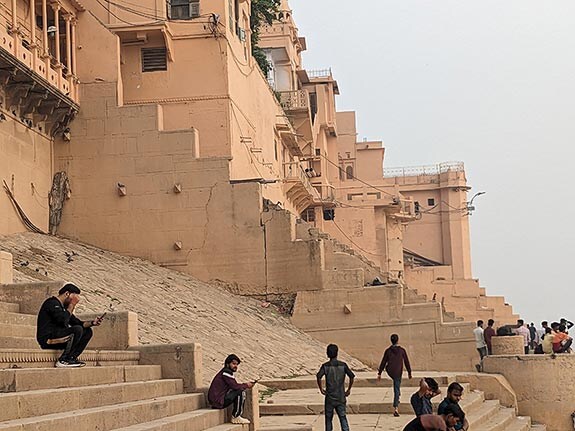
Getting to know Kashi depends on why and how you’re there. If you’re in Kashi solely to perform a religious ceremony and make a quick retreat, chances are that you will miss the marvellous experience of Kashi and the ghats. If you’re there as a member of a tour group, it’s almost certain that you’ll end up with an offering to the river Ganga, a quick visit to the Viswanatha temple, a few photos of yourself at the ghats, and altogether miss the immemorial Kashi that awaits the patient traveller. Of course, even a group tour has its benefits: you would've at least had a cursory glimpse of Kashi. But it would be almost like seeing the Taj Mahal from a passing bus.
But for those who would spare a couple of days for a place that is known to be one of the oldest human habitats in the world and has been, for millennia, holy to millions of Indians, Kashi opens a wondrous door. The ghats of the river Ganga at Kashi possess a holiness and homeliness of their own, hallowed by the millions and trillions of footfalls that have echoed there for at least 3000 years. Women and men of great spiritual heights walk there just as the commonest of common believers. Kings and conquerors have walked on that shore, as also wanderers and the homeless. It’s on the ghats that you come face to face with the magic of Kashi.
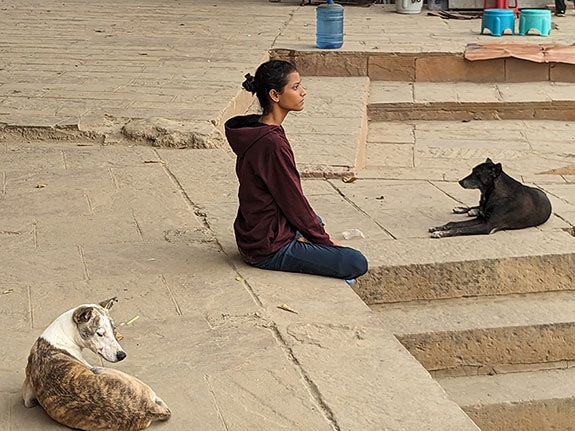
The ghats line the western bank of the Ganges for about 7 to 8 kilometres at a continuous stretch. They begin with the Assi ghat at the south and end with the Adi Keshav ghat (Raj ghat) in the north. I would like to mention that an early-morning walk along the ghats, end to end, is my favourite Kashi experience. The ghats are only waking up. Sleepers on the stone floor of the ghats are still fast asleep. Boatmen are brushing their teeth. You walk by women and men who are in meditation – ordinary people, not sadhus. Even the dogs, who are legitimate citizens of the ghats and friends of visitors, are mostly asleep, except for a few who sit around the meditators as if to give them company. Along the way, you see the sun rising, with a soft golden glow, over the other shore of the Ganges. I must point out here to the intending traveller that you must never miss the panoramic, breathtaking view of the ghats from the river. Do hire a boat and go out there. It’s a magnificent experience.
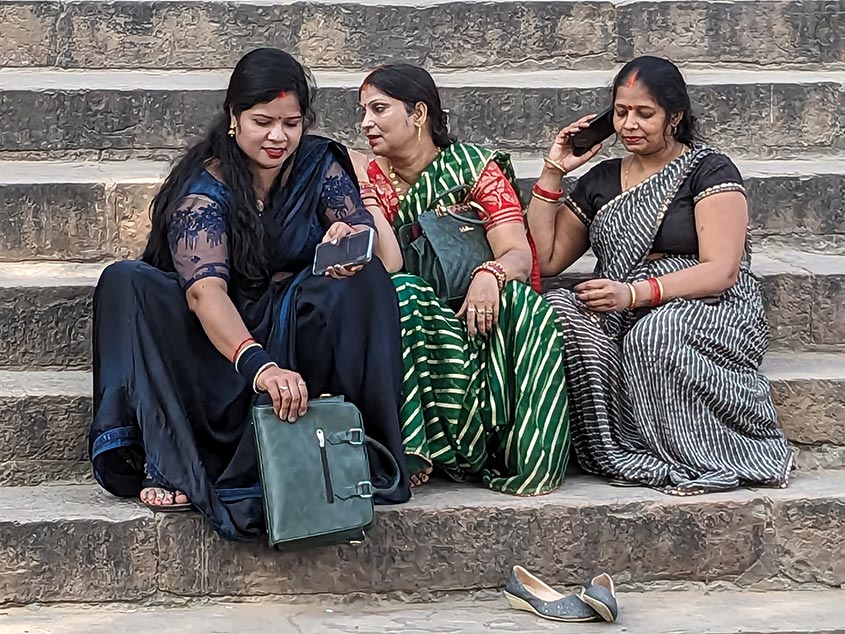
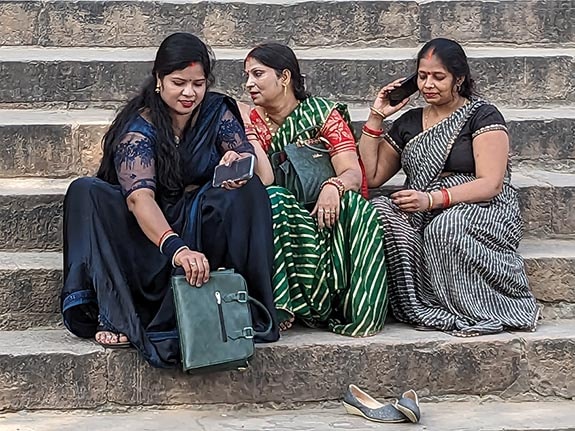
As you return, the whole ghat has come alive. Pilgrims are sitting on the steps, chatting, laughing, grabbing frolicking children and drinking tea. Some are washing clothes while talking to those seated on the steps. Old people are helped to sit on the steps. Some sing bhajans, clapping their hands, thoroughly enjoying themselves. Those who take a dip rise from the water with their palms joined together in prayer. The local bathers are matter-of-fact, finding their space amongst the pilgrims, busily soaping themselves and quickly leaving. They have jobs to do. Sometimes a body floats by. But the people are here to worship Ganga-ji. Not to be shocked by what she carries in her bosom. She has been flowing for 30,000 years, after all. For the people, it’s an endless happy hour. By the time they’re ready to do the poojas they came to do, it’s noon. Time to open the lunch packets!
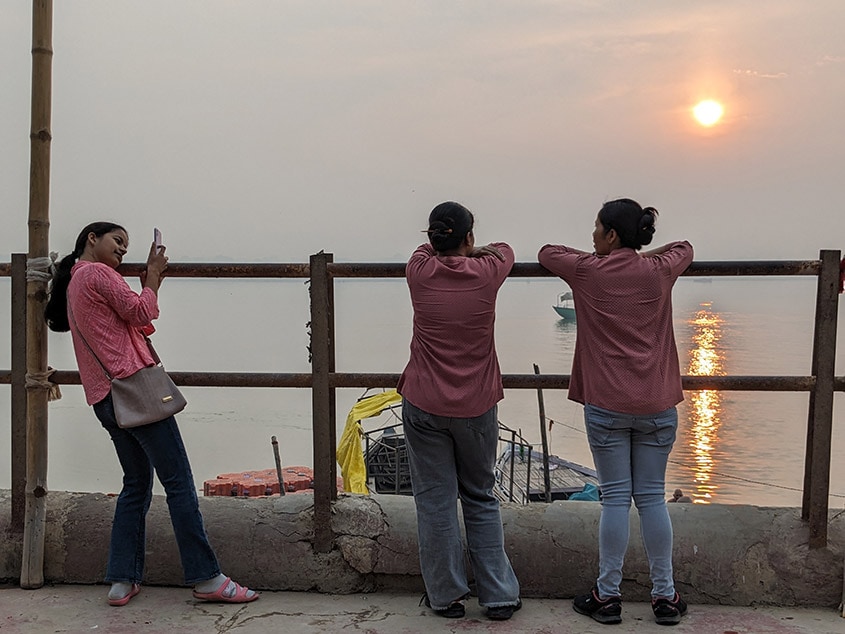
What struck me as exceptional – I hope it always remains so – is that Ganga offers them the joy of freeing themselves and their ancestors from sins absolutely with no strings attached. Ganga lies open, without any barricades, inviting you to take that great dip. She doesn’t charge you a penny. Whether you pay a priest for prayers is up to you. There’s no one counting how many minutes you stayed in the water cleansing your sins. No one shoos you away for overstaying. Hard to find such a holy place in India. Kashi’s magic is that it’s a confluence of people. It’s a great democratic territory. I don’t remember seeing a policeman or security man on the ghats. For me, this enchanting experience of free-flowing humanity is Kashi. Posters do appear calling for a ban on people other than those belonging to a particular faith from entering the ghats. Let’s hope such a joyless thing will not happen. The Ganges is a river of the Indian people. May it remain so
 Add as a preferred source on Google