

Osu Kannon: A Japanese temple, which survived World War, and has an Indian connection
Mail This Article


The tranquil atmosphere, mesmerising architecture and mystic chanting that flows like a river of peace are what welcome you to the iconic Osu Kannon Buddhist temple in Nagoya, Japan. Nana, whom I met in Nagoya, was the one who urged me to visit the Osu Kannon temple, one of Japan’s most famous landmarks. Osu Kannon is not just a Buddhist temple but a place of history that celebrates the unique cultural heritage of the country.
The Osu Kannon temple was originally built in Gifu province in the 14th century. However, the frequent floods in the province caused damage to the structure. So, in 1612, the Osu Kannon temple was moved to Nagoya province.

The Indian connection
The wooden figurine of Kannon, the Goddess of Mercy, is the main idol in the temple. The legends say that Goddess Kannon is the female incarnation of Avalokiteshvara, the God of Mercy who originated in India. The God, popularly known as Lokeshwar or Lokanar Eswaran, is an embodiment of mercy and compassion.
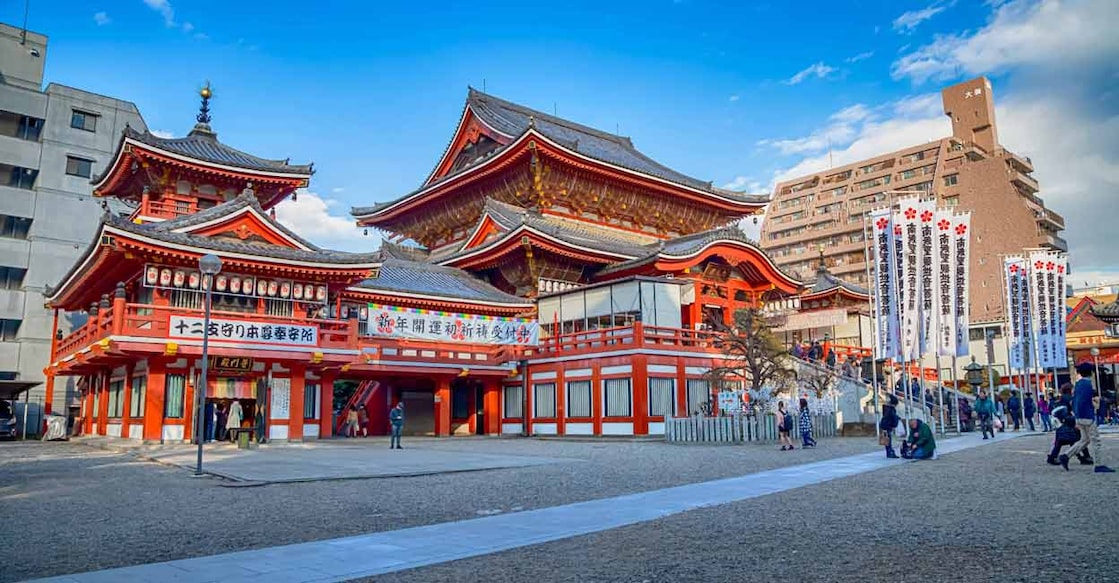
The Osu Kannon temple stands out for its prominent crimson colour that strikes a fabulous contrast with the beautiful nature around. Feeding the pigeons is a popular activity here as children stand in the temple courtyard with grains in their hands and pigeons gather around them.
Meanwhile, the wooden Kannon statue at Osu Kannon temple is said to be carved by Kobo Daishi, the founder of Japanese Shingon Buddhism. Visitors often pay their respects to the statue of the great monk erected on the temple premises.
Surviving World War II
Devotees spray water on their bodies to cleanse themselves before entering the main gate of the temple. The Goddess of Mercy stands gracefully in the middle of the lotus flower in the main prayer hall. The sweet aroma of incense adds a mystic charm to the serene atmosphere. The temple was destroyed by US bombing raids on Nagoya during World War II. However, the wooden statue of Kannon survived the bombing and was found undamaged. The present red building of the temple was reconstructed in 1970. Interestingly, the Shinpukuji Library, known for housing rare manuscripts and Japanese and Chinese texts, is located beneath the main hall of the Osu Kannon temple.
Osu Kannon Temple is a major pilgrimage centre for Japanese Buddhist as they seek refuge at the feet of the Goddess of Mercy. They believe that Goddess Kannon will show mercy on them and take away all their miseries.
