

Kerala's Varkala cliff on UNESCO's World Heritage for India tentative list: Details
Mail This Article


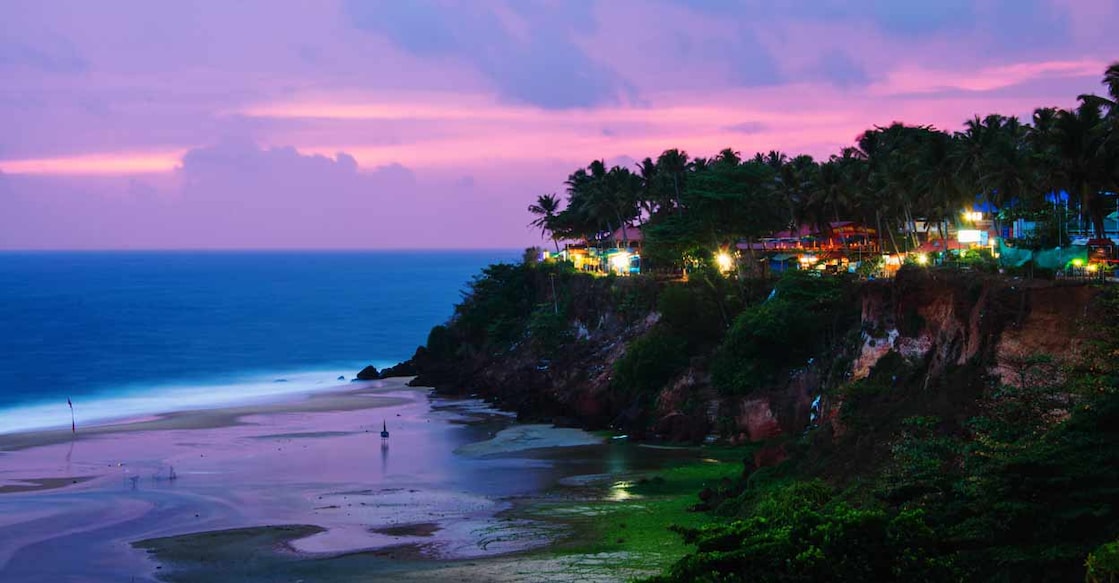
The Varkala Cliff in Kerala, a unique geographical formation that faces the Arabian Sea, has been added to the Tentative List of UNESCO's World Heritage Sites for India. The formation, which dates back to the Tertiary period (about 2.6 million years ago according to Britannica), has evidence of tectonic changes, age-old sediment depositions and marine regressions, alongside ancient lignite seams, trace fossils and more. As for tourism, visitors love to check out the sunrise and sunset here, enjoying a leisurely walk adjacent to the cafes and shops on the cliff. With the cliffs getting a prestigious spot on the tentative list, the popular tourism spot is expected to get a lot more attention in the coming days.
The other properties from India on the list are Deccan Traps at Panchgani, Mahabaleshwar in Maharashtra, Natural Heritage of Tirumala Hills in Andhra Pradesh, Geological Heritage of St Mary's Island Cluster (Udupi, Kamataka), Meghalayan Age Caves (East Khasi Hills, Meghalaya), Erra Matti Dibbalu (Visakhapatnam, Andhra Pradesh), Natural Heritage of Tirumala Hills (Tirupati, Andhra Pradesh) and Naga Hill Ophiolite (Kiphire, Nagaland). With these, a total of 69 properties are now on the tentative list. Alongside Varkala, 16 others are under the 'Natural' category, 49 are on 'Cultural', and three are under the 'Mixed' category.

What's special about the cliff?
The Varkala Cliff has three sections - North, South and Edava Cliffs and is 6.4 km long in total. Such a landscape can't be seen anywhere else in Kerala, and it is already named a 'Geo Heritage Site' by the Central Geological Programming Board (Such 94 sites exist in total, in India). The cliff is a fragile structure and is in danger due to the humid climate of the region and monsoons. Earlier, in a conversation with Onmanorama, Geological Survey of India Deputy Director General V Ambili said, "The weight mounted on the cliff should be reduced. Further constructions should be avoided. At least 600 m from the cliff's edge should be made activity-free."
 Add as a preferred source on Google