

'Sitaare Zameen Par' is not the spiritual sequel to 'Taare Zameen Par' and why that’s okay

Mail This Article


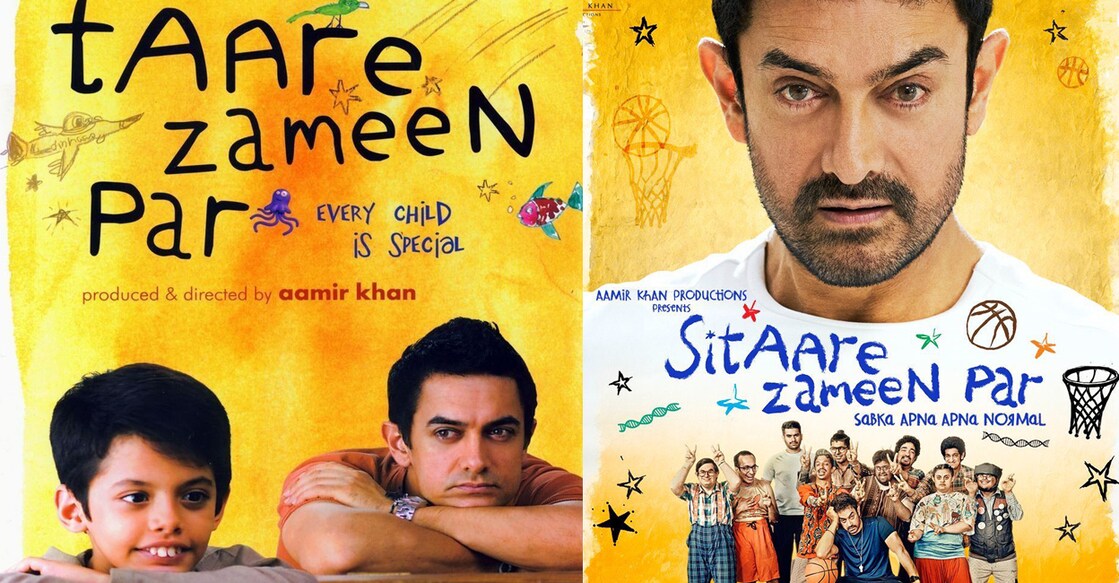
It’s hard to forget the emotional weight of 'Taare Zameen Par'. When it released in 2007, Aamir Khan’s directorial debut didn’t just move audiences, it made them introspect. It asked urgent questions about childhood, education, parenting, and what happens to those who don’t neatly fit the mould. At the centre of this story was Ishaan Awasthi, a dyslexic child played with genuine vulnerability by Darsheel Safary. His world of confusion, misunderstood behaviour, and silent suffering was rendered with a rare kind of empathy, one that didn’t rush to fix him, but instead invited us to understand him.
Enter Ram Shankar Nikumbh (played by Khan), the compassionate art teacher who sees what others don’t. He doesn’t save Ishaan with grand gestures; he simply listens, observes, and gently nudges him toward self-belief. The film’s emotional resonance came not from dramatic conflict, but from its quiet insistence that every child is special, even if the world can’t see it yet.
Now, cut to 'Sitaare Zameen Par', a film widely touted as the spiritual sequel to the original. Directed by R.S. Prasanna and once again starring Aamir Khan, this time as a basketball coach who is sentenced to coach a team of youth with intellectual disabilities, the film takes an entirely different approach. It’s warm, optimistic, occasionally funny, and very much a feel-good movie. But is it a spiritual continuation of what 'Taare Zameen Par' set in motion? Not quite. And that distinction matters.
From the inside out vs. The outside looking in
What made 'Taare Zameen Par' revolutionary was its choice of perspective. The first half of the film lives inside Ishaan’s head. We see the world through his eyes, hear the sounds he hears, get lost in the same chaos he does. The narrative doesn’t explain him to us, it lets us feel what it’s like to be him. It’s only in the second half, through Nikumbh, that the outside world begins to catch up.

'Sitaare Zameen Par', by contrast, keeps us outside. The story unfolds through Gulshan Arora’s arc, a man seeking redemption through court-mandated community service. The children he coaches remain at a distance: they’re symbols of resilience and innocence, yes, but they’re never given the same inner complexity or screen time to truly breathe as characters. The emotional gaze of the film is not inward, but observational.
The comfort of formula
Another key difference lies in the storytelling itself. 'Taare Zameen Par' was structurally unconventional: slow, immersive, and emotionally layered. It resisted the temptation to offer easy catharsis. 'Sitaare Zameen Par', on the other hand, is narratively safe. It follows a tried-and-tested arc: flawed adult meets youth with intellectual disabilities, learns life lessons, and changes for the better. There’s little narrative conflict, few surprises, and very little risk.
The result is a film that feels good, but only on the surface. It’s comforting, like a cinematic warm hug. But that comfort is also what limits its impact. 'Taare Zameen Par' wasn’t comforting. It was unsettling in the best way. It forced the viewer to sit with discomfort, to think about their own role in a system that fails children like Ishaan. It didn’t just tell a story. It asked hard questions.
Emotional depth vs Emotional cues
The emotional architecture of 'Taare Zameen Par' was meticulous. Every moment, be it a silent stare, a school punishment, or a scribble in a notebook was charged with meaning. It invited empathy rather than demanding it. In 'Sitaare Zameen Par', the emotions are present, but more conventional. The tearjerker moments are there, but they feel somewhat expected, designed to stir rather than reveal.
It’s not that the emotions don’t land. They do. But they don’t linger. You leave 'Sitaare Zameen Par' feeling uplifted, but not necessarily changed. 'Taare Zameen Par left you gutted' and then quietly rebuilt you.
Themes that challenge vs. Themes that reassure
At its core, 'Taare Zameen Par' was as much about society as it was about one boy. It took aim at our education system, our parenting culture, our obsession with excellence. It held a mirror up to the audience and asked, “Are you part of the problem?” It was a film about one child, but really, it was about all of us.
'Sitaare Zameen Par' gestures at inclusion and acceptance, but it doesn’t interrogate the systems that marginalize people with intellectual disabilities. Its message is one of kindness and visibility, but not critique. And while that’s not inherently bad, it is a different objective. It wants to inspire, not provoke. It wants to affirm, not question. And that’s why it ultimately feels like a thematic cousin, not a spiritual successor.
So, what is 'Sitaare Zameen Par'?
'Sitaare Zameen Par' is a sweet, sincere, well-intentioned film that shines a light on a group rarely represented in mainstream cinema. It’s warm, engaging, and delivers a positive message. But let’s not call it a spiritual sequel to 'Taare Zameen Par'. That film was lightning in a bottle—unflinching, poetic, and deeply personal. It didn’t just make us feel; it made us uncomfortable in the best way. It didn’t just tell us a child’s story, it asked us to change how we see every child.
And that’s a spiritual journey 'Sitaare Zameen Par' doesn’t quite embark on.
 Add as a preferred source on Google