

'Param Sundari' row: 'Thekkapetta Sundari' angers viewers, but Bollywood is not alone in misrepresenting cultures

Mail This Article


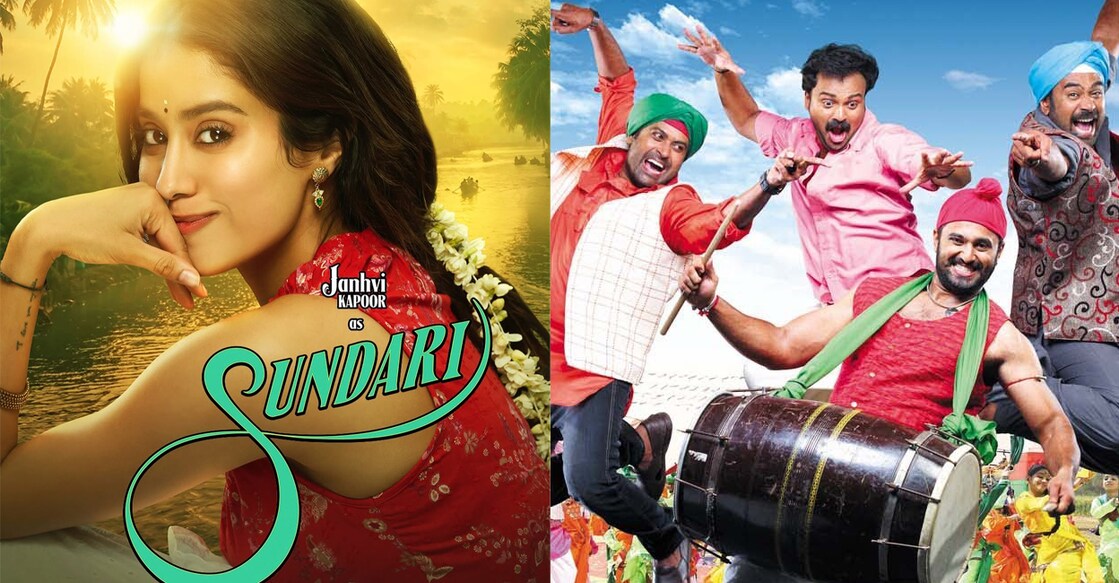
‘Thekkapetta Sundari Damodaran Pillai’ — the name itself set off alarm bells the moment the trailer of Janhvi Kapoor’s 'Param Sundari' dropped. Playing a Malayali woman, Janhvi is styled with the usual Bollywood cliches: jasmine flowers in her hair, exaggeratedly accented English, and broken Hindi. Social media backlash was swift. Malayalis pointed out not just the lazy stereotyping but also the inauthenticity. After all, no twenty-something in Kerala today would carry such a name, nor do Malayali women walk around with jasmine in their hair every day. The criticism was sharper because the role was not even offered to a Malayali actress, once again proving how Bollywood reduces South Indians to broad strokes rather than real people.
This isn’t an isolated instance. Bollywood’s track record with South Indian characters is littered with stereotypes. 'The Kerala Story', in which Adah Sharma played Shalini Unnikrishnan, was widely criticised for its portrayal of Kerala and its communities, yet the film still went on to bag two National Awards. In 'Chennai Express', Deepika Padukone’s heavily accented Tamil-English caricature overshadowed the film’s narrative. Shah Rukh Khan’s 'Ra.One' offered another bizarre stereotype when his Tamil character is shown eating curd with noodles, a dish that exists nowhere outside Bollywood’s imagination. Even Netflix’s 'Meenakshi Sundareshwar', set in Madurai, misfired badly: both leads were North Indian, and the film was called out for its miscasting and cultural shallowness.

But Bollywood isn’t the only offender. Tamil cinema too has made similar missteps. In Sivakarthikeyan’s 'Amaran', Sai Pallavi played Indhu Rebecca Varghese, a Malayali woman. While her performance was appreciated, Malayali audiences criticised the way she spoke Malayalam, finding it influenced by Tamil and therefore awkward and unconvincing. The criticism raises an important question: why are filmmakers hesitant to cast actors from the communities they are portraying, especially when language and cultural nuances are central to authenticity?
That said, there have been moments of authenticity. Gautham Menon’s 'Vinnaithaandi Varuvaayaa' stands out for getting it right. Trisha’s role as a Malayali Christian girl felt real — no gimmicks, no cultural shortcuts, just a respectful, grounded portrayal.
If South Indian industries have criticised Bollywood for cultural misrepresentation, it is worth asking whether they themselves have always done justice to North Indian characters. The answer is equally mixed. Malayalam films like 'Punjabi House' and 'Mallu Singh' leaned into caricature. 'Mallu Singh', in particular, reduced Punjabi culture to a tacky spectacle of blaring bhangra, paddy fields, salwar-kameez clad heroines, and turbaned men played for comic effect, missing the essence of Punjab entirely. Similarly, 'Pandippada', directed by Meccartin, uses the term 'Pandi' in its title, a word that is often considered derogatory towards Tamils. The film also tends to show Tamil characters in a comic light, while Malayalis are presented as smarter and more resourceful.
Yet there are examples where Malayalam cinema has embraced authenticity. Sai Pallavi’s role in 'Premam' as a Tamil girl resonated because she is a Tamil speaker herself, and Malayali audiences warmly accepted her performance. In Basil Joseph’s 'Godha', Wamiqa Gabbi played a Punjabi wrestler, and the portrayal was refreshingly real — helped by the fact that the actress herself is Punjabi, lending the character an honesty often missing in cross-cultural casting.
What becomes clear is that the problem is not limited to one industry. Both Bollywood and South Indian cinema have stumbled when portraying communities outside their own, often choosing shortcuts over research, stereotypes over nuance. But when filmmakers respect cultural specificity, whether through authentic casting or by writing characters as ordinary people instead of exaggerated types, the result resonates with audiences far more deeply.
Representation, after all, is not just about inclusion. It is about respect. And Indian cinema, across industries, still has a long way to go in getting that balance right.
 Add as a preferred source on Google