

Four episodes down, and ‘IT: Welcome to Derry’ is already deeply unsettling | The Haunted Column

Mail This Article


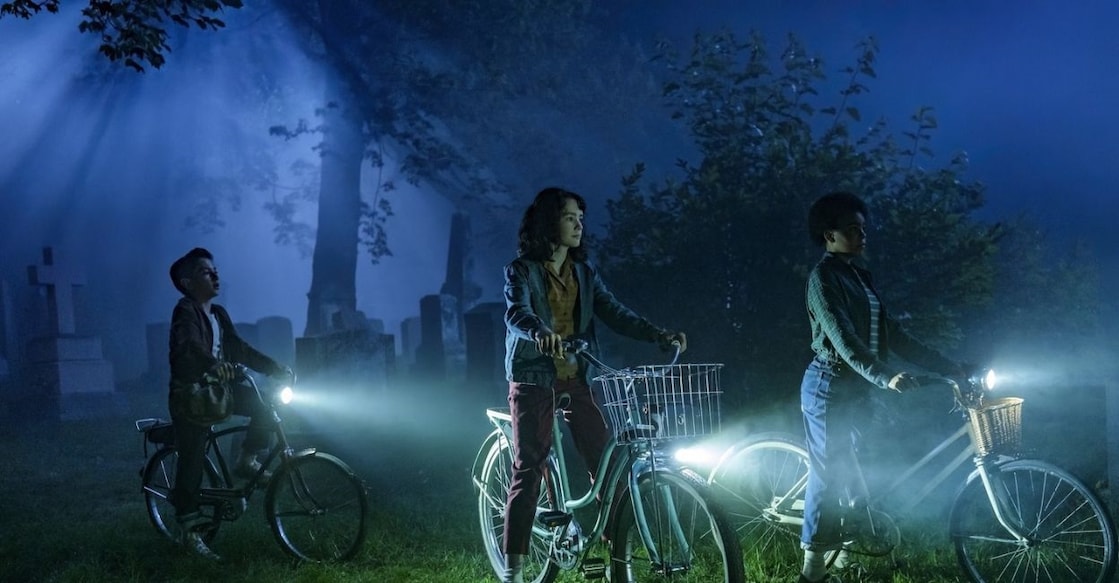
‘IT: Welcome to Derry’ arrives carrying the full weight of Stephen King’s legacy, and the first four episodes make one thing clear: the show isn’t interested in simply recreating Pennywise’s greatest hits. Set in 1962, decades before the events of the films, the series builds its own identity while expanding the unsettling mythology around Derry. The premise is simple enough — a new family moves into town just as strange events begin to gather momentum — but the storytelling leans heavily into atmosphere and character, letting dread seep in slowly rather than announcing itself through constant scares.
The cast, led by Taylour Paige, Jovan Adepo, Chris Chalk, and James Remar, works with material that gives them room to breathe. Their performances help ground the series, especially Paige and Adepo, whose characters find themselves pulled into Derry’s long-standing sickness long before they can fully understand it. Bill Skarsgård’s return as Pennywise is kept tight and controlled in the opening stretch, and that restraint actually strengthens the series. His presence lurks more than it erupts, making every tiny disturbance feel like an early tremor of something catastrophic.
What the show does best is explore the town itself. The series digs into the racism, cruelty, and willful blindness that have always defined Derry beneath the surface. These aren’t new ideas for King fans, but this is the first time a screen adaptation gives them so much narrative focus. The horror grows out of everyday rot, and the result feels closer to a psychological drama that just happens to have a demon clown waiting in the wings. The tone is unmistakably connected to the ‘IT’ films from 2017 and 2019, but it is considerably darker. At times, the show leans deeper into haunting imagery and emotional heaviness than the movies ever did, particularly in how it depicts isolation and community complicity.
The pacing across the first four episodes is slower than expected, and that may divide viewers. Rather than building set pieces, the series spends its time revealing the town’s history, establishing new characters, and hinting at Pennywise’s origins. For fans looking for immediate answers about how the creature became what it is, the show only teases rather than explains. Still, the slower rhythm allows the dread to accumulate properly. By the fourth episode, the unease feels constant, like the audience is trapped under a pressure that’s increasing inch by inch.
If there is one noticeable limitation, it is the balancing act between expanding the mythology and not overexplaining it. The show sometimes hesitates, holding back key details, and at moments you can feel it straining between mystery and momentum. But the emotional core remains strong enough to pull the episodes together, especially as the characters begin to realise that the town’s darkness is not just supernatural but systemic.
Overall, ‘Welcome to Derry’ emerges as a surprisingly confident expansion of the ‘IT’ universe. It respects the source material without mimicking it, and the first four episodes show a willingness to take risks that could pay off massively as the season unfolds. With its strong performances, bleak emotional palette, and slow-burn approach to horror, the series feels less like a prequel and more like a missing chapter — one that deepens Derry’s mythology while reminding viewers that monsters rarely appear without being invited.
 Add as a preferred source on Google