

Guillermo del Toro’s ‘Frankenstein’ belongs to Jacob Elordi | The Haunted Column

Mail This Article


Guillermo del Toro’s new film ‘Frankenstein’ is not the monster movie people expect. It feels more like a slow, bruised love letter to Mary Shelley’s ideas than a straightforward horror outing. The story sinks into grief, ego, creation, and consequence, and it does so through two performances that hold the film together. Oscar Isaac plays Dr Victor Frankenstein with a coiled intensity, while Jacob Elordi gives the Creature a tragic gentleness that slowly fractures into rage. Their pairing works so well that you almost forget how many times this tale has been adapted.
Isaac’s Frankenstein is far from the mad scientist caricature we usually see. His scenes are full of restless movement and a nervous brilliance. You can almost watch the thoughts race through him, convinced that conquering death is noble even as the cost of his ambition keeps rising. Isaac brings flashes of pride, guilt, and stubborn hope, allowing the film to explore his downfall without reducing him to a simple villain.
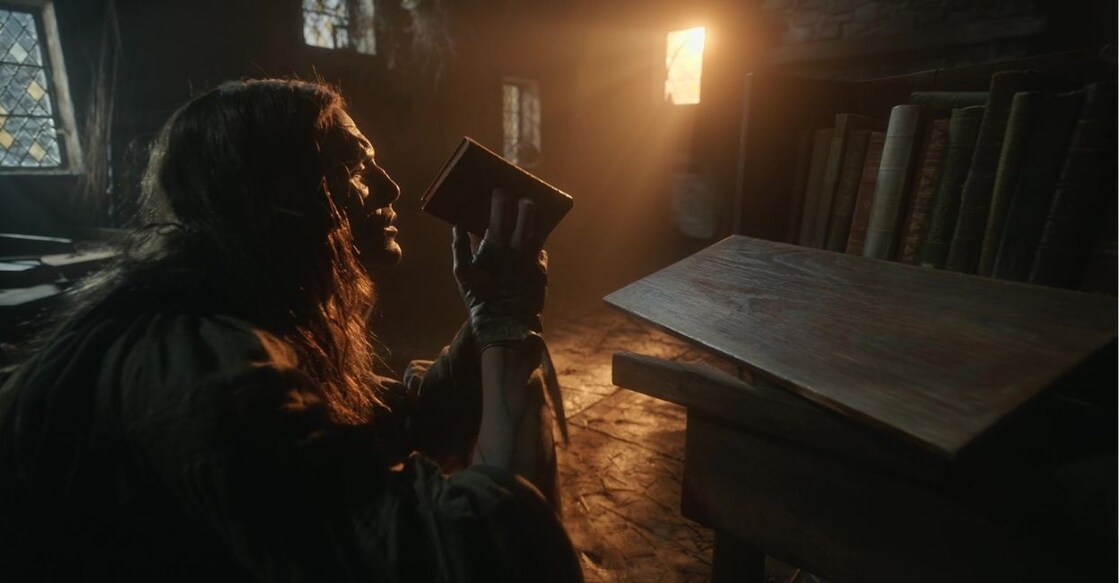
Elordi is the film’s biggest surprise. His Creature is shaped by restraint rather than aggression. He rarely raises his voice, yet every expression feels weighted, as though he carries memories he never chose. There is a gentle curiosity in how he observes the world and bonds instantly with anyone who shows him kindness. Elordi captures the innocence with which the Creature tries to understand a cruel world, ticking every emotional box with ease. There is an early moment where he attempts to mimic human behaviour and fails, and the heartbreak in that scene quietly sets the tone for what follows. His performance is physical but never exaggerated, making the Creature someone you want to understand, not someone to fear. He is not the comic, stitched-together figure we often imagine, but a being who invites empathy the more time you spend with him. One of the central ideas of the film is that nobody is born a villain; circumstances shape them into one.
Mia Goth appears as Elizabeth, and though her screen time is brief, she brings a steady emotional grounding that keeps Victor tethered to his humanity. Christoph Waltz plays the man funding Victor’s experiments, delivering the precise mix of charm and danger expected from him. His presence adds a sleek moral ambiguity that makes the Creature’s creation feel inevitable.
What del Toro does best here is tone. The film is drenched in candlelight, fog, and cold stone laboratories, yet the aesthetic never feels ornamental. It creates a sense of isolation that fits both creator and creation. The horror emerges not from jump scares but from watching two beings who long for simple belonging drift further from it.
There are stretches where the film lingers longer than necessary. Del Toro indulges in atmosphere a touch too much, and the pacing dips in the middle. But the payoff is strong. The final act ties its emotional threads with clarity. It doesn’t aim to shock; it aims to leave you with a weight in your chest, and it succeeds.
This version of ‘Frankenstein’ feels both familiar and new. The story stays rooted in the themes that made the novel endure, yet the performances give it a fresh emotional pulse. It becomes less about a monster and more about the loneliness that creates one. The ending is heartbreaking, leaving you with an empathy that might just be the film’s greatest triumph.
 Add as a preferred source on Google