

From Shyamala to Shobha: Sreenivasan’s quiet feminist voices in patriarchal cinema

Mail This Article


For decades, Malayalam cinema revolved largely around male characters. Women were confined to familiar roles: the dutiful wife, the long-suffering mother, the romantic interest whose inner life rarely mattered once the hero’s arc took over, or outrightly objectified. Amidst this deeply patriarchal backdrop, Sreenivasan’s writing blossomed and stood out not through loud political assertions, but through something quieter and more enduring. He gave women space, relevance, and agency without announcing it as ideology.
In ‘Chinthavishtayaya Shyamala’, Shyamala (Sangita) carries the emotional and moral weight of the film while her husband drifts into various forms of escapism, from the enthusiastic entrepreneur to the delusional spiritualist. In ‘Midhunam’, Sulochana, portrayed by Urvashi, demands emotional presence and responsibility from her husband Sethumadhavan (Mohanlal). Her insistence on being seen and heard is unapologetic, and rightfully so.
It is easy to reduce characters like Sulochana in ‘Midhunam’ and Kanchana in ‘Thalayanamanthram’, both played by Urvashi, to familiar tropes of ‘difficult’ or ‘jealous’ women disrupting domestic harmony. But Sreenivasan frames them differently. They are aspirational middle-class women pushing for financial security and upward mobility for their families and children. Their anxieties, ambitions, and frustrations mirror a larger social reality. Importantly, the films do not glorify the male ego in contrast. Sethumadhavan in ‘Midhunam’ and Suku in ‘Thalayanamanthram’ are far from idealised heroes. Sreenivasan’s gaze is evenly critical, attentive to flaws and vulnerabilities regardless of gender.
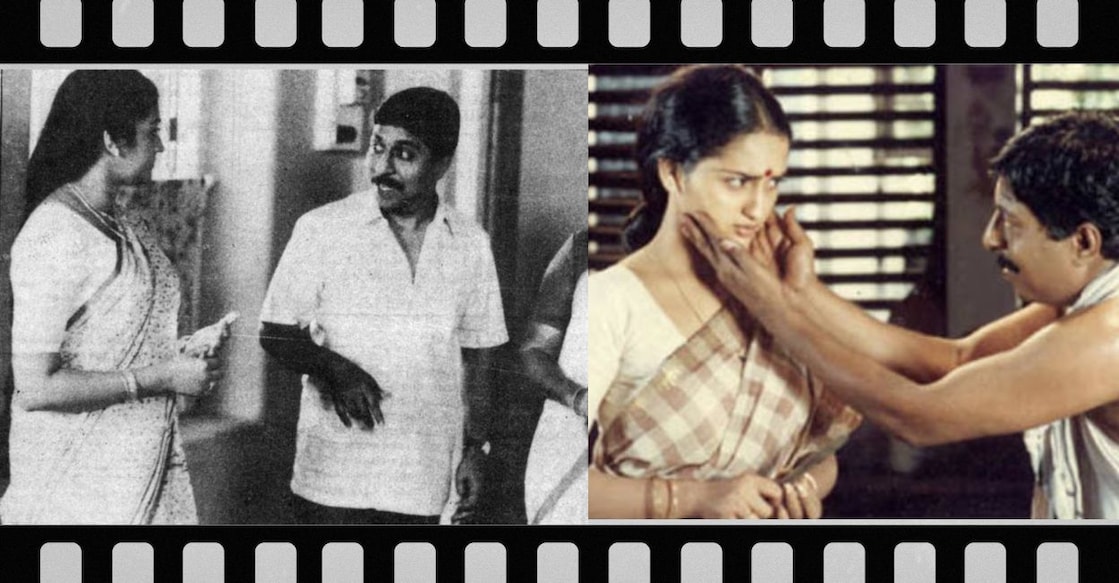
This refusal to centre infallible masculinity is particularly evident in ‘Vadakkunokkiyanthram’, Sreenivasan’s directorial debut. The film revolves around a man consumed by insecurity, suspicion, and imagined inadequacy. Yet it is his wife Shobha who provides emotional grounding. Her calm, dignity, and empathy stand in sharp contrast to his paranoia. The film critiques toxic masculinity without sermonising. The audience laughs at the man’s neurosis, but it is the woman who emerges as the moral adult in the room.
Nowhere is Sreenivasan’s feminist instinct clearer than in ‘Chinthavishtayaya Shyamala’. While the narrative follows a man lost in pseudo-spiritual quests, it is Shyamala who bears the real consequences. She manages the household, raises two children, absorbs neglect and humiliation, and eventually draws a boundary. She is neither idealised nor pitied. Shyamala’s decisions stem from necessity and self-respect rather than rebellion.
When she takes up work and prioritises her daughters’ education, it becomes a moment of empowerment for women watching the film, and a moment of reckoning for men, underscoring the truth that every woman has the potential to live and thrive independently. Her refusal to accept her husband back until he confronts his failures remains one of the most quietly radical moments in Malayalam cinema of that period. In an industry that often rewarded female sacrifice without autonomy, Shyamala’s choices mattered. Her inner life mattered.
This pattern recurs across Sreenivasan’s work. His women are often the ones dealing with the fallout of male ambition, political obsession, financial recklessness, or ideological fantasy. By centring women in the aftermath of male choices, he subtly reoriented the viewer’s empathy.
Equally significant is his treatment of domestic space. Kitchens, living rooms, courtyards, and backyards are not passive backdrops but sites where power is negotiated.
At a time when female agency on screen was often equated with glamour or overt rebellion, Sreenivasan suggested something more radical. Ordinary women, navigating ordinary lives, could still be agents of change. He did not romanticise women as flawless moral beings. His female characters are tired, anxious, sometimes complicit, and often frustrated.
Long before feminist discourse entered mainstream cinematic conversations, such as in The Great Indian Kitchen, his scripts were already asking uncomfortable questions: Who bears the cost of male failure? Who keeps families afloat? Who is allowed ambition, and who is forced into adjustment?
 Add as a preferred source on Google