
‘Lokah’ set designer reimagines Mohanlal as legendary Kerala king with an AI teaser

Mail This Article


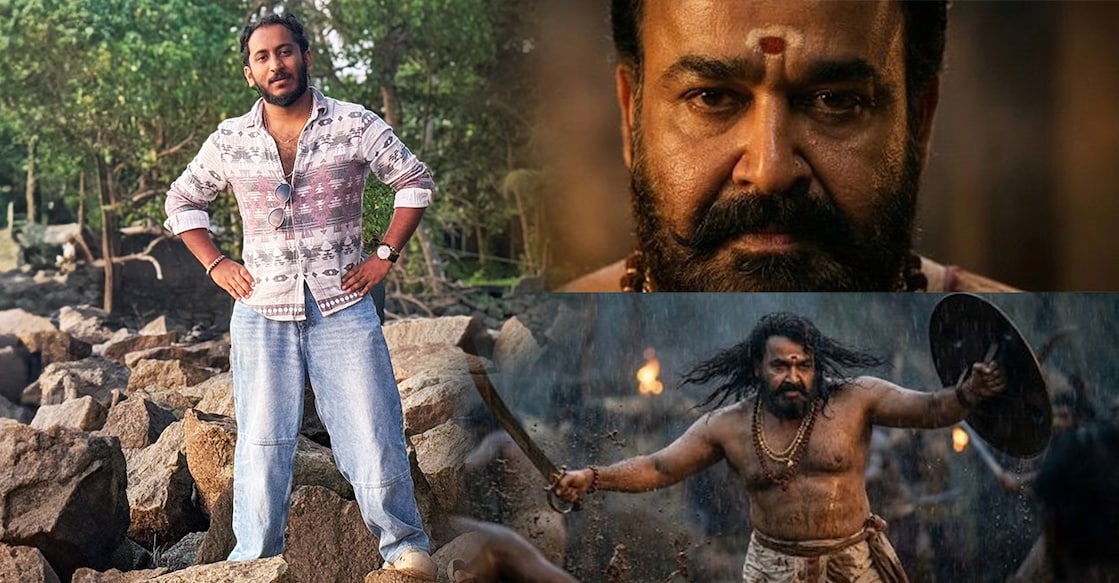
When set designer Abhijith Nair uploaded a short AI-generated video imagining Mohanlal as Marthanda Varma, he did not expect it to travel as far as it did. The idea had lived in his head for years, long before AI tools became part of everyday creative conversations. The video was simply his way of seeing whether a long-cherished thought could work visually.
It turns out many others were thinking along the same lines.

The one-minute-and-27-second teaser, which reimagines Mohanlal as the founder of Travancore, quickly caught attention online. It opens with grim shots of the sea and ships, evoking the tension of a period battle, as the Dutch East India Company approaches Kerala’s shores. The scene cuts to a royal court, where ministers bow to a lone figure. Even from behind, it is unmistakable; Mohanlal as Marthanda Varma, the king who famously defeated the Dutch forces at the Battle of Colachel in 1741. What made people pause was not just the casting idea, but how restrained and believable the visuals felt. This did not look like another flashy AI experiment. The frames felt composed, the costumes considered, the mood consistent. Several viewers said the same thing: it looked less like an AI video and more like the teaser of a film that does not yet exist.
Abhijith, who is 28, works as a set designer in cinema and has been part of films such as 'Kantara' and 'Lokah'. His debut in films came with 'Kantara', and since then, he has also worked on portions of Dulquer Salmaan’s Lucky Baskhar. His background, however, is not cinema but architecture, a detail that explains why his approach to AI is rooted more in design thinking than technical novelty.
The idea of Mohanlal playing Marthanda Varma came much earlier. Abhijith says he has been a long-time admirer of the actor, even before he began working in films. When he and his brother started writing a script based on Marthanda Varma’s life, Mohanlal was the only person they could imagine in the role. The character, he felt, required a certain presence and familiarity, something that could carry authority without exaggeration.
By the time the script was completed, AI tools had begun to gain visibility among creators. Abhijith was already experimenting with AI for his own design-related work. That is when he decided to try using it to create a short teaser, not as a pitch or announcement, but as a visual test. He wanted to see how the idea might translate on screen.
The process was slower and more deliberate than people might assume. Abhijith began with a clear plan of what he wanted to show in each frame. He thought through costumes, colours, lighting and composition before writing prompts. The output was generated several times, with each version refined further. The teaser that eventually went viral was not the first result but one of multiple attempts. According to him, AI only delivers detail when it is guided precisely. Vague instructions lead to flat results.
This is where his experience as a set designer came into play. Working on films taught him how to read frames critically. He was already used to thinking about depth, balance, and how different visual elements sit within a shot. Those instincts helped him evaluate what worked and what did not, even when the images were generated digitally.
Abhijith’s entry into cinema itself was not straightforward. He trained as an architect and worked in the field before moving into films. Architecture, he says, gave him a strong base in design and spatial awareness, which made the shift less intimidating. Keen on working in cinema, he sent samples of his work to production designer Banglan. That eventually led to his first opportunity on 'Kantara'.
Working on a film set for the first time came with its own anxieties. Abhijith recalls worrying about whether he would miss important details or fall behind. Over time, that fear eased, helped by the support of the crews he worked with. On 'Lokah', in particular, the atmosphere felt relaxed. He describes it as less like a formal work environment and more like a group of friends coming together to make a film.
Despite the response to the Mohanlal AI video, Abhijith is clear about what the technology can and cannot do. He does not believe AI can replace actors or the filmmaking process. At best, he sees it as a tool that can help visualise ideas or assist in certain stages of production. Learning to work with AI took him about a week, something he attributes to his design background. Once the basics were understood, the main task was learning how to write effective prompts. For this project, he used tools such as Nano Banana and Gemini.
The script on Marthanda Varma is complete, and Abhijith says he would like to approach Mohanlal with it at some point. For now, the AI teaser serves as a visual reference rather than a formal pitch. Based in Bengaluru, he currently runs Magsman Studio, balancing work across cinema and design.
 Add as a preferred source on Google