

Viral crossover of 'Karimikka' and 'Shalini Unnikrishnan' prompts talk on authentic Kerala portrayals
Mail This Article


The upcoming film The Kerala Story 2 has once again found itself at the centre of controversy, echoing the debates that surrounded its predecessor over its portrayal of Kerala and its people. A moment from the trailer, in which a Hindu girl from the state is shown being forced to eat beef, has particularly drawn criticism online. Many viewers from the Malayali community have called the depiction culturally tone-deaf, pointing out that beef consumption cuts across religious and social groups in Kerala and is far from the rigid marker the scene appears to suggest.
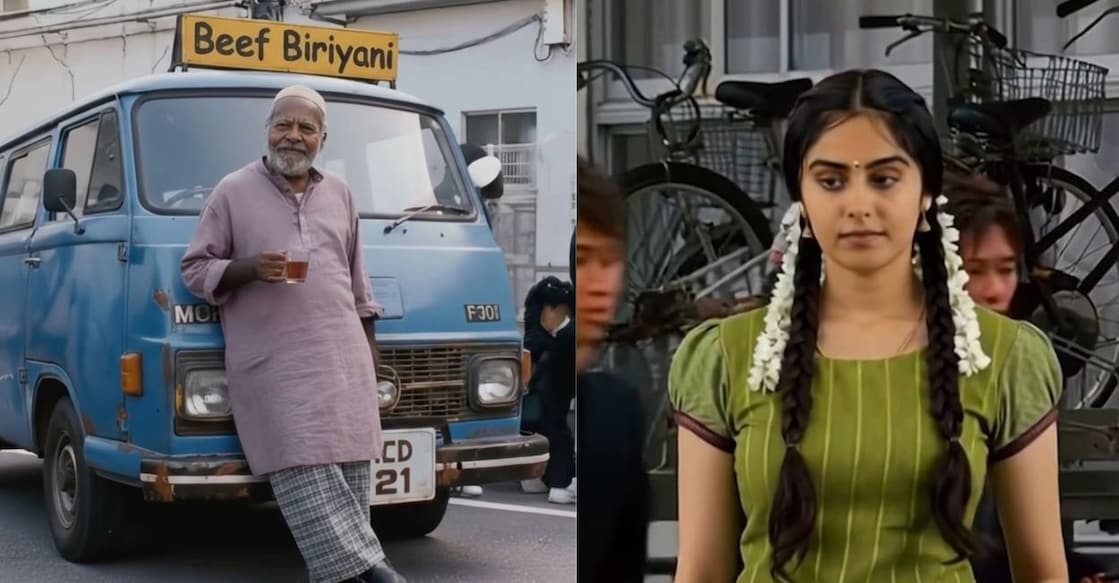
Amid this ongoing debate, a separate viral video has added an unexpected layer to the conversation. The AI-generated clip imagines a crossover between two very different cinematic worlds. It shows Shalini Unnikrishnan, the controversial character played by Adah Sharma in the first film, walking down a street before encountering Karimikka, the beloved grandfather figure portrayed by Thilakan in Ustad Hotel. Karimikka is seen standing beside his food van labelled “Beef Biriyani”, a playful visual that fans have embraced as both humorous and pointed.
The crossover has struck a chord largely because Ustad Hotel continues to be remembered as a culturally rooted film that celebrated Kerala’s everyday life with warmth and nuance. Through the journey of a young chef who rediscovers his purpose under his grandfather’s guidance, the film offered a textured tribute to Kozhikode’s food culture and coastal Muslim life. The bustle of small eateries, the aroma of biryani and the tenderness of intergenerational relationships together painted a portrait of Kerala that felt intimate yet universal.
Placed against this backdrop, the viral edit has been widely read as an indirect commentary on representation. While Shalini Unnikrishnan has often been criticised by viewers for being poorly written and linguistically unconvincing as a Malayali character, Karimikka stands in public memory as an authentic, affectionate embodiment of the state’s cultural ethos. The juxtaposition, though humorous on the surface, underscores a deeper debate about how Kerala is imagined on screen and who gets to define its cultural realities.
