

How ‘Chatha Pacha’ found its look, according to cinematographer Anend C Chandran

Mail This Article


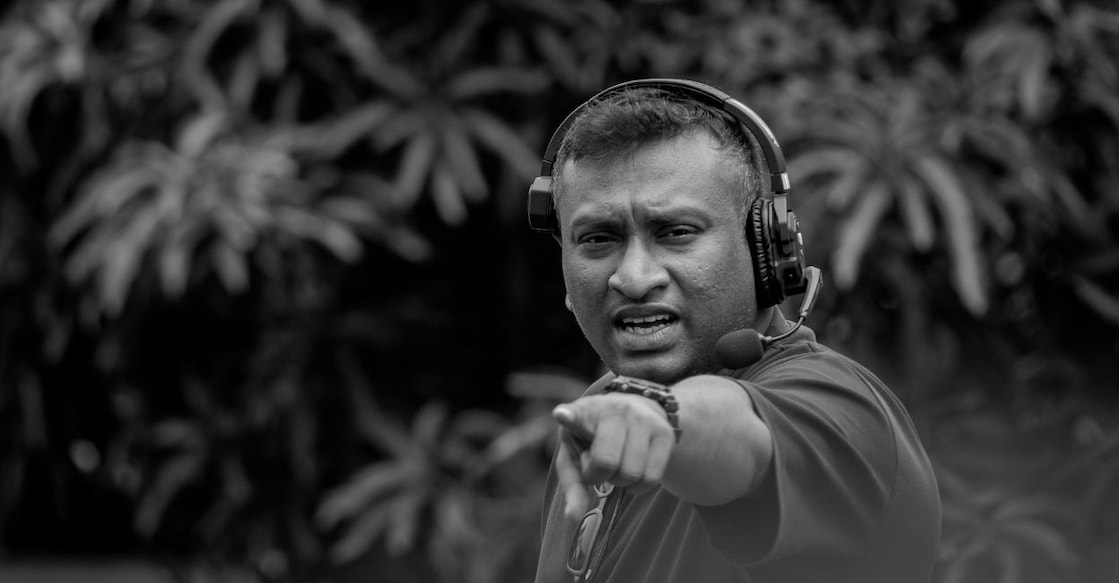
When Mammootty walks into a frame, Anend C Chandran believes the camera does half the work on its own. “Without doing anything, he comes with an aura,” the cinematographer says, almost casually. It’s a thought that neatly sums up Anend’s approach to cinema: knowing when to step in, and more importantly, when to step back.
That philosophy runs through ‘Chatha Pacha’, Adhvaith Nayar’s wrestling drama, which has quietly become one of the most talked-about Malayalam films in recent weeks. Rooted in Kerala’s love for WWE-style wrestling and drenched in nostalgia, the film builds a world that feels both heightened and real. For Anend, the challenge was never about making it more cinematic. “There is already cinema in WWE (World Wrestling Entertainment),” he says. “You don’t have to add anything extra. You just have to be in the right zone.”

Anend, whose filmography includes ‘Premam’, ‘Bheeshma Parvam’, and ‘Neram’, approached ‘Chatha Pacha’ with a clear sense of restraint. Wrestling, he felt, exists in a strange sweet spot: exaggerated yet grounded, theatrical yet painfully real. The trick was to let those contradictions coexist on screen. “Scenes should look cinematic, but they should also look real. Here, both concepts are merging. It’s mostly about focusing on what not to do.”
The project also struck a deeply personal chord. Growing up, Anend and his sister were devoted World Wrestling Federation (WWF, which later became WWE) viewers, reenacting moves and mock-fighting as children. “What more reason do I need?” he laughs. “When you look back now, WWE was pure entertainment. The action you see in the cinema is very close to what you see there. It’s all connected.”
Still, nostalgia alone was never the end goal. Anend is clear that while ‘Chatha Pacha’ plays with memory, it doesn’t depend on it. “The nostalgia payoff is only in a few places. As a film, it has to hold on its own. How you frame it, how you build around it, that’s what you’re seeing now.”
Much of that world-building came from an organic, collaborative process. The script had lived with the director and creative team for nearly two years, carrying visual cues that Anend then expanded on. He describes himself as someone who works “with the flow”, inventing solutions on set rather than locking himself into rigid plans.

Lighting played a central role in shaping the film’s visual style. The frames needed to feel authentic, capturing the energy of the wrestling world without directly imitating WWE broadcasts. “It had to stay in that zone,” he says. Mood boards and AI-generated references helped guide the look, but no single wrestler or moment was copied. “Everything was developed through the mood, and it was a completely collaborative effort. Producer Shihan Shoukath played a significant role in shaping the creative vision,” Anend adds.
That collaboration extended naturally to the action. Stunt choreographer Kalai Kingson, a lifelong WWE fan, brought a shared enthusiasm to the set. “Kalai personally wanted to pay tribute to a lot of things. Everyone was on the same page, which made the shoot easy.”
One question many viewers have asked is about the film’s time period. ‘Chatha Pacha’ feels retro in places, yet unmistakably contemporary. Anend says the answer lies in texture rather than timeline. “It is set in the present. But to bring in nostalgia, I used older lensing. The costumes, sets, compositions, all of it had to work together to make it feel real and cinematic at the same time.”
Interestingly, he chose not to lock the film into a strict colour palette. Avoiding obvious blacks and greens, Anend kept several options open. “That’s generally how I work: keep things open, then remove.”
His own journey into cinema was equally intuitive. International films watched during school days sparked a love for film appreciation and still photography. A chance creative jamming session with Alphonse Puthren led him to formal film studies and eventually to ‘Neram’. “That’s how it started,” he says.
Anend is also thoughtful about the debate around style overpowering story. For him, visual excess is not a flaw if it’s a conscious choice. “Some films need those visuals, sound, production design, editing, all of it coming together. It depends on how you want to approach the script.”
He recalls a moment in ‘Chatha Pacha’ where the visual effects and lighting are intentionally a bit out of sync with the action. “I liked it,” Anend admits. “I could see the possibility of music elevating it. You have to think like that.”
Mammootty, of course, remains a presence even in absence. Though his portions in ‘Chatha Pacha’ were handled by an additional cinematographer, Anend was involved in designing the approach. Unlike ‘Bheeshma Parvam’, where the film revolved around Mammootty, this was about perspective. “It’s Mammootty as a star. I’m a big fan. I love shooting him. That love shows in the shots. When you’re filming your star, you want to make him look good.”
For Anend, it ultimately comes down to understanding the film's world and trusting it enough to let it speak. That balance gives ‘Chatha Pacha’ its texture and allows his work to feel distinct each time without repeating itself.
 Add as a preferred source on Google