

Unconventional villains and captivating father-son dynamic: Mari Selvaraj’s 'Bison' is a familiar, yet powerful underdog story

Mail This Article


Mari Selvaraj’s films are often poignant portrayals of marginalised individuals struggling to carve out a place in a society that either ignores or actively oppresses them. His stories are humbling, constantly reminding us that the journeys of the oppressed are never easy. But are they preachy? Perhaps repetitive at times, but never sermonising. They are always reflective, but never wearying.
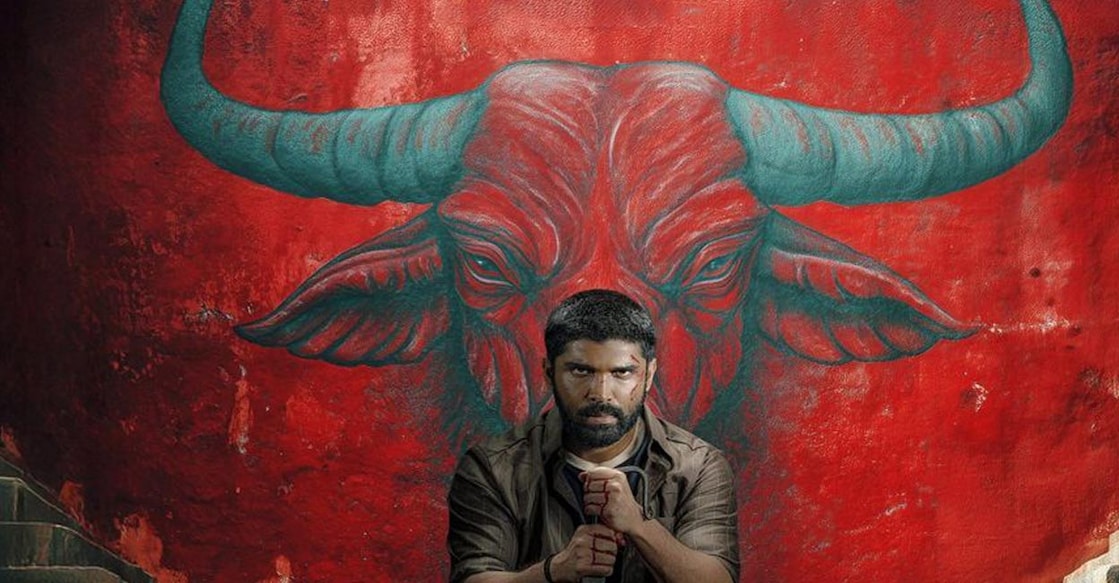
This mastery is evident in his latest film, ‘Bison Kaalamaadan’, featuring Dhruv Vikram, Rajisha Vijayan, and Anupama Parameswaran. 'Bison' could have easily been just another generic sports drama, but Mari takes it beyond that, transforming it into a tale of distinct personal struggles. Even as the protagonist, Vanathi Kittan (Dhruv), pursues his passion for kabaddi amidst the pervasive violence in his village, the film becomes a narrative of deeper, more unique challenges."
Unlike his previous films, like ‘Pariyerum Perumal’ and ‘Vaazhai’, which primarly focuses on caste discrimination, Mari Selvaraj’s protagonist in ‘Bison’ must navigate the perilous terrain of two rival gang leaders each driven by a burning hatred for the other, whose deadly rivalry has come to define their village.

Kittai's father, Velusamy, portrayed with intensity by Pasupathy, has his own deep-seated reasons for discouraging his son from pursuing a career as a kabaddi star. He actively opposes it at every step. After all, he witnessed the brutal death of his own kabaddi idol—a moustache-twirling hero after whom he named his son—killed in a violent village feud. This trauma makes him unwilling to let Kittai pursue the game, even when his son's school coach and sister recognises his talent. 'Of course, every dog and cat in the village can play kabaddi,' he says in the opening scenes, a statement that lets the audience know that the game is integral to the people of the village, just like how tug-of-war defined the villagers in Indrajith’s Malayalam film ‘Aha’.
As the story unfolds, this same man becomes the driving force behind his son’s journey, one of the film’s most emotional turning points, set against a backdrop of intense violence. Family dynamics play a central role in Mari Selvaraj's films, with the director often delving into the complexities of familial relationships while also exploring love. Though ‘Bison’ is familiar in some way, with the story quite leaning on a commercial underdog story, it still retains the boldness that defines Mari’s works.
In ‘Pariyerum Perumal,’ uncomfortable scenes arise, such as the depiction of Pariyan’s father dressing as a folk dancer, blending elements of drag. Mari is unflinching in portraying such moments. In ‘Bison,’ he takes yet another bold step, showing something starkly new: the brutal killing of a ram driven by the deep-seated vengeance of a village.
"The characters are equally compelling. Anupama Parameswaran portrays Kittai’s lover, who is several years older than him, adding an interesting dynamic to their relationship. His sister, played by Rajisha Vijayan, is strong-willed and fiercely protective. However, it is the villains, Pandiraja (Ameer) and Kandasamy (Lal), who stand out with their complex, morally ambiguous portrayals, adding depth to the film’s tension." Each actor portrays their role with conviction, but it’s Dhruv's physical performance that truly steals the spotlight.
While the film occasionally teeters on the edge of melodrama, with a few moments that feel stretched, these minor flaws can be overlooked thanks to Mari Selvaraj’s sharp, impactful dialogues. ‘Bison’ marks Mari’s first collaboration with music composer Nivas K Prasanna, and the latter's score is both powerful and evocative, perfectly complementing the film's most pivotal moments." Overall, Mari’s movie is a powerful tale fueled by uncharacteristic villains with enough ingredients to make it a true winner.
 Add as a preferred source on Google