

‘Mariana’s Room’ review: A quiet, unlikely bond in the shadow of the holocaust | IFFK Review

Mail This Article


Stories about the Holocaust often revisit the same overwhelming memories of cruelty and loss, but Emmanuel Finkiel’s ‘Mariana’s Room’ stands apart because it shrinks this massive tragedy into a very small, very intimate space. Adapted from Aharon Appelfeld’s novel ‘Blooms of Darkness’, the film takes place almost entirely inside a single room in Nazi occupied Ukraine. What unfolds there between a frightened Jewish boy and the woman who hides him becomes a quieter, stranger and much more personal story of survival than we usually see in Holocaust cinema.
Hugo, played beautifully by young actor Artem Kyryk, is just 12. He does not understand why his world has suddenly collapsed or why he has to be hidden away. What he does know is that his mother has entrusted him to her friend Mariana, a sex worker, who tucks him into her brothel room and risks everything to keep him alive. The film never tries to make Hugo wise beyond his age. He behaves like a confused, scared child who cannot make sense of the hatred outside but slowly builds his own inner world to cope with all that fear.
Most of Hugo’s days pass inside a cramped closet. There is a tiny hole in the door that becomes his only window to the outside. Through it he sees flashes of boots on the floor, shadows of strangers, bits of conversation and moments he cannot fully decode. These broken images become the fragments he uses to stitch together his understanding of what is happening around him. When it all gets too frightening, he retreats into his memories. These scenes are warm and gentle, almost like he is holding on to tiny pieces of his old life so that the Holocaust cannot swallow everything he is.
Finkiel uses colour and light in a very emotional way. The film begins with heavy, dull shades that echo the constant dread of the period. As Hugo slowly finds ways to cope, the palette brightens. When danger looms again, the colours tighten and darken once more. You start to feel Hugo’s inner weather, not through dialogue, but through the way the room itself seems to breathe with him.
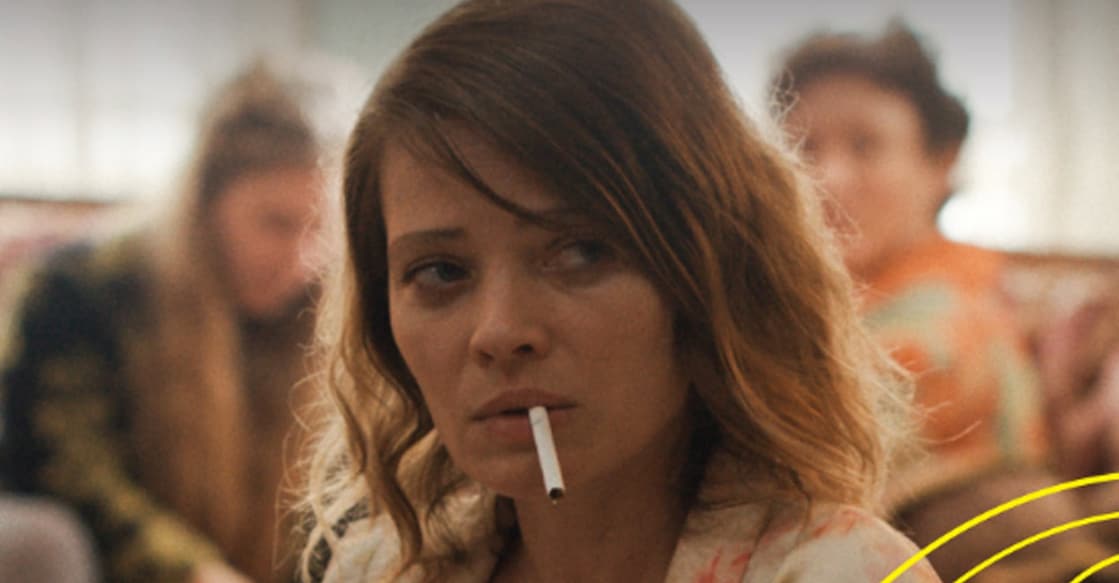
Mariana, played with incredible honesty by Melanie Thierry, is the film’s most complicated presence. She is not painted as a saint or a mother figure or a tragic victim. She is a real woman who is doing her best to hold herself together while also protecting this child she barely knows. She calls Hugo her little puppy, which falls somewhere between playful affection and an attempt to stay in control of at least one part of her messy life. Their relationship is hard to categorise. It is not fully parental and not romantic, yet it has an intensity that comes from the two of them depending on each other for survival. Their bond grows out of fear, loneliness and the need to feel connected to another human being in a world that is rapidly losing its humanity.
Inside that room, they create their own fragile universe. Hugo watches her from the closet, learning about adulthood in ways he is too young to understand. Mariana talks to him as if he is the only person left who sees her as more than a body. They save each other in small, imperfect ways.
There are moments when the film echoes other stories about children living through racist and fascist violence, especially Taika Waititi’s ‘Jojo Rabbit’. Both Hugo and Jojo are boys trying to make sense of the collapse around them. Both build inner worlds to survive what they cannot control. But ‘Mariana’s Room’ is much quieter. It looks inward instead of outward. It is less about politics and more about how a child holds on to his emotional life when everything outside is falling apart.
There is also a clear respect for imagination. One line in the film says that without reading, the mind will be empty. Hugo is living proof of this because his memories and dreams become the only spaces the Holocaust cannot invade.
By the end, ‘Mariana’s Room’ becomes a moving reflection on how people cope with death, fear and the slow erosion of innocence. Hugo senses death everywhere, but he holds it at a distance, almost the way he watches life unfold through the peephole of the closet.
What lingers long after the film ends is not only the horror of the time but the strange tenderness that grows between two unlikely survivors. Finkiel has created a film that understands that survival is never just physical. It is emotional and often built on the smallest gestures of care. In the darkest moment of history, ‘Mariana’s Room’ finds a quiet, stubborn spark of humanity that refuses to fade.
 Add as a preferred source on Google