

Apem, not appam: Meet the Indonesian cousin of our favourite hopper

Mail This Article


We all know our appams. Palappam with stew, mutta appam on a Sunday morning, and the humble vattayappam served during festivals. But there’s a lesser-known relative in Indonesia that’s worth talking about. It’s called apem, and it’s surprisingly close to vattayappam.
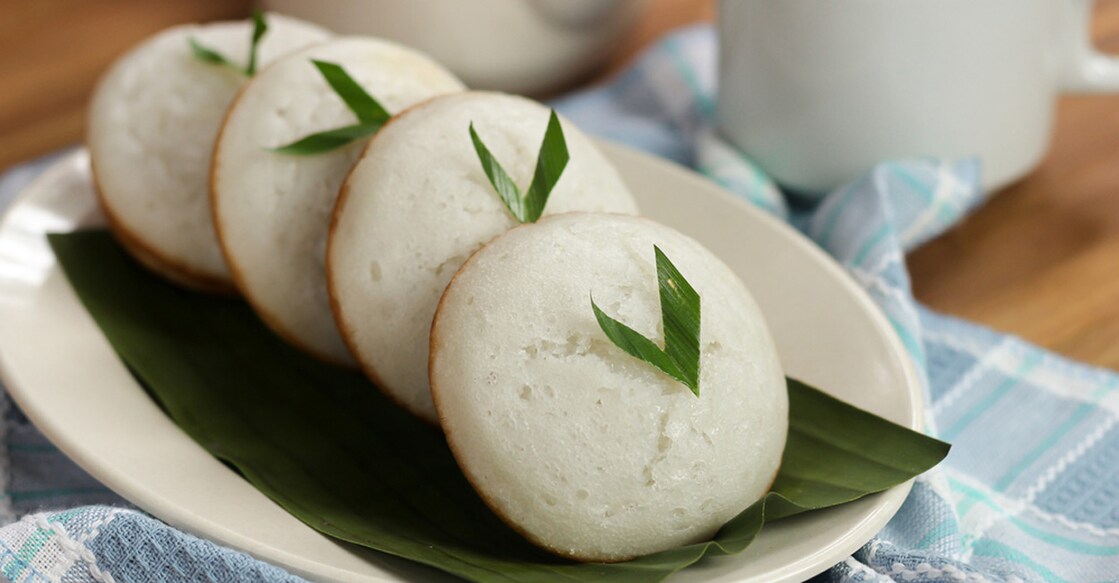
Apem or Kue Apem is made with rice flour, coconut milk, and palm sugar. Sometimes, fermented cassava (tape) or yeast is added to help the batter rise. The mixture is left to ferment, then steamed in small moulds. What comes out is a soft, slightly sweet rice cake that looks and feels a lot like the vattayappam.

Palappam is thin and lacey, made in a curved pan and eaten hot. Apem, like vattayappam, is steamed and fluffy, usually eaten at room temperature. But here’s where it stands out: it comes in colours. White, pink, green and sometimes even yellow, depending on what’s added—pandan leaves, rose essence, or natural dyes. The colours aren’t just for looks. In Javanese culture, these shades carry meaning and are often used in prayer offerings or communal gatherings. In Java and other parts of Indonesia, apem is a ritual food. It’s made for prayers, family gatherings, and religious offerings. You’ll often find it during “slametan” ceremonies or Ramadhan, offered to ancestors and shared with neighbours.
There’s also a bit of history hiding in its name. Some believe “apem” comes from “apupa”, a Sanskrit word found in ancient Indian texts for a kind of rice cake. This makes sense, considering the long history of trade and cultural exchange between South India and Southeast Asia.
So if you’ve grown up with vattayappam at home, apem won’t feel foreign. It’s just made a different journey, shaped by different hands, but born from the same love for rice, coconut, and time.
 Add as a preferred source on Google