

Arrowroot powder hits ₹2,000 per kg in Kerala: Here’s why everyone wants it
Mail This Article


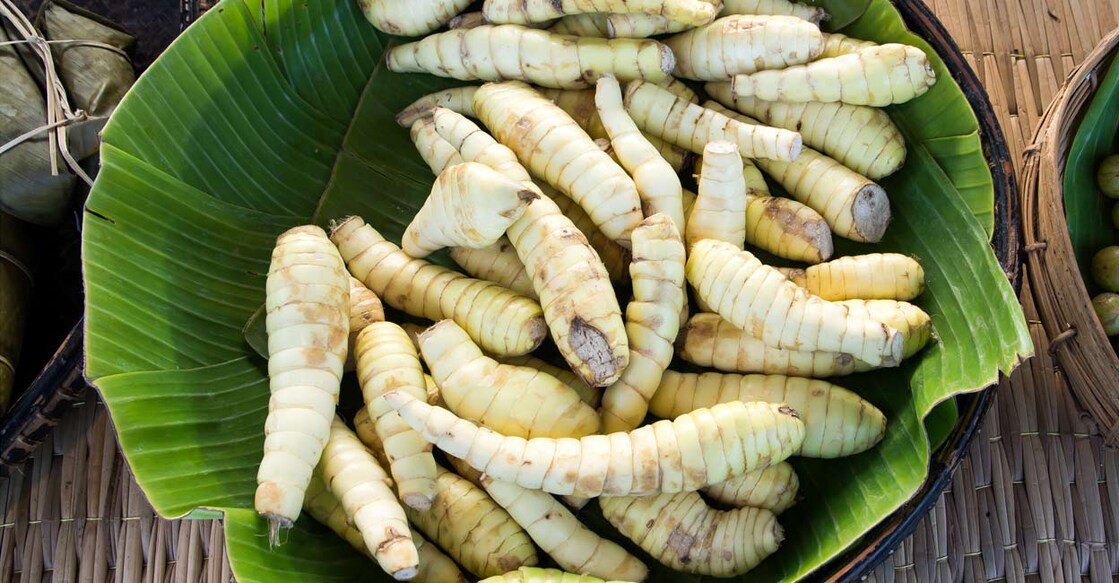
The once-ubiquitous arrowroot in our backyards is making a grand comeback. Those who had cleared their backyards of arrowroot plants that grew wild are now willing to pay a handsome amount to get the rhizome back on their dining tables.
Powdered arrowroot is now selling for Rs 2,000 a kilogram. With a health-conscious generation that keeps an eye on what they eat, and the COVID-19 outbreak has fuelled the return of the tuber crop, after they realised the benefits of arrowroot. A few farmers who retained arrowroot as an intercrop have realised its potential and are now actively farming it.
Though growing arrowroot (Koova in Malayalam) is not difficult, extracting its powder is onerous. Hence, very few attempted to make the arrowroot powder. However, the new demand for arrowroot powder has enthused farmers.

Farmer Siby K John of Velliyamattom near Idukki's Thodupuzha is one among them. Siby has been farming arrowroots and marketing its powder for years. He sells three types of arrowroot powder: blue, white, and yellow. Besides growing the crop himself, he procures the rhizome from other farmers and produces more than 200 kilograms of arrowroot powder annually. He also grinds arrowroot in his machine for others.
The farmer has been selling blue arrowroot powder for Rs 1,700 a kilogram. White and yellow arrowroot powders are sold for a lesser price. Siby said his products are now fast-moving, compared to previous years.
Three types of arrowroots
Siby said Kerala grows mostly white arrowroot, which could be cooked and consumed like other tuber crops. The yield is higher in the white variety, and it produces more powder compared to the other two varieties. Hence, the white rhizome costs more in the market.
Blue arrowroot has a higher medicinal content. However, blue and yellow varieties have a slightly bitter taste like tapioca. Hence, it should be washed multiple times in warm water. These two varieties do not provide much yield when powdered like their white counterpart. However, blue and yellow cost more due to their medicinal value.
Siby grows blue and white arrowroots on his farm, and procures yellow arrowroot from farmers who grow them near the forest.

Once the planting bed is prepared and sown, the arrowroot does not need much care. Since the rhizome remains in the soil, new plants keep sprouting. The yield would be better if arrowroots are harvested after two years. Siby said scientific farming allows harvesting in a year.
The harvesting season begins in November. However, Siby said arrowroots harvested in January-March are better. Those harvested after March are difficult to powder.
Several grinding machines with varying capacities are now available to crush arrowroot. Siby is using a Rs 13,000-machine that could grind 100 kilograms of arrowroot in an hour. He said machines with overflow washing and stirring filtration capabilities, too, are now available. Since they are expensive, Siby is filtering the starch manually. He has plans to procure one such machine to expand his business.
Arrowroot: Uses and health benefits
Beyond its sudden surge in market value, arrowroot has long been valued in Kerala households for its medicinal and culinary uses. Traditionally consumed during illness or as a staple in fasting meals, the tuber’s powdered form is gaining new popularity among health-conscious consumers—and for good reason.
A gentle, easy-to-digest food, arrowroot is often recommended for those recovering from fever, stomach upset, or indigestion. Its soothing nature makes it suitable for children, the elderly, and anyone with a sensitive digestive system. Mixed with warm water or milk, arrowroot porridge has been a go-to home remedy for generations.
In the kitchen, arrowroot powder serves as a natural thickening agent—a cleaner alternative to cornstarch for gravies, sauces, and desserts. It’s also widely used in gluten-free baking, especially in cookies and light, chewy pastries. For those observing fasts, arrowroot-based dishes like koova payasam and arrowroot halwa are familiar comfort foods.
From a nutritional standpoint, arrowroot is a gluten-free, allergen-free starch rich in potassium and B vitamins. It helps maintain fluid balance, supports metabolism, and provides energy without taxing the gut. Arrowroot is also known to have a cooling effect on the body, making it particularly beneficial during summer or post-illness recovery.
Some even use arrowroot topically in traditional medicine—for treating rashes, wounds, or insect bites—thanks to its anti-inflammatory properties.
 Add as a preferred source on Google