

Aravana and more: Discover the sacred tastes of Sabarimala and their ritual significance
Mail This Article


Every pilgrimage season, Sabarimala becomes a world of ritual rhythms, where aroma and devotion rise together from the temple kitchens. What is prepared here is not “food” in the ordinary sense, but prasadam — offerings created with intention, tradition and centuries of practice.
Aravana is the most recognisable of these offerings, but the temple kitchen prepares a range of traditional payasams and nivedyams through the day. Each has its own timing, ingredients and purpose, and together they form an important part of the temple’s food traditions.
Apart from Aravana, three other types of payasam are prepared as offerings to Lord Ayyappa, the presiding deity. These include Idichu Pizhinja Payasam, Ellu Payasam and Vella Nivedyam.

Idichu Pizhinja Payasam is offered during the Usha Pooja at 7.30 am. As the name suggests, it is made using the first and second extracts of coconut milk, obtained by grating, crushing and squeezing fresh coconuts, which are then gently combined with jaggery. Slow cooking brings the mixture to a silky, fragrant finish that has been part of the temple’s traditions for generations.
Aravana, cooked for the Uchha Pooja at noon, is by far the most familiar. Thick, glossy and deeply sweetened, it carries the unmistakable signature of Sabarimala’s prasadam tradition.
Ellu Payasam, offered at 9.15 pm, quietly stands apart. Made from sesame seeds, it does not resemble payasam in the usual sense. Tantri Kandararu Mahesh Mohanaru notes that it is a prasadam prepared with sesame alone, maintaining its own sacred identity within the day’s offerings.
Vella Nivedyam is prepared for all poojas through the day, bringing another layer to the temple’s rhythm of offerings.
For the Athazha Pooja, another set of offerings is prepared. This includes Panakam, Appam and Ada. Panakam is a traditional drink made with cumin seeds, jaggery, dried ginger and pepper, known for its cooling and medicinal qualities.
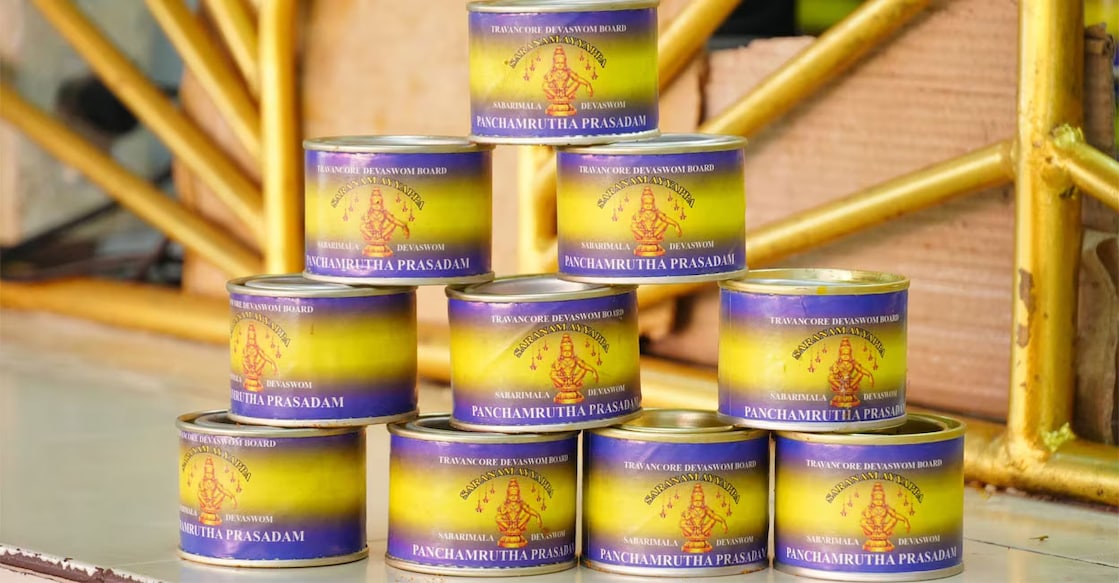
Before dawn, the first ritual of the next day begins with the preparation of Panchamritham for the 3 am Abhishekam. This eight-ingredient blend — rock candy, jaggery, kadali banana, raisins, ghee, honey, cardamom powder and dried ginger powder — is thick and aromatic.
Among the prasadam prepared at Sabarimala, Aravana and Panchamritham are made available for devotees to take home. Panchamritham is sold in bottles half the size of the Aravana containers and is priced at Rs 125.
These offerings are more than rituals. They reflect a food culture shaped by traditional methods, specific timings and ingredients that have remained unchanged for generations. For many devotees, they are as much a part of the Sabarimala experience as the pilgrimage itself.
 Add as a preferred source on Google