

The pudding that arrived late, worried everyone, and became the heart of A Christmas Carol

Mail This Article


“Hallo! A great deal of steam! The pudding was out of the copper.”
These are the first memorable words that Dickens uses to introduce the Christmas pudding in A Christmas Carol. What follows is one of the most vivid, sensory passages in all English literature, a moment in which a simple boiled pudding becomes a thing of pride, anxiety and joy.
The pudding arrives late. It is small. It has been boiled in a cloth and worries everyone while it cooks. Mrs Cratchit fears it might fall apart. The children hover. Bob Cratchit beams. All that anxiety dissolves the moment it finally appears.
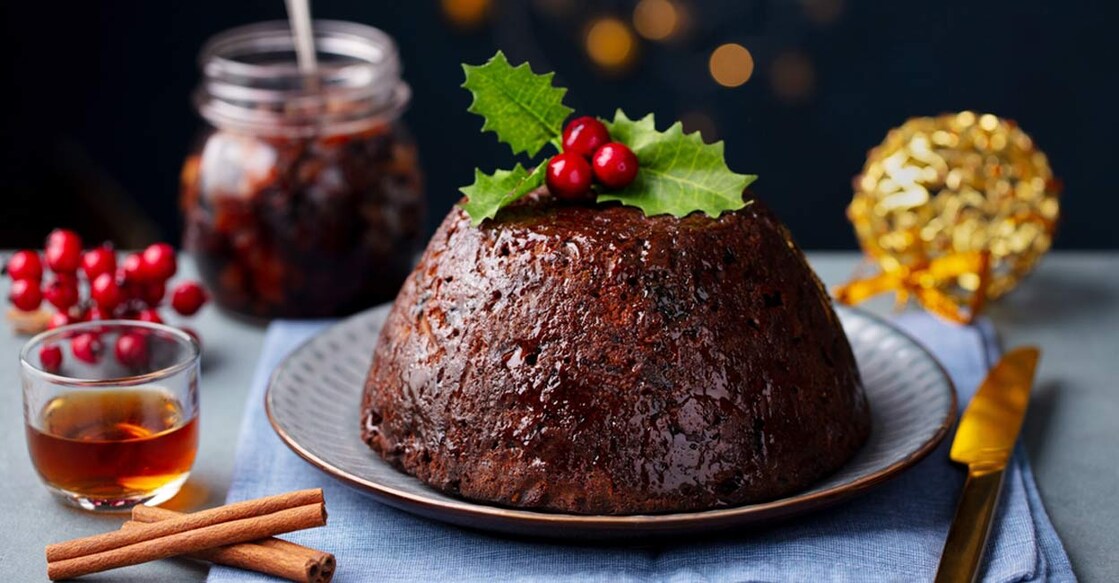
In the heart of the Cratchit household on Christmas Day, Mrs Cratchit brings in the steaming pudding, “like a speckled cannon-ball,” blazing with ignited brandy and topped with holly. Bob Cratchit calls it “a wonderful pudding” and praises it as his wife’s greatest success since their marriage. No one dares suggest it might be small for such a large family. The very scent of it, at once rich and strangely domestic, fills the room and confirms that this modest gathering has something worth celebrating.

A pudding rooted in ritual and meaning
Dickens chose a pudding that was already part of English Christmas tradition in his day. By the early 1800s, what we now call Christmas pudding had begun to replace earlier medieval festive dishes, bringing together dried fruits, suet, spices and alcohol in a boiled or steamed form that was meant to be prepared well before Christmas. The ritual of making it was as important as the eating. Families stirred it together and made wishes. A coin might be hidden inside. By the time it was ceremoniously brought to table, it carried the weight of hope and togetherness.
Dickens’s description captures this tension perfectly. The anticipation, the fear it might break, the steam that smells of laundry and pastry together, the flaming brandy and the sprig of holly — each detail brings the pudding to life and makes it part of the emotional core of the story. It is not merely dessert. It is proof that the Cratchits have worked and waited for this one moment of warmth and pride.
For a food lover reading A Christmas Carol today, the pudding still speaks. It reminds us that festive cooking has always been about more than luxury. It is about memory, ritual and the quiet pride of placing something special on the table once a year.
From Dickens to the Kerala table
Kerala’s Christmas tables have their own pudding traditions, shaped by colonial influence, church kitchens and home cooks who adapted recipes to local tastes. Steamed puddings, rich with eggs, bread, fruit and alcohol, are as familiar here as plum cake. They may not look like the suet-heavy puddings of Victorian England, but the spirit is strikingly similar. They are slow, generous and meant to be shared.
One such recipe comes from Mrs K M Mathew, whose cooking defined generations of home kitchens. Her all flavour pudding feels like a conversation between worlds. It brings together plum cake and pineapple jam, bread and coconut, brandy and chocolate sauce. Much like Dickens’ pudding, it celebrates the idea that many flavours can live happily in one dish.
Recipe of Mrs K M Mathew’s all flavour pudding with chocolate sauce
This pudding is rich, layered and meant for a crowd. It tastes best when made without hurry.
Serves 12
Ingredients
4 eggs, medium sized
2 cups lukewarm milk
1/2 tin condensed milk
8 teaspoons sugar
1/2 cup bread pieces, edges removed, soaked, squeezed and crumbled
1/2 cup plum cake, crumbled
4 teaspoons finely grated coconut
1/4 cup pineapple jam
1/2 cup brandy
1 teaspoon vanilla essence
For the chocolate sauce
4 teaspoons cocoa powder
2 teaspoons cornflour
A pinch of salt
1 cup cold milk
1 cup milk
8 teaspoons sugar
1 teaspoon butter
Preparation
Whisk the eggs until light and fluffy
Add the milk and whisk again
Add all the remaining ingredients one by one, mixing well so there are no lumps
Pour this mixture into a greased mould and cover with a lid or foil
Place the mould in a shallow vessel of water and steam in a pressure cooker for 20 minutes
Let the pressure fall naturally before opening
When the pudding is set, remove and let it cool
Unmould onto a glass plate
To make the chocolate sauce, mix the cocoa powder, cornflour and salt in 1 cup of cold milk
In another pan, bring the remaining milk and sugar to a boil
Slowly add the cocoa mixture, stirring as it simmers
When it thickens, remove from heat and beat with a fork to remove any lumps
Stir in the butter. When cool, pour over the pudding
Garnish with cream, cherries and banana slices if you like.
Why the pudding still resonates
Today’s holiday tables may look very different, but the spirit of that pudding persists. Food in celebration always carries memory and meaning. A feast becomes more than a meal when it is the culmination of preparation, tradition and shared expectation. Dickens understood this instinctively. The Cratchit pudding is an emblem of love in scarcity, joy in modest abundance. In a time when festive food is now often about spectacle, the Cratchit pudding reminds us that it was once, and can still be, about presence. About family. About arriving at the table with gratitude and pride.
(Suet is the hard, white fat found around the kidneys and loins of animals, traditionally beef or mutton. In cooking, especially in British and European food traditions, suet is valued because it is firm at room temperature and melts slowly when heated. This makes it ideal for dishes that are boiled or steamed for long periods.)
 Add as a preferred source on Google