

Ever wondered why biscuits have those tiny holes?
Mail This Article


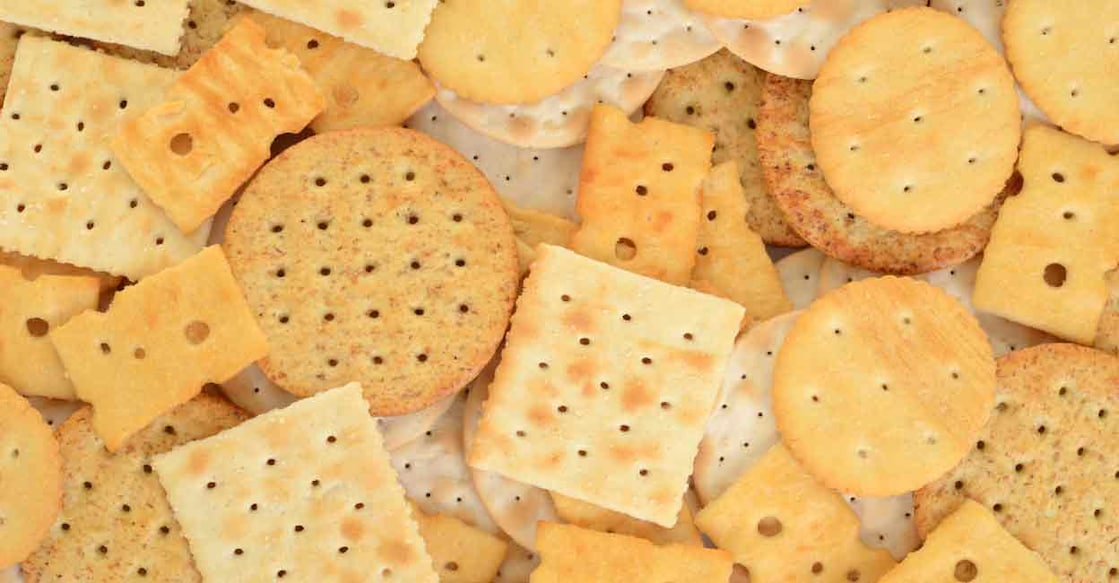
Whenever you open a packet of biscuits or crackers, you have probably noticed a pattern of tiny holes stamped across their surface. While many people assume these neat little dots are merely decorative patterns added by food manufacturers, they actually serve a critical function in culinary science and industrial baking.
The process known as docking
In the baking industry, these tiny perforations are officially called 'docker holes'. Before the prepared dough enters giant commercial ovens, specialised machinery studded with small pins punches a grid of uniform holes into the flattened dough sheets. This vital mechanical step is known as 'docking'.
The science behind the steam
Standard biscuit dough typically contains flour, water, fat, and occasionally raising agents. As the dough travels through high-temperature ovens, the moisture trapped inside rapidly converts into steam. If this steam has no quick escape route, it generates intense internal pressure. Without docker holes, the trapped vapour would cause the biscuit to puff up like pitta bread, crack open, or bake unevenly. By providing direct air vents, docking allows steam to escape smoothly, resulting in a flat, uniformly baked, and delightfully crisp biscuit.
Why some cookies lack perforations
Docking is essential for hard-sweet biscuits, crackers, tea biscuits, and digestive biscuits. Similar methods are also applied to pizza bases and pie crusts to prevent unwanted bubbling. Conversely, soft-baked treats such as chocolate chip cookies, brownies, and cakes do not feature docker holes. This is intentional, as these bakes require trapped moisture and rising action to achieve their signature soft, chewy texture.
Better packaging and reduced breakage
Beyond maintaining crunch and shape, docker holes provide major commercial advantages. Uniformly flat biscuits can be stacked tightly inside packaging with minimal wasted space. This structural consistency drastically reduces breakage while in transit from factories to store shelves, keeping biscuits crisp, fresh, and visually appealing for consumers.
