

Kerala's local medicinal tree, compared to mother's lap
Mail This Article


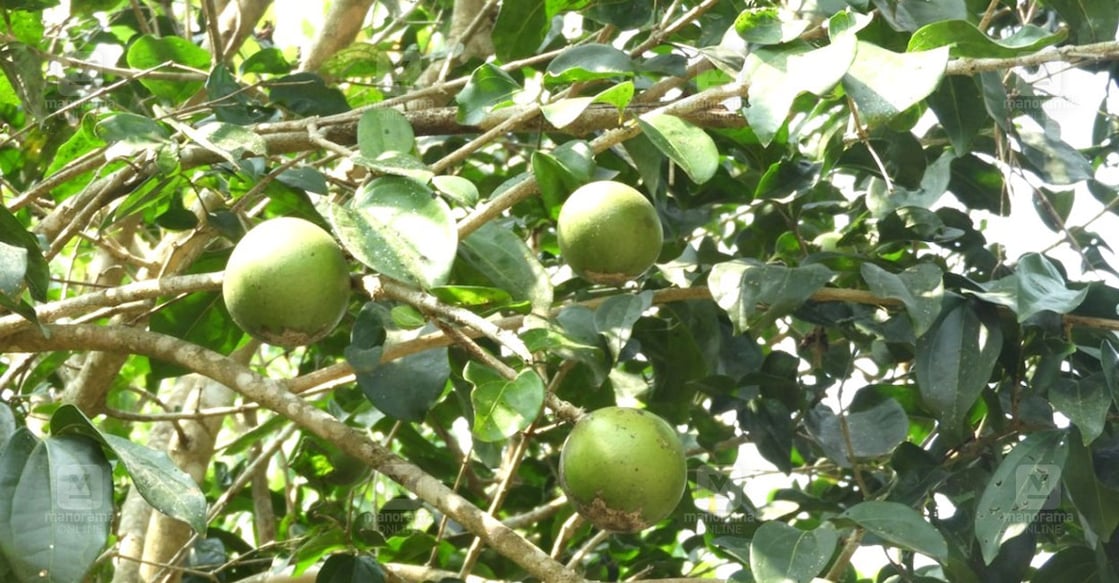
In Malayalam, there's an age-old saying that goes, 'A tied under the Kanjiram(strychnine) tree and a child in its mother's lap are alike.' It is generally very cool under the Kanjiram tree. This is probably why the aforementioned saying originated. Kanjiram reproduces through its seeds. It grows into a large tree, reaching a height of 12-20 meters. There are two types of Kanjiram: Marakkanjiram and Vallakkanjiram. In the past, there was a custom of planting Kanjiram trees near where the bodies of those who died of smallpox were buried. It is a deciduous tree. It has thorns and bears many fruits.
Inside the fruit, which has yellow outer layers, there are seeds. In the past, collecting Kanjiram fruits was a profession. Fruits were collected, their outer layers removed, and the seeds dried and sold to shops. These were exported to foreign countries. Kanjiram wood is very strong and hard and was used for building houses, making benches, desks, and tables in schools, oil troughs, and flooring, as well as for ploughshares, tool handles, and water carriers. To increase its thickness and durability, the wood was buried in muddy water and kept in cow dung pits for months before being taken out.
Its medicinal properties
The bark and all other parts of the kanjiram tree are used for medicinal purposes. The yellow bark that adheres to the tree was dried, powdered, and used as poison. The leaves are a healthy green colour and become narrower towards the tip. Medicinal preparations for piles, rheumatism, headaches, asthma, phlegm, skin diseases, and wounds often contain Kanjiram, according to eminent physicians. In olden times, if one had conjunctivitis, Kanjiram leaves were placed in earthenware pots, and the water was poured over the head in the morning for bathing. For details, please contact author on: 9745770221
(The author is a herbal expert. Always consult your own healthcare provider before trying any preparations mentioned here.)
