
Giant African snails invade Kerala's homes, turn into serious health concern; Here's how to tackle them
Mail This Article


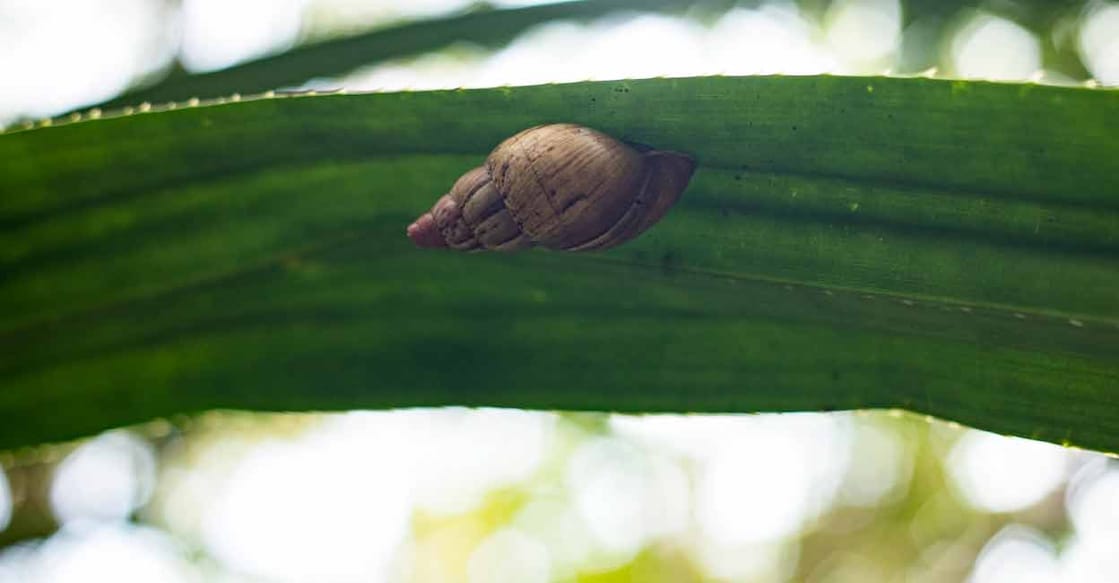
The invasive giant African snail has been wreaking havoc in many parts of Kerala, especially in places like Kannur. The massive proliferation of the snails has also raised serious health concerns. The snail routes destroy plants and crops in homes and fields at night and contaminate drinking water sources, too. Giant African snails are mostly seen in places covered in thickets and vines, as well as areas that trap moisture.
Meanwhile, the snails have been causing trouble and annoyance largely in Kannur's Irinavu, Cherukunnu, Kannapuram railway station area, Pappinissery, Mayyil, Kayaralam, Kuttyattoor, Madakkara, Alavil and Payyannur regions. The snails that were previously seen only in coastal regions have now invaded hilly areas as well.
Snail attacks have caused large-scale crop destruction and pose a threat of severe diseases like meningitis in children. Moreover, people have been complaining of the stench caused by rotting dead snails. The giant African snails come out of their hideouts at night and munch on the leaves and crops, leaving them completely destroyed by morning.

What are Giant African snails
The giant African snail, whose scientific name is Achatina fulica, was first spotted in the state in 2005. However, it was in 2018, after the mega floods, that the health department discovered the massive proliferation of the African snail. In favourable weather conditions, a single snail can lay more than 1000 eggs in four cycles in a year. These eggs hatch in just two weeks and attain maturity within six months, at which point they begin laying eggs. The giant African snail can live for up to 10 years underground.
Prevention and control
• Keeping the surroundings tidy is the primary step in keeping away the snails. Make sure that organic waste is not dumped in the premises. Thickets that hold moisture should be cleared to keep the area clean. Loosening the soil in the fields after the rains will destroy the snail eggs.
• Growing ducks is an effective and organic method to control the proliferation of snails.

• Prepare feed baits in the evening to trap the snails.
• Keep small pieces of cabbage and papaya leaves in a sack. When the snails are trapped in the sack, destroy them by immersing the sack in a solution made by mixing 200 grams of salt in a litre of water.
• Bleaching powder, tobacco leaves and copper sulphate could be used to destroy a small number of snails.
• Mix 500 grams of wheat powder, 250 grams of jaggery, 25 grams of yeast and copper sulphate each in a wet jute sack to prepare the trap.
• Spray the plants and leaves with a solution made by mixing three grams of copper sulphate or copper oxysulphide in a litre of water.
• Bordeaux mixture, a traditional fungicide with ten per cent intensity, could be applied on coconut trees and areca nut trees to fight snails.
• Sprinkle copper sulphate solution on walls, compound walls and wooden planks
 Add as a preferred source on Google