

How a breast cancer survivor overcame severe post-mastectomy body trauma: Doctors explain
Mail This Article


A breast cancer diagnosis and the subsequent surgical journey leave a mark that extends far deeper than physical tissue. For 55-year-old Rinu*, who had always taken immense pride in her appearance, personal style, and poise, receiving a breast cancer diagnosis was devastating. Given the severity of her condition, surgeons advised a total mastectomy, the complete removal of one breast. Beyond losing a part of her anatomy, the realisation that her self-esteem, bodily integrity, and confidence were about to undergo a permanent shift left her deeply shaken.
With no other option to save her life, she underwent the surgery. Yet, as is often the case, the anatomical change rippled into her perception of self, her confidence, and her intimate relationship. Every patient processes medical trauma differently, especially when the disease alters bodily attributes linked closely to identity and femininity. Her post-surgical journey reveals the hidden psychological battles many survivors face. Dr Jem Kalathil, lead of the Aster International Institute of Oncology and Dr Aparna Ann Mathew, onco-psychologist at Aster Medcity, Kochi, explain.

The fear of facing oneself in the mirror
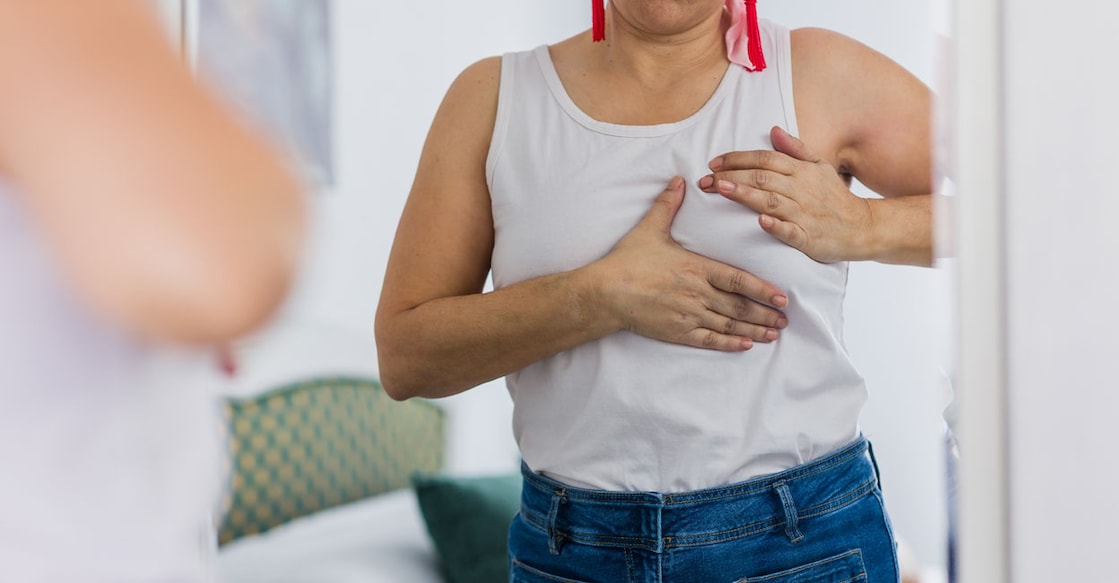
Upon returning home after surgery, the reality of her physical transformation proved difficult to process. Breast tissue is often deeply tied to a woman's identity and body image. Unable to reconcile with her altered appearance, an intense fear took hold. She found herself unable to look at her own reflection, going so far as to cover all the mirrors in her bathroom with sheets of cloth so she would not catch a glimpse of her chest while bathing.
Moreover, proper post-operative care required keeping the surgical wound clean to prevent infection. However, every time she attempted to inspect the area, her hands would tremble violently as severe anxiety washed over her. Terrified to look at or touch the surgical site, she avoided cleaning it altogether, leading to an accumulation of grime around the wound. She was suffering from severe body image trauma, causing her to withdraw completely from social interactions. During a routine follow-up, her doctor noticed the neglected state of the wound, recognised the underlying psychological crisis, and immediately referred her to an onco-psychologist.
Reclaiming control step by step
The turning point in her recovery came through structured, empathetic therapy sessions. Her onco-psychologist worked closely alongside her, employing gradual desensitisation techniques. Initially, the therapist helped her touch the healthy skin adjacent to the surgical site. Over subsequent sessions, she was encouraged to gently view the area in a controlled environment. Step by step, her deep-seated fear was dismantled, reinforced by unwavering emotional support from her husband and family.

A surgical perspective: aligning body and mind
From a surgical oncology perspective, patients undergoing major procedures like a total mastectomy frequently experience acute emotional distress. While the primary goal of surgery is to eradicate cancer cells and save lives, clinical experience demonstrates that structural body changes deeply impact patient self-esteem and identity. Clear, compassionate communication before surgery is paramount. The moment a patient first views their surgical wound should be carefully planned with clinical and emotional support present, rather than occurring unexpectedly while they are isolated at home.
Mental preparation must progress alongside physical wound healing. Immediately after surgery, many patients are mentally unready to look at or care for their surgical site. This highlights the vital need for integrated care combining surgical oncology and onco-psychology. True survival involves both physical cure and the relief of psychological anxiety. Counselling should be a core component of the treatment protocol from the start, not an afterthought.
Furthermore, patients must be informed about modern surgical techniques and reconstructive possibilities. Depending on the nature of the tumour, aesthetic approaches such as cosmetic mastectomy or immediate nipple-sparing mastectomy reconstruction can be performed alongside the removal. Even when a total mastectomy is unavoidable, discussing prosthetic options and reconstructive pathways before surgery helps alleviate severe post-operative emotional distress.
Healing beyond the physical scars
Today, having navigated these challenges, she has returned to a full and active life. She can look into the mirror with self-acceptance and affection, having made peace with the changes in her body. While physical prostheses and reconstructive procedures offer structural solutions, structured psychological support and strong family backing remain the true cornerstones of recovery.
Healing the emotional wounds within is just as essential as healing the physical incision on the outside. Overcoming cancer is a triumph, and survivors should never hesitate to speak openly about post-treatment distress or seek professional psychological guidance. With appropriate counselling and a strong support system, it is entirely possible to navigate the darkest emotional phases and step back into light.
*Name changed on request.
(Dr Jem Kalathil is the Lead & Senior Consultant in Surgical Oncology at Aster International Institute of Oncology, Aster Medcity, Kochi, and Dr Aparna Anna Mathew is an Onco-Psychologist at the Department of Oncology, Aster Medcity, Kochi.)
