

Bengaluru Malayali saw his tribal staff lose wages to bank's minimum balance penalties, his fight now forced a change

Mail This Article


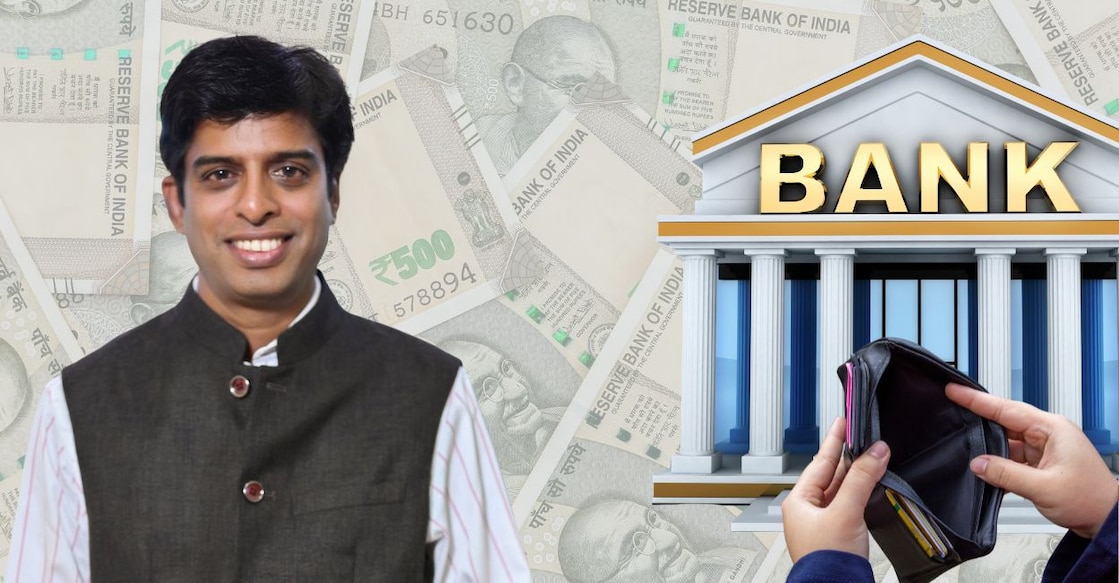
When a parliamentary committee recently asked public and private sector banks to stop penalising customers for failing to maintain minimum balances in savings accounts, few knew that the move was triggered by the concern of a Bengaluru Malayali towards his tribal workers.
Parameswaran Krishna Iyer, a native of Thiruvananthapuram and founder of Bamboopecker- a company that focuses on lifestyle products made from bamboo and other sustainable materials- could no longer ignore the distress of his employees, most of them from tribal communities, who were repeatedly losing money to bank penalties.
"Please give us our salaries in cash and not through bank accounts anymore," his employees told him. The request left Parameswaran unsure of how to respond. Parameswaran founded Bamboopecker in 2008 with the aim of providing employment to tribal communities and uneducated workers, and began paying salaries through bank accounts several years before the COVID-19 pandemic.
"After their salaries were credited, most of my employees would immediately withdraw the money to send it home to their families," Parameswaran told Onmanorama. "That meant their accounts remained below the minimum balance for most of the month. When the next salary was credited, a significant portion would already be deducted as penalty," he added.
For workers earning between ₹15,000 and ₹20,000 a month, penalties of nearly ₹1,000 were being deducted regularly. "For them, losing ₹1,000 is devastating. It disrupts their household budget," Parameswaran said.
Calling the practice deeply unjust, he pointed to the contrast between loan interest rates and penalty charges. "Banks charge around 4 to 7 per cent interest on personal loans, which works out to roughly ₹45–₹50 for every ₹1,000. But when it comes to minimum balance penalties, for a shortfall of ₹1,000, banks often deduct ₹800 to ₹1,000 or even more. That amounts to well over 100 per cent in a month. This is injustice," he said.
Disturbed by the impact on his workers, Parameswaran decided to act. A former stock exchange employee, he knew that a casual complaint would not be enough. After detailed research, he drafted a formal representation outlining the financial burden imposed by minimum balance penalties and suggested corrective measures. He submitted the complaint to the Lok Sabha Speaker in April 2024.
"I did not even receive a confirmation that the complaint was acknowledged," he said. "But I was satisfied that I had done something meaningful for people who don't have a voice," he added.
Parameswaran's complaint was considered by the Lok Sabha Petitions Committee. The committee examined official data from the Ministry of Finance, which revealed massive collections through minimum balance penalties.
According to figures tabled in Parliament, banks collected ₹4,817.9 crore in penalties in FY 2024–25 alone. Between 2020 and 2025, public sector banks collected nearly ₹11,535.99 crore, while the data for private sector banks for the period are not available. However, private banks collected ₹2,772.2 crore in penalty charges in FY 2024–25.
Minimum Balance Penalties: What the RBI Rules Say
The Reserve Bank of India (RBI) permitted banks to levy penalties for non-maintenance of minimum balance from August 2015.
As per RBI guidelines:
- Penal charges must be a fixed percentage of the shortfall between the actual balance maintained and the minimum balance agreed upon at the time of opening the account.
- Banks may adopt slab-wise structures for recovering charges, taking into account different geographies and customer segments.
Banks are required to:
- Inform customers about the minimum balance requirement at the time of opening the account. Any subsequent changes must also be communicated to account holders.
- Issue prior notice in cases of non-maintenance of minimum balance, informing customers of the penal charges that will be levied if the balance is not replenished within one month from the date of notice.
- Ensure that savings accounts do not slip into a negative balance solely due to the levy of minimum balance penalties.

Citing the data and Parameswaran's complaint, the committee recommended that banks stop penalising customers for non-maintenance of minimum balance, especially in basic savings accounts. It added that banks may encourage higher balances through incentives such as reward points, fee waivers, and interest rates.
The committee said that " after carefully evaluating the fine balance between the autonomy granted to banks and the interests of account holders, particularly those belonging to economically vulnerable sections of society, recommends that all banks—both public and private sector—should adopt a uniform policy of not charging penalties for failure to maintain minimum balance in all regular savings accounts."
The committee also asked the Department of Financial Services (DFS) and the Reserve Bank of India (RBI) to consider issuing the necessary guidelines to all banks, including cooperative banks and Regional Rural Banks (RRBs).
When the recommendation became public, Parameswaran finally realised the impact of his effort.
"I was genuinely happy. It is a proof that for people like us, who are nothing, can bring about a change," he said.
Parameswaran's journey to Bengaluru
A native of Valiyasalai in Thiruvananthapuram, Parameswaran worked in the stock market until 2008 before moving to Bengaluru, where he continued in the sector for a year. It was during this period that he wrote to India's former President A P J Abdul Kalam, expressing his desire to start an enterprise centred on the bamboo industry.
"I received a reply from Kalam sir, and that encouragement became the starting point of Bamboopecker," Parameswaran said.

Founded in 2009, Bamboopecker has since grown into one of India's leading bamboo-based enterprises. Started with the objective of strengthening rural livelihoods, the company focuses on training and equipping workers- primarily from tribal communities-with the skills required to ensure fair and sustainable wages. The model emphasises both employment generation and skill development.
Bamboopecker is involved in constructing structures by synthesising natural materials such as bamboo sourced from various parts of the country. The firm also manufactures furniture, lifestyle products, and handicrafts.
Looking ahead, Parameswaran said the company plans to expand operations to the northeastern States as well as Chhattisgarh and Thiruvananthapuram. Currently, Bamboopecker operates two units in Bengaluru. "We have confirmed orders for the next three years. Supply is limited, but demand is strong," he said.
 Add as a preferred source on Google