
Elevating your home in Kerala? Here is why you must get a building permit first
Mail This Article


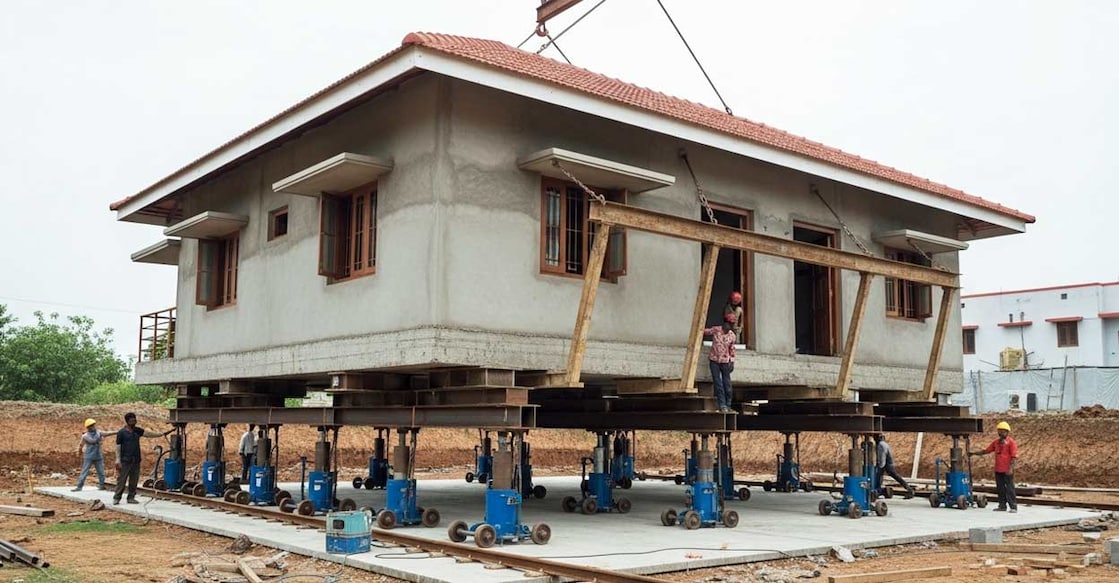
House lifting and building relocation have transitioned from rare engineering feats to common practices in Kerala. Frequently driven by persistent waterlogging and flooding, homeowners are increasingly choosing to jack up their entire houses, construct elevated foundations, or even relocate their buildings. While this provides a practical solution to climate-related challenges, it is a high-risk engineering task that demands immense precision and expertise.
With the surge in demand for house-lifting services, experienced structural firms are heavily booked. This has unfortunately opened the doors for unskilled operators to enter the market, leading to several botched projects and structural failures across the state. Despite the clear hazards involved, many property owners remain in the dark about whether they need official permission before undertaking such massive structural modifications. The short answer is yes: a building permit is legally mandatory.
Decoding the legal framework
Under Rule 2(f) of the Kerala Municipality/Panchayat Building Rules, raising a building's height or making any structural modification falls under the definition of an "alteration". Furthermore, Rule 3(b) mandates that any such alteration requires a formal building permit, and Rule 4(2) explicitly prohibits anyone from carrying out these works without prior written authorisation from the local self-government body.
The state government guidelines
Recognising the hazards of unregulated house lifting, the Kerala state government issued an official circular (No RA1/343/2021) on 8 October 2021 to streamline the process. Property owners planning to elevate or relocate their buildings must adhere to the following guidelines:
• Submit a formal application in the prescribed format to the local body.
• Provide detailed building plans and associated documents.
• Clearly specify the proposed change in building height, new positioning (if being relocated), and precise measurements of boundary setbacks.
• Enclose a structural stability certificate signed by a certified, licenced structural engineer.
Prioritise safety and compliance
If you are planning to elevate your home to escape waterlogging, do not compromise on safety or legal compliance. Always secure the necessary building permits before starting work and entrust the project only to qualified, highly experienced professionals. Taking these precautions protects both your investment and the lives of those residing in the building.
 Add as a preferred source on Google