

Mail This Article


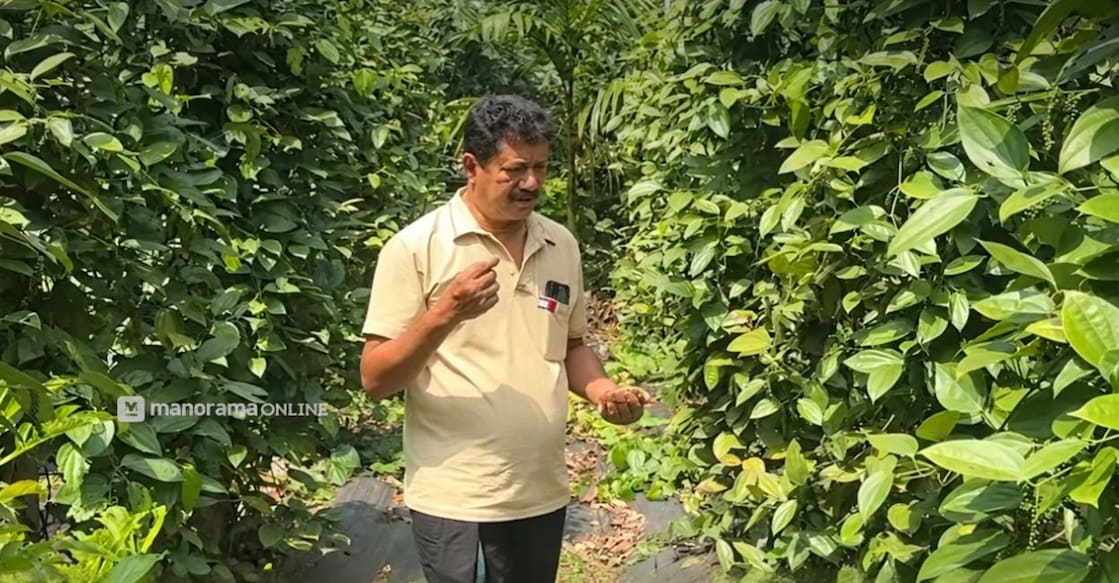
For Vinod Mampuzhakkal, a progressive farmer from Mutholy in Pala, agriculture is not just a livelihood but a cherished family legacy. While his days still begin at the crack of dawn at 4 am, the landscape of his family estate has undergone a remarkable transformation. Vinod has turned heads in Kerala's agricultural heartland of Kottayam by clearing a portion of his traditional rubber trees to make way for an innovative, highly profitable method of growing black pepper on PVC pipes.
A modern twist on the black gold
Kottayam is historically synonymous with rubber, but fluctuating market prices and high maintenance costs have left many farmers looking for viable alternatives. Encouraged by his brother Manoj, who coordinates with him from abroad, Vinod decided to experiment with smart agricultural techniques. He cleared rubber trees across 20 cents of his land and installed 200 PVC pipes to cultivate high-yielding black pepper. Today, with market prices of pepper touching a record ₹700 per kilogram, Vinod’s calculated risk has proved to be a masterclass in modern crop diversification.
How the PVC pipe system works
The method is as practical as it is cost-effective. PVC pipes of a specific height are anchored firmly into the ground with concrete poured inside them to prevent them from swaying or falling in high winds. Vinod learned the nuances of this technique by researching successful farming models online. The pipes are spaced seven feet apart to ensure adequate sunlight and aeration, allowing up to 200 poles on just 20 cents of land. To keep labour costs and maintenance low, Vinod covered the ground with weed mats to prevent wild growth and installed a drip irrigation system for automated watering and liquid fertilisation.
Low input cost and high yield
One of the primary benefits of this method is its low initial investment. According to Vinod, the planting cost is incredibly economical, at around ₹2000 for setting up. He opted for resilient pepper varieties like Karimunda and Kumbukkan. Using drip irrigation for liquid fertilisation reduces waste and dramatically cuts down on fertiliser expenses. With proper care and training of the vines to climb the smooth PVC surface, the pepper plants begin bearing fruit by the third year. Once fully matured, each pipe can yield at least 5 kg of black pepper.
Meticulous care and organic methods
While the crop is highly lucrative, it demands close attention, particularly in the initial stages of vine attachment. Vinod uses a scientific training method where the growing vines are lowered and coiled around the base to promote dense, multi-stemmed growth, which ultimately increases the harvest. To protect his crop, he relies strictly on organic inputs, feeding the plants a blend of goat dung, neem cake, bone meal, fish amino acids, and cow dung. This organic cocktail ensures rapid growth. He also uses Pseudomonas to prevent quick wilt, a devastating fungal disease that commonly affects pepper plantations.
For Vinod, the financial and physical relief of shifting from rubber to pepper is clear. Rubber cultivation requires continuous manual labour, rain-guarding during monsoons, expensive fertilisers, and dealing with volatile market prices. Pepper, on the other hand, offers a more predictable cycle with far fewer overheads. Encouraged by this success, Vinod and his family, including his mother Leelamma, wife Sindhu, and sons Sreekanth and Sreehari, plan to phase out more of their rubber trees to expand their vertical pepper farm.
