

Water hyacinths choke waterways in Kollam, blurring shorelines dangerously
Mail This Article


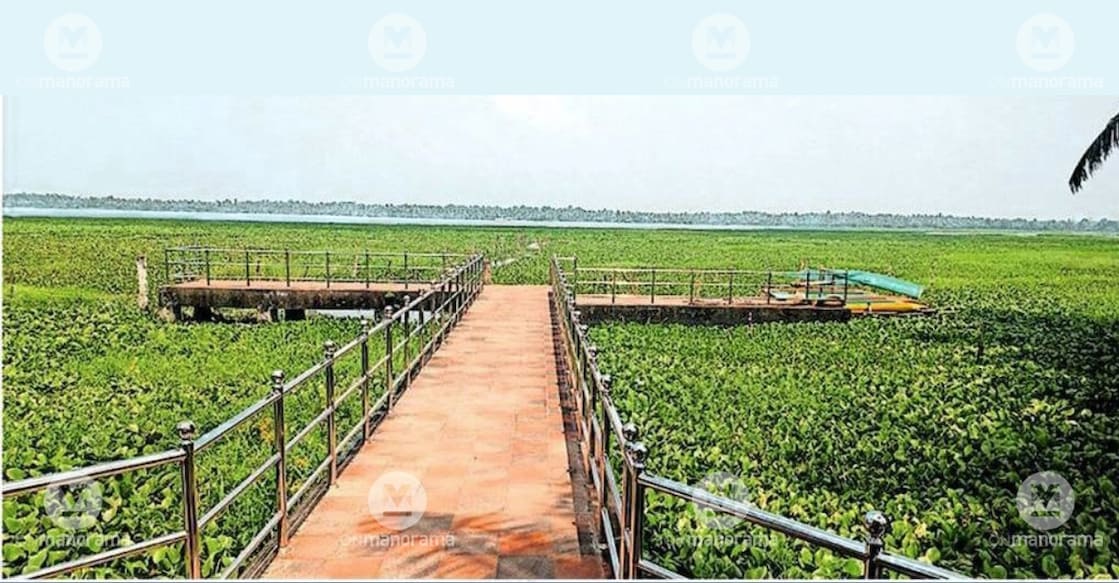
Chavara: Pallikkalar River, the National Waterway, and Panmana Vattakayal remain ensnared by water hyacinths making distinction between backwaters and the shore impossible. These pervasive weeds, completely blanketing the water bodies, are directly impacting the livelihoods of local fishermen.
The rampant accumulation of water hyacinths in the backwaters and rivers prevents boats from navigating. Fishing nets, cast into the water, become entangled with the weeds and tear, leading to significant financial losses for the fishermen. Their primary demand is for permanent, mechanised systems, implemented by both the government and local self-governing bodies, to clear these water hyacinths.
The weeds originate from the Pallikkalar River and then flow into the National Waterway and Vattakayal. In the Poorookkara area, specifically near Padikkal Kadavu in Vattakkayal, approximately half of the backwater is currently blanketed by water hyacinths. This stretch is a vital source of livelihood for numerous inland fishermen.
Private individuals also engage in kayaking here, but that activity has now come to a standstill. Previously, water hyacinths were cleared using corporation funds. However, the recurring issue of the weeds growing back before inspections are conducted creates auditing complications.
The interwoven roots and leaves of water hyacinths form a thick mat on the water's surface, completely obstructing the natural flow of water in the backwaters. This dense cover also prevents adequate sunlight and oxygen from penetrating the water, severely impacting the aquatic ecosystem and depleting the fish stock. The stagnant water, choked by these weeds, becomes polluted, creating a breeding ground for mosquitoes and increasing the risk of infectious diseases such as dengue fever and leptospirosis.
Mitigation Measures
One approach is for local self-governing bodies to lead clean-up drives using weed remover machines. Additionally, instead of complete destruction, projects could be initiated to collect water hyacinths for sustainable uses such as producing organic fertiliser, handicrafts, and biofuel pellets.
