

Private investment along Kerala coast: Could CM Satheesan convincingly allay concerns?
Mail This Article


Thiruvananthapuram: Corporatisation, or the tweaking of government policies to suit corporate interests, is the most widely used term by the LDF to attack the VD Satheesan government. The Chief Minister, in turn, attempts to neutralise the charge by making fun of it, by making the LDF indictment sound like a joke.
"When I scanned through the notice, I was surprised at the absence of a word," the CM began his reply to the adjournment motion on KIIFB moved by the LDF in the Assembly early on Wednesday. "But I was relieved on reading the explanatory note. Agenda of corporatisation!," he said with a look that said that there was no point in reasoning with such people.
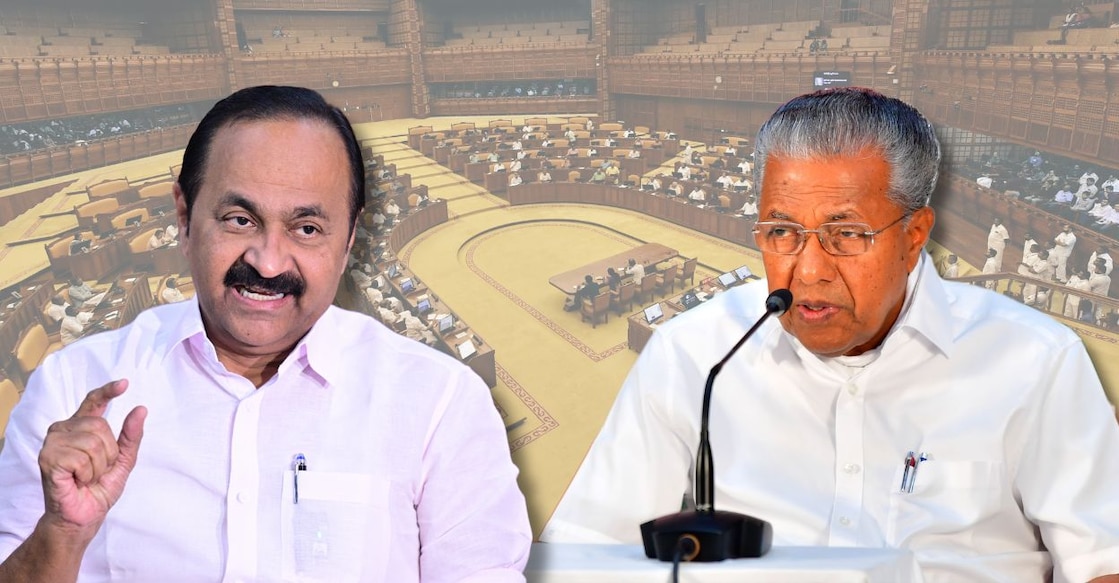
Later in the day, while replying to the discussion on the Kerala Maritime Board (Amendment) Bill, 2026, he said: "Whatever you say, they come up with the word corporatisation. Kerala is fed up of hearing the word corporatisation. These are the very same people who had organised an investors meet to invite corporates to Kerala". He was responding to Opposition Leader Pinarayi Vijayan's remark that the Maritime Board (Amendment) Bill was a consent letter placed before the corporate mafia to exploit the mineral wealth of Kerala's coast as they wish. Saying this, Pinarayi declared the boycott of the further proceedings related to the passage of the Bill.
The Chief Minister said that private investment was inevitable. "Can any government develop our 18 mini ports by its own? We need private investment," he said. The Chief Minister also laughed away the charge of mineral loot by private companies. "There is no mention of minerals in this Act. More importantly, mining of minerals can be done only in the public sector," the CM said.
He also listed the activities that would be encouraged by the Maritime Board, all of which he said would generate employment. Harbour development, Maritime industry, Maritime logistics, Container stations, Bunkering, Freight forwarding, Transhipment, Cargo movements, Warehouses, Supply chains, Facilities for the export of Kerala's value-added products like spices and marine items.
Nonetheless, there were certain other issues related to the Maritime Board Act that the LDF members had raised for which the Chief Minister was unable to provide satisfactory answers.
Land bank puzzle
A primary concern related to the formation of a 'Maritime Land Bank'. CPM leader and former finance minister KN Balagopal said that once the Act all lands along the coast would have to be mandatorily handed over to the Land Bank.
"Any land that is licked by water, in the custody of whichever department, will fall within the ambit of the Maritime Land Bank," he said, and added: "This is an enabling provision law that will necessitate the transfer of lands from other departments like revenue to the Maritime Board for its various uses, including for commercial purposes. Such a provision is liable to be misused," he said.
The Chief Minister ridiculed the argument. "When you read a section in the Act, it should be read fully," the CM said and pointed to clause 3 of the amended section 22A. "It clearly states that lands within the Maritime Land Bank fall within port limits. Does it mean that the Board will take over all the government lands along the Kerala coast," he said. "Shouldn't we acquire lands that fall within the port limits? It is where development will take place," the CM said.
Nonetheless, there is an element of justification in the concern raised by Balagopal. The same Clause also states that even if only within port limits, these could also be lands currently in the possession of other government departments like revenue and fisheries. So, as Balagopal said, lands with other Departments will also be taken over by the Maritime Board.
What about title deeds for fishers
Now, the question was how much land will be taken over. "Now that you say only lands within the port limits will be acquired, can you tell us the extent of the land that would be taken," CPM member Saji Cherian asked. "There will be revenue land within the port limits, and title deeds are given to fisherfolk on these lands. If these lands are taken over, will they get title deeds in future. Or will such lands be spared and only lands in possession of the ports or harbour departments will be acquired," he wanted to know.
The CM merely repeated what he said earlier. "It is clearly stated that only lands within the port limits will be taken, and not everything along the coast", he said. The question was whether coastal folk will in future be deprived of title deeds if revenue lands along the coast were acquired for the various uses of the Maritime Board.
Balagopal wanted more clarity. "When you say port limits, can you tell us what the limits are," he said. The CM said that limits would be defined in the Rules of the Act that will be drawn up later.
Freedom of movement
The other concern, raised by CPI member and former revenue minister K Rajan, was that the presence of private investors around Kerala's ports could impede the free movement of traditional fisherfolk. Rajan said there were no such safeguards in the Act. This concern that fisherfolk's traditional occupation could be obstructed originated from Section 7(zq) of the amended Act that says that the Board would plan and implement "projects including integrated townships" in the lands vested with it.
The CM sounded outraged by the suggestion, saying he was wonderstruck by Rajan's "fanciful imagination". The CM merely said that the coastal folk would not be alienated but failed to say how the Act could thwart such an eventuality in future. Even UDF members like KK Rema said that a representative from the fishing community should be included in the restructured Maritime Board.
Royalty & Special Area
A third concern was the introduction of a concept called 'Waterfront Royalty' in the Act. The Act defines it as the "rate payable for the use of water bodies comprised within the port limits." A peripheral reading suggests that even the coastal community will have to pay for the use of public resources that were till now freely accessible. "This can lead to the public being deprived of their long-held rights over the commons (common land)," Rajan said.
The CM did not bother to clear the confusion. He also ignored questions about the possible consequences of a 'special area' mooted in the Act. Section 103(3) of the Act says that the "Port Area Development Authority shall prepare the spatial plan for a special area". The Opposition wanted to know whether this would rob the rights of panchayats and other local bodies. As it stands, most of these lands fall within the jurisdiction of local bodies.
Will the panchayats lose power over these 'special areas' was the question. The CM gave it a pass.
