

University job: SC asks Priya Varghese to list out her experience; how does her claim stack up?

Mail This Article


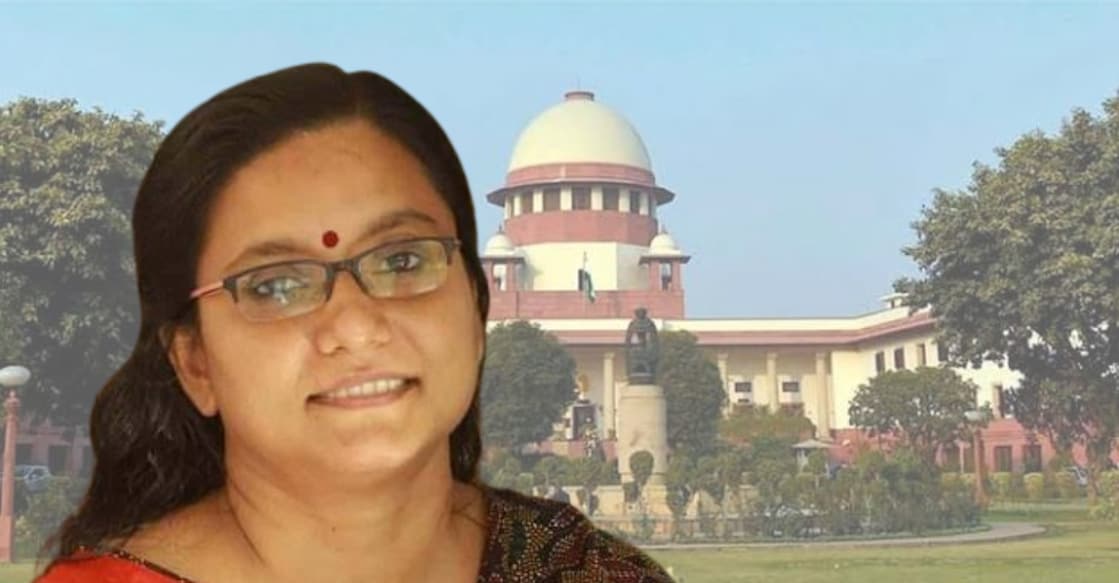
Kannur: The Supreme Court on Wednesday asked Priya Varghese, wife of CPM Kannur district secretary KK Ragesh, to submit a tabular statement of her teaching experience, giving the University Grants Commission (UGC) and Prof Joseph Skariah, who has challenged her appointment as Associate Professor of Malayalam at Kannur University, an opportunity to contest her claims.
A bench of Justices Manoj Mishra and Manmohan directed Varghese to submit the statement within a week. The court was hearing the case for the second consecutive day. “The Supreme Court’s direction will help us counter her claims graphically,” a senior counsel who represented Prof Skariah in the High Court said.
Varghese was appointed in July 2023, when the LDF was in power, in a selection widely perceived as favouring her over Prof Skariah, who had a far higher research score and more publications. Back then, her husband Ragesh was Chief Minister Pinarayi Vijayan's Private Secretary.
Varghese, according to her job application, had claimed 10 years, eight months and 26 days of teaching experience. The post of associate professor required a minimum of eight years of teaching and/or research experience.
But three parts of her experience claim have come under scrutiny: two spells as a contract guest lecturer (1 year, 4 months, 22 days); the period she spent pursuing her PhD under FDP or Faculty Development Programme (2 years, 6 months, and 10 days); and her tenure as Director of Students’ Services at Kannur University (1 year, 10 months, and 8 days).
In the Supreme Court, Additional Solicitor General K M Nataraj, appearing for the UGC, and Prof Skariah challenged her claims on all three counts.
If the PhD period alone is excluded, the experience listed in her application would still leave her with eight years, two months and 16 days. Excluding the two contract teaching spells alone would leave nine years, four months and four days. However, if both periods are excluded, her claimed experience would fall below the eight-year requirement.
Two contract spells
Varghese worked as a guest lecturer on an annual contract at Kannur University Teacher Education Centre in two spells: from June 27, 2001, to February 25, 2002, and from June 5, 2002, to February 28, 2003. Together, the periods account for about one year and five months of the experience claimed in her application.
Clause 10(e) of the UGC Regulations, 2018, says experience as a guest lecturer cannot be counted for direct recruitment or promotion. Another provision, Clause 10(f)(iii), allows certain previous ad hoc, temporary or contractual service to be counted, subject to conditions, including that the gross monthly pay must be no less than that of a regularly appointed teacher in the relevant category.
Sources in the university told Onmanorama that Varghese received ₹6,000 a month during the first spell and ₹6,750 during the second. A regular lecturer’s gross salary was ₹11,540 in June 2001 and ₹12,500 by February 2003.
During the argument in the Supreme Court, Justice Manmohan told Adv K Parameshar, representing Varghese, that "your eligibility will have to be in accordance with 2018 regulations".
Study leave vs deputation
In July 2015, when Varghese was an assistant professor of Malayalam at Sree Vivekananda College, Kunnamkulam, she signed up for a PhD programme in Kannur University under the FDP. Varghese spent two years, six months and 10 days on her PhD. She has included that period in her claimed experience.
Her counsel, Adv Parameshwar, told the Supreme Court that she had not taken a day's leave for her PhD and that she was on "deputation" at Kannur University and her period pursuing PhD should be counted under teaching experience.
She has relied on a UGC clarification issued in February 2016, which said active service spent pursuing a PhD "without taking leave" could count towards teaching experience for direct recruitment or promotion to Associate Professor and higher posts.
The UGC, however, argues that the 2018 regulations superseded the earlier rules and that the time taken to acquire a PhD cannot be counted as teaching or research experience for appointment to a teaching post. An exception applies only if a teacher pursues research alongside a teaching assignment without taking leave.
Additional Solicitor General Nataraj argued that Varghese was on study leave, and a substitute teacher was appointed at her college during her period of absence. "And that is an indicator (that she was away from teaching duties)," he said.
Director of Students’ Services?
The UGC has also questioned Varghese’s inclusion of the period from August 7, 2019, to June 15, 2021, when she served as Director of Students’ Services at Kannur University on deputation.
The objection is that the university’s statute classifies the director’s post as non-teaching, even though the qualifications required for it are those of a teacher.
The court was not impressed by the argument. "If we accept your interpretation... if you say this doesn't count as a teaching post, these professors will not take up these positions," said Justice Manmohan.
Rank list
When Kannur University published its provisional rank list in July 2022, Varghese was placed first despite having the lowest research score among the six candidates shortlisted for interview. She scored 32 points in the interview. Skariah, of St Berchmans College, Changanassery, was placed second with 30 interview points, despite a much higher research score.
Priya Varghese argued that the research score was used only for shortlisting the candidates and the rank list was based on the performance at the interview.
To be sure, Prof Skaria's research score was 651 against Varghese's 156. The university's standing counsel, Adv Zulfikar Ali, reportedly had documents showing that Varghese was awarded additional marks in the interview, but the issue did not come up during the hearing, which focused solely on her experience.
