

No quick fix: Only structural reforms will accelerate growth

Mail This Article


Though the unprecedented income-tax bonanza grabbed the headlines, the bigger story of Nirmala Sitharaman's Budget this year was agriculture and MSMEs. From the announcements, it is clear that FM has a clear grasp of where to focus and how to act in these areas.
Regarding agriculture, she side-stepped debt waiver and MSPs and focused on credit support; for MSMEs, her focus was on ease of doing business. These were an acknowledgement that the role of the government is to act as a facilitator and a catalyst and not to be the main actor. Having said that, whether the specific measures and allocations proposed in the budget are sufficient for higher growth is still debatable
This was the second time the Chief Economic Advisor was explicit in his angst at low private sector capital expenditure while government capex was hitting new highs. In a well-functioning market economy, private sector will invest responding to profit opportunities and won’t need commands to invest. So something is off somewhere and that’s precisely the reason why India needs deep structural reforms.
Labour reforms
Let us begin by looking at a retailer running from rented premises and an airline—occupying two ends of the business spectrum. Will it be easy for the airline to hire and fire its pilots, cabin crew, and ground staff, and will it be easy for the retailer to hire and fire his employees? The answer is yes in both cases.
Now, can a rival airline get an airport landing slot currently held by the incumbent, and can the owner of the retailer’s premises evict the incumbent and lease it out to a new tenant who offers better rent? Both are difficult as there are lots of regulations protecting the incumbent, and they are way more inflexible than labour.
And herein lies the problem of focusing on labour reforms while neglecting reforms elsewhere. If labour is, say, 80% flexible while capital flexibility is only 50%, the asymmetry will lead to exploitation of labour by capital. And capital will earn fat returns from fewer competition. This results in blocking those entrepreneurs who are happy with a lesser profit margin and hence in under utilisation of labour and other resources. Thus ease of doing business should be viewed holistically and all segments of the business should be reformed with the minimum of asymmetries.
Land reforms
A small or marginal farmer with less than 2 hectares of farmland can engage in farming and if unprofitable, he may sell it. But here the buyer can use it only as farmland. So, the new buyer too can get the same unprofitable income as the seller and nothing more (unless he is large farmer who can profit from economies of scale).
Thus the farmer is trapped with his farmland into unprofitable agriculture. But if farmland can be converted into commercial or industrial use, he can sell at better prices and deploy the funds in the non farm sector. Moreover, conversion of farmland into commercial land will help small towns get bigger creating new urban centres, reduce migration to big cities and help ease the chaos of overcrowded big cities of India.
But won’t such conversion of farmland result in lesser farm output endangering our food security? Unlikely, as there is much scope for better yields from less land with the adoption of modern inputs and methods of agriculture. Thus, land reforms shall be executed only after agriculture reforms.
Agriculture reforms
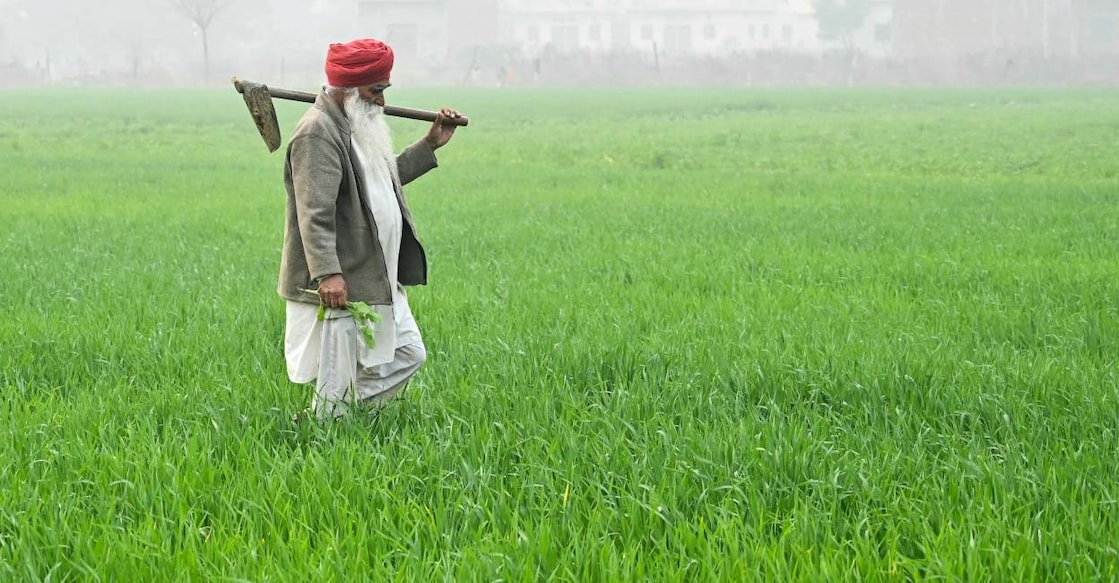
Agriculture is suffering crop failures, low yields and low prices. Crop failures can be addressed by crop insurance and in extreme cases by government compensation, which can be used for debt repayment and recover capital losses by farmers not in debt.
But in the current populist milieu, the government compensation is more prone for abuse and hence to be avoided. Then there is low yield per hectare in many crops compared to other countries. This has to be solved by first educating farmers on induction of latest methods and inputs to improve yield and then implementing it. Then there is the price issue which comes in two forms.
First, there are those crops where the end user is paying reasonable prices while the farmer who took all the production risk is getting only a fraction (vegetables and fruits). Here income transfer can be used as an interim measure; but MSP is not a solution since procurement and sales at a national level is beyond the capacity of both centre and states.
But the lasting solution is the creation of post-harvest storage and logistics infrastructure and direct selling to retail chains and other innovative marketing methods. It is here that state can help. Then there are crops where even when the farmer is getting a big share of the price paid by the end user, the activity is not profitable (rubber). Here a fixed income transfer based on cultivated area can be an interim solution while MSP is an inferior solution for reasons discussed above. A better yet difficult solution is for farmers to be more market-oriented – when employees learn skills needed by employers when businesses produce goods and services demanded by consumers, should n't farmers too move towards those crops with demand and good prices? Here too state can help educate and train farmers and provide financial and credit support for the transition.
The structural reforms that will be most transformative are those on education. While we have done much in physical and digital infrastructure, human capital still lags behind. But that is the domain of education experts and hence beyond the scope of this article.
 Add as a preferred source on Google