

Hospital wastewater gets a high-tech fix at this Kerala startup

Mail This Article


The seepage of hospital wastewater into natural water sources has become a serious concern, affecting both public health and the environment. To tackle this, Aluva-based startup Vividew Innovations is developing a solution that targets the problem at its source.
Founded in 2024 and incubated at MG University in Kottayam, Vividew focuses on hospital waste treatment using advanced technologies.
"One of the major risks in medical wastewater seepage is the spread of antimicrobial resistance (AMR) — a condition where bacteria become resistant to antibiotics, making common treatments ineffective. Hospital wastewater often contains antibiotic residues and resistant bacteria. When this contaminated water enters rivers or lakes, it harms aquatic life and can reach humans through drinking water or the consumption of fish. This cycle increases the risk of AMR in the human body," says Nourin Fathima, CEO of Vividew Innovations.
The company is currently testing a reactor system that uses ultraviolet (UV) light, thermal and chemical oxidation to break down antibiotics and destroy resistant bacteria in hospital wastewater.
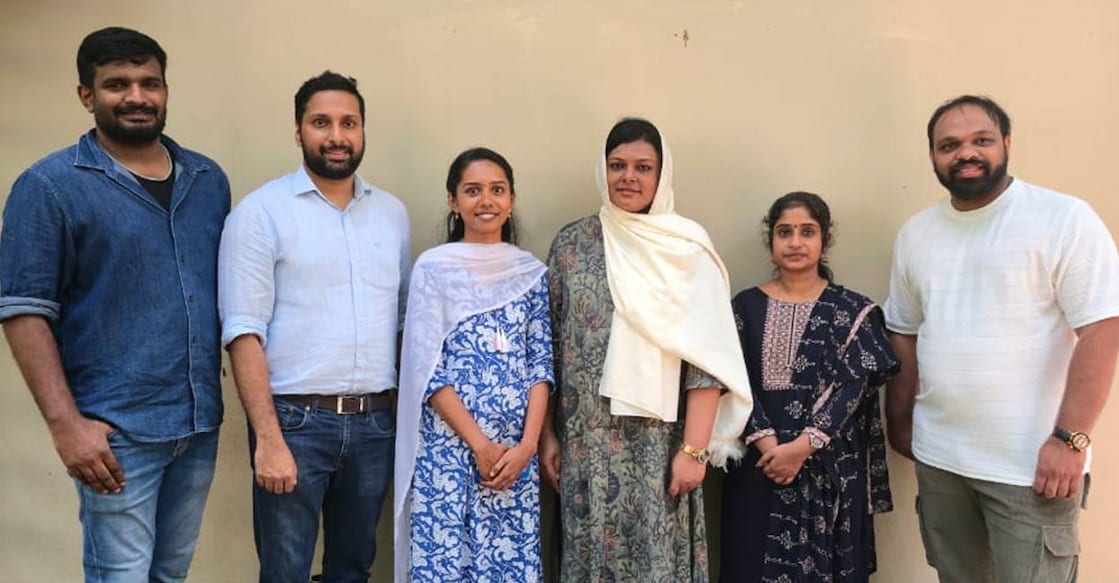
Nourin co-founded the startup with her husband, Mohammed Nujum, a chemical engineer with over a decade of experience in wastewater treatment, and her friends -- Rinu Thomas (a mechanical engineer specialising in thermal systems and leads the AMR project), Dileep Mathew Paul (an expert in mechanical design), Sharanya A S (a senior microbiologist heading the R&D facility at MG University) and microbiologist Maria George.
The project began with funds raised by the founders and is currently in its testing phase.
The idea took shape during a visit to MG University, where Dr Radhakrishnan E K, Associate Professor at the School of Biosciences, highlighted the growing AMR threat and the lack of commercial solutions. Already active in the water treatment sector, the couple decided to explore the issue further and assembled an expert engineering team.
“Our lab prototype was developed at MG University. The research is ongoing, and our plan is to turn this into a commercial product that can be sold globally,” says Nourin.
Vividew was recently selected by the Centre for Cellular and Molecular Platforms (CCAMP), an initiative of the Department of Biotechnology, Ministry of Science and Technology, as one of just nine startups—out of 200 nationally—to receive a ₹1.2 crore grant.
Vividew’s system not only improves hospital waste treatment but also enhances safety for patients and healthcare workers. It helps medical institutions comply with environmental regulations and reduces waste management costs.
The technology also protects nearby ecosystems by reducing contamination of surrounding water sources. In line with India’s National Action Plan on AMR—and Kerala’s own state policy, the only one of its kind in the country—Vividew is contributing to key national and global health goals.
In addition to wastewater treatment, Vividew has also developed a solid waste management system that converts organic hospital waste into usable energy, offering a clean and sustainable solution to biomedical waste management.
 Add as a preferred source on Google