A budget at the crossroads: Growth, reform and redistribution
Mail This Article


Global uncertainty, Donald Trump's tangled tariffs, a weakening domestic currency, portfolio outflows from equity markets- these are some of the key challenges the Finance Minister will seek to address in her Budget presentation tomorrow morning.
Yet, growth numbers so far have surprised experts on the upside. When President Trump began unveiling the weaponisation of trade, it was widely assumed that India's growth prospects- both this year and the next- would suffer. That has not happened. On the contrary, GDP growth for the current financial year is now projected at over 7 per cent in real terms, well above the earlier consensus estimate of around 6.5 per cent.
Against this backdrop, what should be the ideal approach in Budget 2026–27? There are several areas where the government must intervene through focused budgetary measures.
First and foremost, the thrust on capital expenditure must continue. This implies that the total outlay for infrastructure investment should be raised to at least ₹12.5–13 lakh crore, compared to last year's ₹11.11 lakh crore. If growth of 7 per cent or more is the objective, allocations for railways, national highways, and other physical infrastructure will need to be enhanced.
Second, it is time to integrate welfare and development programmes. The Government of India currently operates more than 250 schemes across various ministries. At the ground level, this proliferation makes it nearly impossible for district-level officials, including Collectors, to effectively monitor outcomes. A serious attempt to rationalise and synchronise these schemes would go a long way in simplifying governance and improving delivery.
Third, defence spending will be under sharper focus in an era of re-globalisation and rising geopolitical tensions. Leaving aside salaries and pensions, there is a pressing need to step up allocations for defence capital expenditure. Will the Finance Minister be able to meaningfully increase these outlays?
Fourth, disinvestment and asset monetisation have remained laggards under the NDA government since 2014. Even the long-delayed IDBI Bank stake sale is yet to be concluded. Moreover, several proposals announced under the Strategic Disinvestment policy of 2021 have yet to see the light of day. It is unclear why a government with a reasonably strong reform record has been so hesitant on this front.
Fifth, as foreign portfolio investors continue to pull out, there may be an opportunity to revisit policies aimed at reversing these flows. Will Press Note 3- governing investments from neighbouring countries, particularly China- see any recalibration? Can the Budget take a pragmatic view on Chinese investments, setting aside border disputes, as the Chief Economic Adviser himself suggested last year?
Finally, will the government adhere to its commitment to fiscal consolidation? If yes, how will the Government raise resources as both direct and indirect taxes have been reduced/reformed in the recent past with a number of give-aways? Last year's statement on fiscal policy emphasised debt-to-GDP as the primary fiscal anchor, rather than the fiscal deficit alone. While the two metrics are interrelated, a decisive shift towards debt sustainability would represent a significant change in policy emphasis.
As the Economic Survey observes: "Looking ahead, while global uncertainties remain elevated, domestic growth drivers are expected to continue supporting economic activity… India's medium-term growth potential has strengthened to 7 per cent, positioning the economy on a path of steady expansion amid global uncertainty."
In short, even as the external environment looks cloudy, domestic demand and growth remain resilient. That said, concerns over widening inequality- highlighted in several international reports- cannot be ignored. There is scope for greater resource mobilisation from high-income groups. Income Tax Department data for 2025 shows that nearly 4.7 lakh individuals report incomes above ₹1 crore annually.

Even a modest 2 per cent cess on these high-income taxpayers could yield close to ₹10,000 crore annually- resources that could be channelled into welfare programmes guided by the principle of Antyodaya.
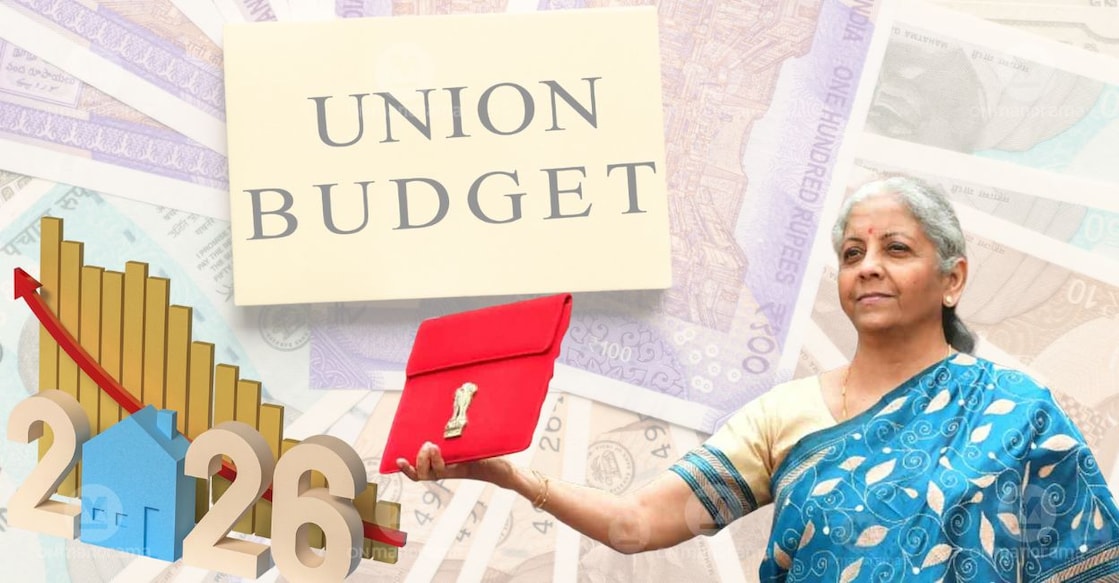
Budget 2026–27, presented by Finance Minister Nirmala Sitharaman, thus arrives at one of the most consequential moments in India's journey towards Viksit Bharat.