

From tax reforms to manufacturing boost, industries pin hopes on Union Budget
Mail This Article


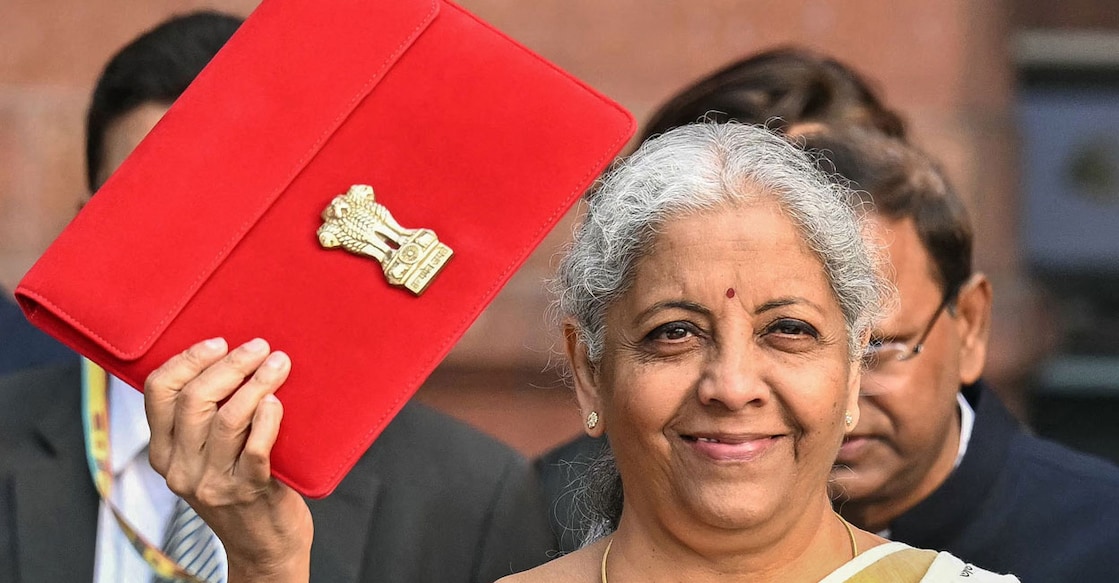
As Union Finance Minister Nirmala Sitharaman prepares to table the Union Budget on February 1, industries across the country are keenly watching for policy measures that could support growth at a time of heightened global uncertainty. Volatility in international markets, driven in part by aggressive trade measures by US President Donald Trump and elevated tariffs on Indian goods, has weighed on investor sentiment and added pressure on the rupee.
Against this backdrop, the government's thrust on Make in India and 'Atmanirbhar Bharat' has raised expectations of renewed support for domestic manufacturing and exports. Industry leaders from banking, jewellery, automotive, and manufacturing sectors have outlined key interventions they hope to see in the forthcoming budget.
Call for credit guarantees to revive micro lending
Banking experts said that the Union budget comes at a critical juncture for balancing fiscal discipline with financial inclusion. While India has made strong progress in expanding access to banking and digital payments, the microfinance and small borrower segment is currently under stress, said K Paul Thomas, Managing Director and CEO of ESAF Small Finance Bank.
Gross NPAs in the microfinance sector touched around 16 per cent of the loan book in FY25, while the micro loan portfolio contracted by over 15 per cent year-on-year. Against this backdrop, Thomas said that introducing a dedicated Credit Guarantee Scheme for microfinance and small borrowers is essential to revive lending.
He said a proposed ₹20,000-crore credit guarantee fund could de-risk bank lending to microfinance institutions and small finance banks, stabilise portfolios and unlock fresh credit, particularly in states such as Kerala and Tamil Nadu. He also underlined the need for continued support to affordable housing, MSMEs and agriculture, along with a clear fiscal consolidation path to keep borrowing costs in check.
Jewellery sector seeks duty rationalisation
The jewellery sector, which contributes around 6–7 per cent to GDP and employs over 46 lakh people, expects targeted measures to unlock its growth potential.

According to Joy Alukkas, the Chairman and Managing Director of the Joyalukkas Group, fiscal prudence remains important with the rupee under pressure and export earnings affected by global trade tensions. At the same time, he called for bolder reforms, particularly a further reduction in gold import duties. While the import duty has already been cut to 6 per cent from 15 per cent earlier, along with 3 per cent GST, he said high global prices continue to suppress demand, especially in rural markets.
Reducing the duty to 4 per cent, he argued, would curb smuggling, boost formalisation and support MSMEs and retailers by lowering input costs and improving inventory turnover.
Manufacturing, tax reforms feature high on wish list
The manufacturing sector has placed GST rationalisation, input cost recalibration, easier access to funding, and targeted policy incentives at the top of its Budget wish list. Industry players say rising raw material prices and logistics costs continue to erode competitiveness, making rationalised duties and stable input costs critical as India pushes to emerge as a global manufacturing hub.
Manufacturers believe continued support under the Make in India initiative, along with incentives for value-added production, could help domestic companies scale up, innovate and strengthen India's position as a reliable base for both domestic and export markets. "A supportive budget can accelerate local manufacturing and strengthen India's position as a reliable production hub for domestic and export markets," said Andre Eckholt, Managing Director, Hettich India, SAARC, Middle East & Africa.
Tax simplifications to help businesses
Against a backdrop of strong economic momentum, professional services firm KPMG said the budget offers an opportunity to accelerate reforms that enhance India's global competitiveness. India's economy is projected to grow between 7 and 7.5 per cent, supported by resilient consumption, infrastructure spending and ongoing policy initiatives, while corporate deal activity and foreign investment inflows remain robust.
However, KPMG noted that tax litigation continues to be a concern, with over 5.4 lakh appeals pending, underlining the need for faster dispute resolution and greater clarity and simplification in tax laws. It said the Budget could consider measures to streamline mergers and demergers by granting tax-neutral status to fast-track demergers, helping businesses reorganise efficiently and unlock growth.
Extending dividend tax exemption for investors in International Financial Services Centres (IFSCs) is also expected to attract long-term foreign capital and strengthen India's position as a global financial hub.
Automotive sector looks to EV push and localisation
The automotive industry is expecting the budget to focus on electric mobility, localisation and infrastructure development. Industry leaders have called for rationalisation of duties on EV components, continued consumer incentives to accelerate adoption, and stronger fiscal support for charging infrastructure.
Companies also expect sustained policy backing for multiple green energy pathways, alongside reforms to improve ease of doing business, faster approvals and streamlined regulations to unlock private investment. Support for rural incomes and affordability, they say, will be key to sustaining demand and creating multiplier effects across the economy.
AI, mining and exports in focus
Artificial intelligence has emerged as a key area of expectation within the financial sector. Experts said that AI is now central to risk management, compliance, fraud detection and real-time forecasting. The budget, they argue, should prioritise digital public infrastructure, AI-focused skilling and clear regulatory frameworks to ensure responsible adoption while fostering innovation.
In the mining sector, iron ore producers have sought incentives for low-grade ore beneficiation to unlock vast underutilised reserves. Industry estimates suggest over 300 million tonnes of low-grade ore remain unprocessed due to high costs and policy hurdles. Targeted incentives, subsidised financing and a rational duty structure could help boost domestic steel supply, exports and job creation.
GST reforms to ease cash flows
Simplification of GST could make it easier for businesses to manage cash and reduce compliance hassles, according to KPMG. The firm said that reforms to how GST is applied to intermediary services- by shifting the place of supply from the supplier's location to the recipient's location- could align India's tax rules with global tax principles. This could reduce disputes in cross-border transactions.
GST rules on post-sale discounts should be simplified to better reflect how businesses actually operate, especially those that offer volume-based or performance-linked incentives. In addition, removing minimum value limits on export refund claims would help small and medium exporters get refunds faster, improving their liquidity.

Allowing provisional refunds in cases where higher GST is paid on inputs than on final products- known as an inverted duty structure- would further ease working capital pressure by ensuring quicker access to refunds, it stressed.
Private space sector seeks recognition
India's emerging private space industry has also pitched for stronger government backing. Industry players want space assets to be classified as critical infrastructure, enabling access to low-cost, long-term financing. They have also called for assured government procurement, rationalisation of taxes on specialised components, and expanded funding pools for deep-tech missions.
With proven capabilities across satellites, launch systems and earth observation, private players say clearer long-term procurement policies and stronger collaboration with government agencies could help India scale up and compete globally.
