

Musk questions Ambani's clout, Rahul Gandhi joins in; govt denies bias against Starlink
Mail This Article


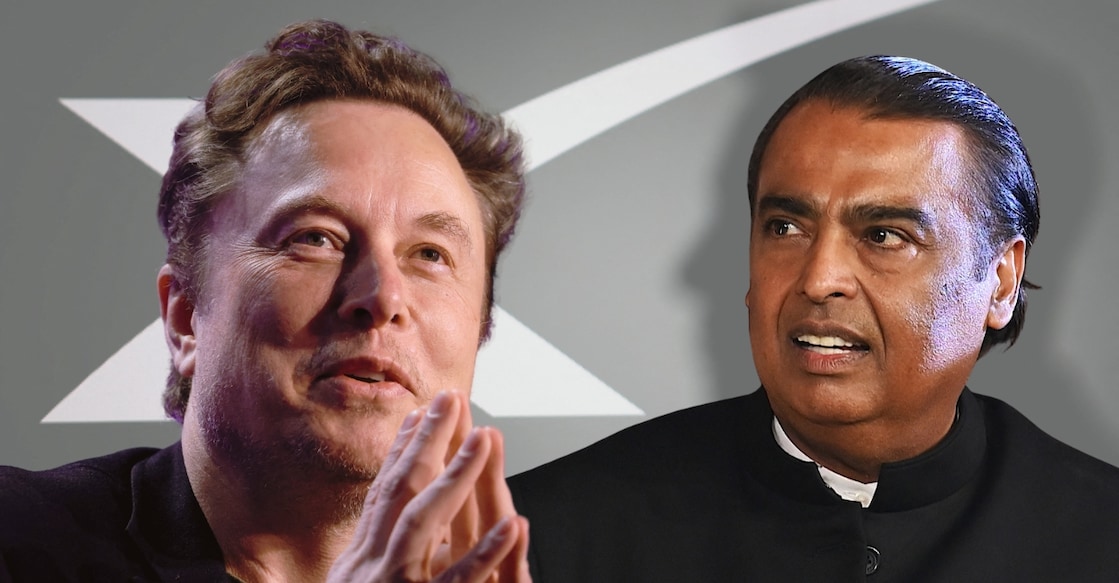
Elon Musk's complaint that Starlink is being denied approval to operate in India has triggered a political exchange, with Congress leader Rahul Gandhi using the issue to target Prime Minister Narendra Modi and his closeness to billionaire Mukesh Ambani.
Musk, the owner of SpaceX, which operates the satellite internet service Starlink, alleged in a post on X that the service was being blocked by “certain oligarchs in order to maintain their monopolistic chokehold on the Indian people”.
“Is Ambani the real boss of India?” Musk asked, taking aim at the influence of Reliance Industries chairman Mukesh Ambani, whose Reliance Jio is one of India's dominant telecom operators. Musk also questioned why Starlink had yet to receive the necessary approval despite years of efforts to comply with Indian regulations.
“Starlink is licensed in over 165 countries and has spent five years complying with every single law and requirement of the government of India, so why still no license?” he asked.
The remarks drew a political response from Rahul Gandhi, the Leader of the Opposition in the Lok Sabha, who backed Musk's criticism and took a swipe at Modi. “Welcome to India, Elon,” Gandhi said, before adding: “Wait till you discover the other guy.”
The Centre, meanwhile, rejected suggestions that Starlink was being treated unfairly, defending India's regulatory framework for satellite internet services. “The suggestion that the framework or its application is unfair or discriminatory is baseless and misconceived,” the Ministry of Telecommunications said in a statement.
The ministry said three entities were at broadly the same stage of the regulatory process, with security assessments under way for each. It did not identify the companies.
Musk's tussle with India's telecom giants
The latest exchange comes against the backdrop of an earlier dispute over how satellite spectrum should be allocated in India. Musk had previously clashed with Ambani and Bharti Enterprises chairman Sunil Bharti Mittal over the terms under which satellite internet operators should access the Indian market. Their differences eased in 2025, when Starlink signed separate agreements with Reliance Jio and Bharti Airtel to distribute its devices in India.
India represents a potentially lucrative market for Starlink. The satellite broadband sector is projected to be worth $1.9 billion by 2030, according to Deloitte.
The approval question also has a wider geopolitical dimension. The US has pushed for Starlink's access to markets as a goodwill measure in trade discussions with countries affected by tariffs. New Delhi and Washington have struggled to finalise a trade agreement since announcing a framework in February.
The regulatory debate has also unfolded amid security concerns over the presence of Starlink equipment in India.
Indian authorities reported recovering Starlink devices in two separate operations in late 2024: a drug seizure in the Andaman and Nicobar Islands and an Army search operation in Manipur.
Musk subsequently said Starlink's satellite beams were “turned off over India” and had “never been on in the first place”. He reiterated the position on Wednesday.
The latest developments come as neighbouring Bangladesh has also allowed Starlink to operate in the country, adding another dimension to the debate over India's approval process.
