

The whys and why nots of the AI171 crash preliminary report
Mail This Article


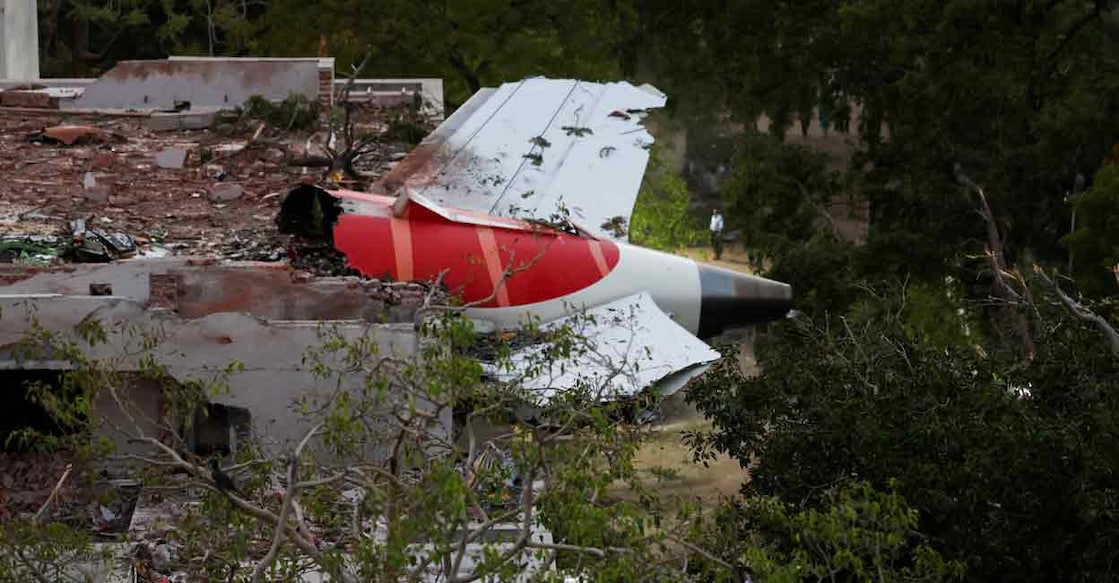
The Air India AI171 crash preliminary report seems to be much more than meets the eye, posing more questions than answers. It offers a chilling timeline of events. Several critical gaps have sparked concern among aviation experts, pilots, and grieving families, many noticeable ones that have been reported by Malayala Manorama. It has also drawn sharp criticism for its lack of clarity, transparency, and technical depth.
One major concern is the report’s omission of safety recommendations despite the catastrophic nature of the crash. Experts argue that even preliminary findings should prompt interim safety measures, especially given the history of Federal Aviation Administration (FAA) advisories on fuel control switches. Some have interpreted the decision to exclude any recommendations for Boeing or General Electric as an attempt to shield manufacturers from scrutiny.
While the report outlines a sequence of events, it fails to explain the underlying cause of the dual engine shutdown, leaving many to question whether the investigation is prematurely leaning towards pilot error.
The crash has raised alarming questions about potential software faults in the aircraft’s fuel delivery systems. In the final report, expected to take around a year, the Thrust Control Management Assembly (TCMA), which manages engine thrust based on the flight phase, could and should be looked at. A malfunction may have misread the aircraft’s status, causing it to throttle down as if still on the ground - a disastrous error during take-off.
Another suspect is the Full Authority Digital Engine Control (FADEC), which controls fuel flow and ignition. Any glitch here could block fuel delivery or hinder engine relight after cutoff. What’s even more troubling is that fuel control switches—usually protected by manual locks—were found in the “CUTOFF” position just seconds after lift-off. The initial climb is one of the most vulnerable phases of flight. While designed to resist accidental movement, some experts speculate that software (that triggers fuel to engines) overrides could have disengaged the safeguards. If software bugs flipped the switches, or if they were ignored, maintenance advisories contributed. Adding to the mystery, the switches and fuel valves are wired independently, making simultaneous manual shutdown unlikely without a deeper systemic failure. The report needed to say whether automation overrode pilot inputs.
Further, the investigation process itself has been called into question. The Association of Licensed Pilots of India has condemned the exclusion of experienced line pilots from the inquiry, arguing their absence undermines the credibility of the findings. The leak of sensitive details to international media before Indian stakeholders were informed has also sparked outrage, suggesting a lack of control over the narrative.
The tragedy has become a stark reminder of how fragile the balance between human control and aircraft automation can be.
A similar incident with All Nippon Airways (ANA) in 2019 matched the exact circumstances of the Air India AI171 crash, fortunately occurring on the ground. During taxiing, the TCMA system misinterpreted the aircraft’s status and throttled back the engines, believing the plane was still stationary. The cause was a software glitch in TCMA incorrectly signalled to FADEC that the aircraft was on the ground. As a result, the engines responded by reducing thrust, even though the aircraft was in motion. While no injuries occurred, the National Transportation Safety Board concluded that TCMA had failed, prompting a review of Boeing’s software logic. This incident finds no mention in the report.
The final report should tell us if it was a malfunction or deliberate attempt, and hopefully, what the Original Equipment Manufacturers (OEMs), including Boeing and GE, need to look into. These should not have been delayed. One only hopes it won’t be as inconclusive as MH 370, which continues to haunt aircraft designers and the world.
Meanwhile, India’s aviation growth and global safety hangs in the air.
(The author is an aviation expert)
 Add as a preferred source on Google